MenuClose

A place worth knowing

St. Peter’s Basilica

Attractions · Basilica in RomeUpdated

  • Google rating4.8/5
  • Typical visit30-60 minutes
  • EntranceFree (donations welcome)
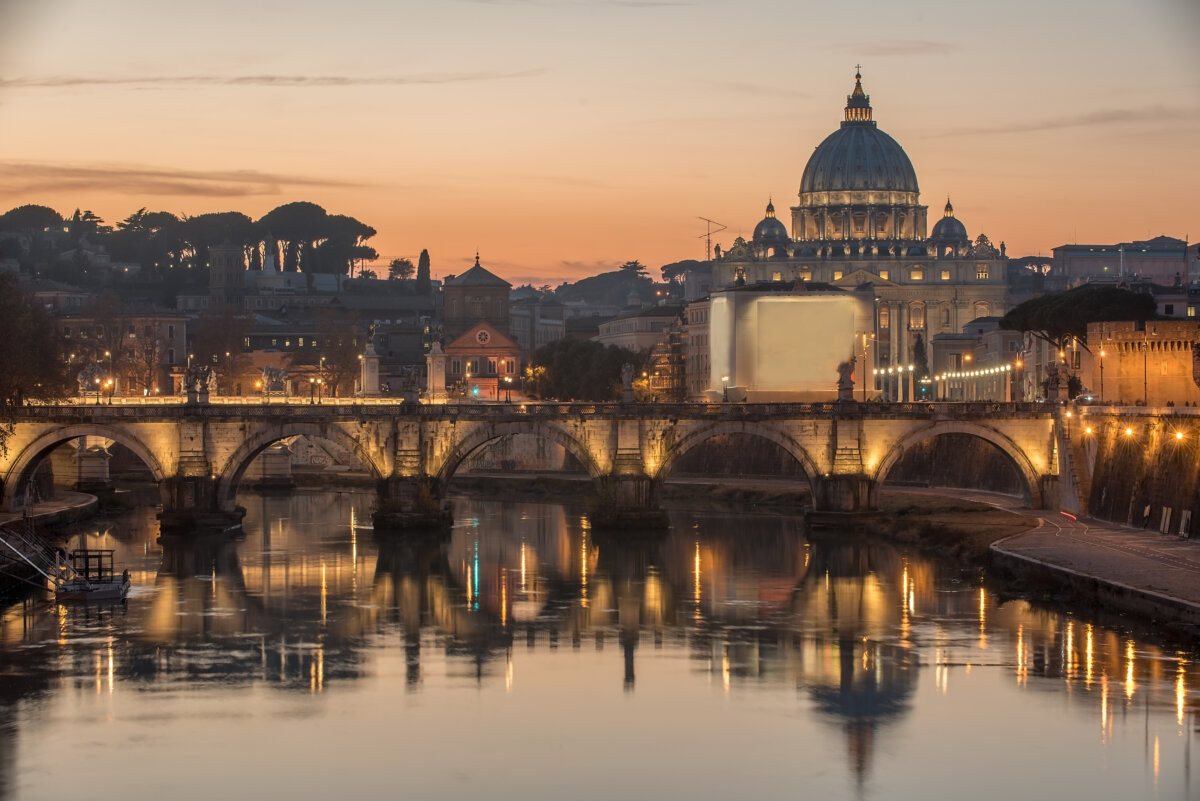
St. Peter's Basilica, as seen from across the river.
Rome, Italy: St. Peter's Basilica, Saint Angelo Bridge and Tiber River in the sunset
  • Today (Wednesday)7:00 AM – 7:00 PM
  • Typical visit30-60 minutes
  • EntranceFree (donations welcome)
  • Google rating4.8/5
  • WebsiteOfficial site ↗
Opening hours all week
Monday
7:00 AM – 7:00 PM
Tuesday
7:00 AM – 7:00 PM
Wednesday
7:00 AM – 7:00 PM
Thursday
7:00 AM – 7:00 PM
Friday
7:00 AM – 7:00 PM
Saturday
7:00 AM – 7:00 PM
Sunday
7:00 AM – 7:00 PM
Quiet times
7-9am, After 4pm, November-March, Tuesdays, Late Wednesday mornings
Busy times
10am-4pm daily, Easter Week, Christmas period, Summer June-August, Weekend mornings
Accessibility
"{"restrooms": "Accessible restrooms available in Vatican City area", "mobility_aids": "Wheelchairs can navigate main basilica areas", "elevator_access": "Available to main basilica level", "dome_limitations": "Dome climb not accessible – 551 steps with narrow passages", "special_services": ["Sign language guided tours (advance booking required)", "Dedicated entrance with ramp", "Contact [email protected] for specific needs"], "dedicated_entrance": "Right-hand hemicycle of St. Peter's Square with ramp access", "wheelchair_accessible": true}"
The short answer

Why it matters

The world's largest church and spiritual center of Catholicism, crowned by Michelangelo's dome and housing Bernini's baldachin

Rising majestically at the heart of Vatican City, St. Peter’s Basilica stands as Christianity’s most renowned church, a masterpiece of Renaissance architecture, and a profound expression of Catholic spiritual identity built upon the traditional burial site of the apostle Peter. The current structure, completed in 1626 after 120 years of construction, represents the collaborative genius of the Renaissance’s greatest artists and architects—including Bramante, Raphael, Sangallo, Michelangelo, and Bernini—who each contributed to its harmonious grandeur. Upon entering, visitors encounter Michelangelo’s Pietà before proceeding into the vast central nave where Bernini’s spectacular 29-meter bronze baldacchino marks the papal altar positioned directly above what tradition holds as St. Peter’s tomb. The basilica’s defining feature, Michelangelo’s soaring dome rising 136 meters from floor to lantern, creates a sense of transcendent space while representing one of architecture’s greatest engineering achievements. Unlike many monumental churches that feel primarily like museums, St. Peter’s maintains its vibrant spiritual function through daily masses, papal audiences, and its status as Catholicism’s most significant pilgrimage destination, where the faithful from across the globe converge to connect with the church’s apostolic foundations. The basilica’s rich decorative program—including 45 altars, 11 chapels, and countless mosaics replicating Renaissance masterpieces—creates a deliberately overwhelming sensory experience designed to inspire spiritual awe. As both the world’s largest church interior and the ceremonial center of Roman Catholicism, St. Peter’s transcends ordinary architectural categories to function as a physical manifestation of religious tradition spanning two millennia.

Cultural Context

Heart of Catholic Christianity housing tomb of St. Peter, symbol of papal authority and Church continuity, pinnacle of Renaissance art featuring works by Michelangelo, Bernini, representing faith’s triumph through art

Historical Context

Built over St. Peter’s tomb where Constantine erected first basilica 326 AD, current structure begun 1506 by Julius II, completed 1626 after 120 years involving Bramante, Raphael, Michelangelo as architects

Context

Story and significance

About

The world’s largest church and the centre of Roman Catholic Christianity, built over the traditional burial site of Saint Peter. The current basilica was constructed between 1506 and 1626, replacing the original 4th-century Constantinian structure. Michelangelo designed the iconic dome, which rises 136.6 metres and dominates the Roman skyline. The interior covers 2.3 hectares, holding masterworks including Michelangelo’s Pietà, Bernini’s bronze baldachin over the papal altar, and the Chair of Saint Peter. St. Peter’s Square in front was designed by Bernini with its elliptical colonnade of 284 Doric columns. Entry to the basilica is free; dome access requires separate tickets.

Historical significance

Built over tomb of St. Peter, first Pope and apostle martyred in Rome 64 AD. Current basilica (1506-1626) replaced 4th-century Constantinian basilica. Designed by Bramante, Michelangelo, Bernini among others. Center of Catholic Church and papal ceremonies. Michelangelo’s dome engineering marvel influential worldwide. Site of papal conclaves, canonizations, major liturgical celebrations. Holy Door opened only during Jubilee Years for pilgrimage. Artistic treasure house representing Renaissance and Baroque pinnacle.

Historical context

Built over St. Peter’s tomb where Constantine erected first basilica 326 AD, current structure begun 1506 by Julius II, completed 1626 after 120 years involving Bramante, Raphael, Michelangelo as architects
Cultural context

Heart of Catholic Christianity housing tomb of St. Peter, symbol of papal authority and Church continuity, pinnacle of Renaissance art featuring works by Michelangelo, Bernini, representing faith’s triumph through art

Architecture

World’s largest church interior, Michelangelo’s dome inspired by Pantheon and Florence Cathedral defining skyline, Bernini’s Baldachin and colonnade, facade by Maderno, synthesis of Renaissance and Baroque genius

Local significance

Vatican City centerpiece attracting millions of pilgrims and tourists, papal ceremonies venue including conclaves and canonizations, free public access maintaining role as universal church, UNESCO World Heritage site

Experience

Make the most of it

Local tips
  • Romans avoid Sunday mornings due to masses and papal events
  • Elevator saves 231 of 551 steps but final 320 are narrow and steep
  • Visit Vatican Grottoes after basilica tour to avoid re-queuing
  • Dome ticket office only accepts cash – bring euros
  • Best dome photos at 8am when ticket office opens with minimal crowds
  • Jubilee 2025 pilgrim app provides QR code for Holy Door fast track
Hidden gems nearby
  • Scavi necropolis requires booking months ahead – only 250 daily visitors
  • Michelangelos Pietà behind bulletproof glass after 1972 attack
  • Vatican Grottoes contain 90+ papal tombs including John Paul II
  • Clementine Chapel protects original St Peters tomb directly below dome
  • Queen Christina of Sweden tomb – converted Protestant queen buried here
  • Dome interior walkway offers unique view down into basilica nave
Special features
  • World's largest church interior housing Michelangelo's only signed work (Pietà) and Bernini masterpieces. Papal basilica where Pope celebrates major liturgies. 2025 Jubilee Year brings special Holy Door opening ceremony. Dome offers 360-degree Rome views after 551-step climb. Vatican Grottoes contain papal tombs including St. Peter. Treasury displays priceless religious artifacts spanning centuries.
Editorial scores

How we rate it

Authenticity10/10
Accessibility score7/10
Family-friendly score7/10
Off-the-beaten-path2/10

Editorial scores on a 10-point scale, judged against places of the same kind.

Bookable experiences

Worth booking ahead in Rome

Hand-picked from the operators our guides already send readers to. Prices and availability are live on the partner site.

We earn a commission if you book through these links, at no extra cost to you. It is how we keep the guides free and independent.

Updated Data: Editorial research · Google Places ratings · Verified coordinates