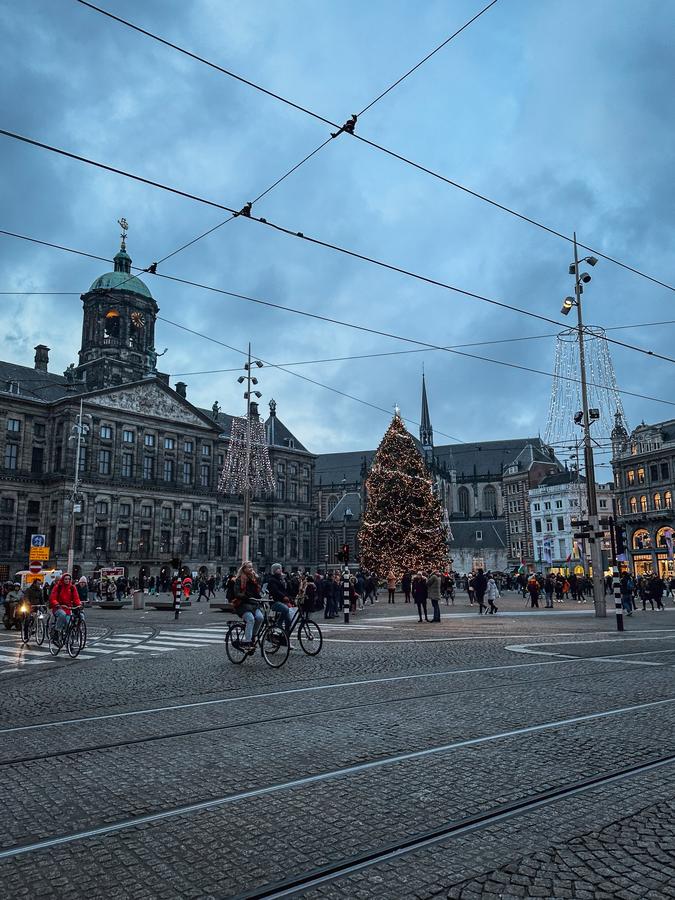
Dam Square stands as the historic heart of Amsterdam, a grand open space dating back to the 13th century when a dam was built on the Amstel River (giving the city its name). Today, this bustling central plaza is flanked by magnificent buildings including the Royal Palace (Koninklijk Paleis), the Neo-Gothic New Church (Nieuwe Kerk), and the National Monument, a striking white stone pillar commemorating World War II. The square functions as Amsterdam’s vibrant living room, hosting markets, performances, demonstrations, and seasonal attractions like summer festivals and the winter holiday fair. Street performers entertain crowds while locals and tourists alike gather to socialize, people-watch, or simply pass through this pivotal crossroads. Dam Square offers a perfect blend of historical significance and contemporary urban energy, making it an essential landmark that connects Amsterdam’s past with its present.
Cultural Context
Heart of Amsterdam embodying 700 years of Dutch history from medieval dam to modern democracy, site of royal ceremonies and protests, symbol of civic pride where monarchy meets merchant heritage
Historical Context
Created 13th century damming Amstel River giving Amsterdam its name, site of medieval fish markets, 1960s hippie gatherings, location of National Monument honoring WWII victims, witness to centuries of Dutch social movements