A place worth knowing

Museum Ons’ Lieve Heer op Solder

Amsterdam’s second-oldest museum houses a hidden Catholic church built in a 17th-century canal house attic during the Protestant Reformation.

Museums · Museum in AmsterdamUpdated

  • Google rating4.5/5 (6,500 reviews)
  • Typical visit2-3 hours
  • EntranceAdmission required — check https://www.opsolder.nl/ for tickets
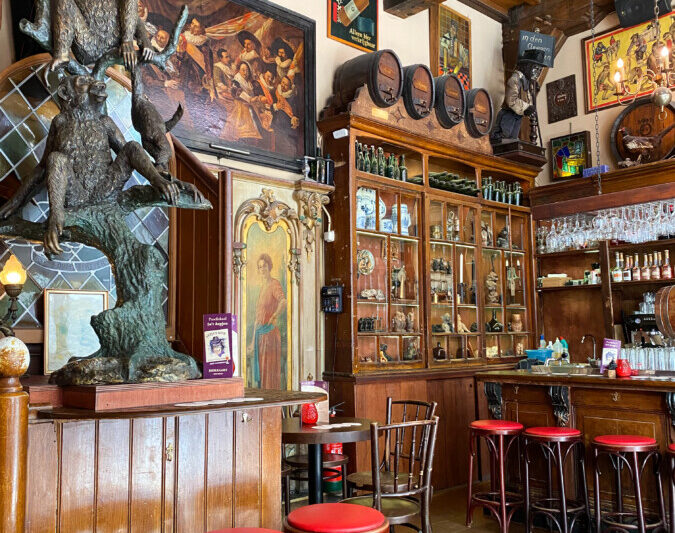
Inside Our Lord in the Attic Museum
Kyle Kroeger / ViaTravelers
  • Today (Tuesday)10:00 AM – 5:00 PM
  • Typical visit2-3 hours
  • EntranceAdmission required — check https://www.opsolder.nl/ for tickets
  • Google rating4.5/5 6,500 reviews
  • WebsiteOfficial site ↗
Opening hours all week
Monday
10:00 AM – 5:00 PM
Tuesday
10:00 AM – 5:00 PM
Wednesday
10:00 AM – 5:00 PM
Thursday
10:00 AM – 5:00 PM
Friday
10:00 AM – 5:00 PM
Saturday
10:00 AM – 6:00 PM
Sunday
10:00 AM – 6:00 PM
Quiet times
"{}"
Busy times
"{}"
Accessibility
"{"mobility": "Exhibitions reachable by lift, but main areas require stair climbing", "assistance": "CoVisit tour available for visitors unable to climb stairs, service dogs permitted", "facilities": "Adapted toilet available, unguarded cloakroom, free lockers, museum café", "public_transport": "Central location – walk from Central Station, multiple metro/tram connections nearby", "wheelchair_access": "Not wheelchair accessible – historic building with narrow, steep 17th-century staircases only"}"
The short answer

Why it matters

Amsterdam's second-oldest museum houses a hidden Catholic church built in a 17th-century canal house attic during the Protestant Reformation.

Concealed behind the facade of a seemingly ordinary canal house in Amsterdam‘s Red Light District lies one of the city’s most extraordinary hidden treasures. Museum Ons’ Lieve Heer op Solder (“Our Lord in the Attic”) preserves a secret Catholic church built across the top three floors during the 17th century, when public Catholic worship was officially forbidden in Protestant Amsterdam. While authorities tacitly permitted such “hidden churches,” this remarkable example—with its fully intact Baroque interior, original organ, confessional, and altar—offers a powerful testament to Dutch religious tolerance in practice. The narrow stairs and intimate spaces of this merchant’s home-turned-clandestine-church create an atmosphere of discovery as visitors ascend through domestic rooms to find the unexpected sacred space above. Beyond its religious significance, the museum provides a rare glimpse into authentic 17th-century Dutch domestic life, with period furnishings and household objects illustrating daily existence during the Golden Age. As one of Amsterdam’s oldest museums (established 1888), it connects visitors to both the city’s complex religious history and the pragmatic tolerance that became a defining characteristic of Dutch society.

Cultural Context

Unique preserved example of Dutch religious tolerance during Reformation, hidden Catholic church representing peaceful coexistence in Protestant Amsterdam, symbol of faith persevering under restrictions

Historical Context

Built 1661-1663 by merchant Jan Hartman when public Catholic worship banned, served as clandestine church until St Nicholas opened 1887, saved from demolition 1888 becoming Amsterdam’s second oldest museum

Context

Story and significance

About

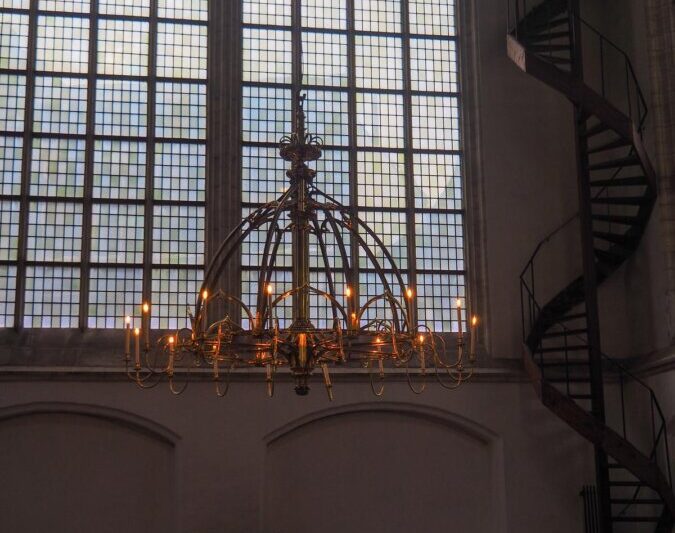
Museum Ons’ Lieve Heer op Solder (Our Lord in the Attic) is a 17th-century canal house on Oudezijds Voorburgwal in Amsterdam with a secret Catholic church hidden across three upper floors. Built in the 1660s during the Dutch Reformation when Catholic worship was officially banned, the concealed church features a two-gallery nave, baroque altar, and working organ — all preserved exactly as used for over 200 years of clandestine services. The lower floors showcase 17th-century domestic life with period rooms.

Historical significance

The Museum Ons’ Lieve Heer op Solder holds profound historical significance as a testament to religious perseverance during the Dutch Golden Age. Constructed in the early 1660s, the hidden church was a direct response to the Protestant Reformation and the subsequent prohibition of Catholic worship in public spaces within the Dutch Republic. At a time when Catholics faced legal restrictions and social marginalization, the covert church embodied a resilient assertion of faith and community identity. It is one of the best-preserved examples of a ‘schuilkerk’ or hidden church, illustrating how religious minorities adapted to oppressive circumstances by creating secret spaces for worship. This church not only served as a spiritual refuge but also as a symbol of religious tolerance evolving in Amsterdam, which later became known for its relatively liberal stance on faith and expression. The building’s survival through centuries of political and social change offers invaluable insights into the interplay between religion, politics, and urban development in the Netherlands. Its legacy extends beyond its walls, influencing the broader narrative of religious freedom and coexistence in Europe. Today, the museum educates visitors about the complexities of religious identity, the history of Catholicism in the Netherlands, and the broader context of European religious conflicts. As such, Museum Ons’ Lieve Heer op Solder stands as a crucial cultural and historical landmark, preserving a narrative of resilience and tolerance that continues to resonate in contemporary discussions about faith and society.

Historical context

Built 1661-1663 by merchant Jan Hartman when public Catholic worship banned, served as clandestine church until St Nicholas opened 1887, saved from demolition 1888 becoming Amsterdam’s second oldest museum
Cultural context

Unique preserved example of Dutch religious tolerance during Reformation, hidden Catholic church representing peaceful coexistence in Protestant Amsterdam, symbol of faith persevering under restrictions

Architecture

Three canal houses unified containing complete Baroque church in attic with galleries, altar, and confessional, preserving 17th century merchant home with original rooms demonstrating Golden Age domestic life

Local significance

Popular museum attracting 85,000 annual visitors exploring religious freedom themes, European Heritage Label site 2024, educational resource about tolerance and diversity relevant to contemporary multicultural Amsterdam

Experience

Make the most of it

Local tips
  • Museum cafes often serve quality local food
  • Late night openings often have special events
  • Visit during weekdays for fewer crowds
  • Special exhibitions require separate tickets
  • Gift shops have unique souvenirs
  • Members get free entry and skip lines
  • Check for combo tickets with nearby attractions
Hidden gems nearby
  • Rooftop terraces often have great city views
  • Free guided tours at specific times
  • Secret passages between galleries
  • Staff recommendations for must-see pieces
  • Archive rooms sometimes open for special tours
  • Hidden courtyards perfect for photos
  • Lesser-known wings have amazing collections
Special features
  • Museum Ons' Lieve Heer op Solder is uniquely distinguished by its extraordinary preservation of a 17th-century clandestine Catholic church hidden within a traditional Amsterdam canal house. This rare architectural fusion combines a typical merchant's home with an elaborate place of worship built in the attic, showcasing the ingenuity of Catholics during a period when public Catholic worship was prohibited in the Dutch Republic. The church features beautifully crafted wooden galleries, an intricately carved altar, and original religious artifacts that have been meticulously maintained. Visitors can explore the narrow staircases leading to the attic chapel, where the intimate space once accommodated secret congregations. The museum also includes period furnishings and paintings that reflect the socio-religious context of the 1600s. Its location in the Red Light District adds a compelling layer of contrast between the city's historic religious tolerance struggles and its modern-day cultural landscape. The museum's combination of domestic architecture and sacred space offers a vivid, tangible experience of Amsterdam's complex religious history, making it an exceptional cultural site. In addition, the museum hosts rotating exhibitions and educational programs that delve into the history of religious freedom in the Netherlands, enhancing its role as a living repository of cultural memory. This blend of architectural ingenuity, historical artifacts, and immersive storytelling defines the museum's special character and appeal to visitors interested in religious history and Dutch heritage.
Editorial scores

How we rate it

Authenticity10/10
Accessibility score4/10
Family-friendly score7/10
Off-the-beaten-path8/10

Editorial scores on a 10-point scale, judged against places of the same kind.

Bookable experiences

Worth booking ahead in Amsterdam

Hand-picked from the operators our guides already send readers to. Prices and availability are live on the partner site.

We earn a commission if you book through these links, at no extra cost to you. It is how we keep the guides free and independent.

Updated Data: Editorial research · Google Places ratings · Verified coordinates