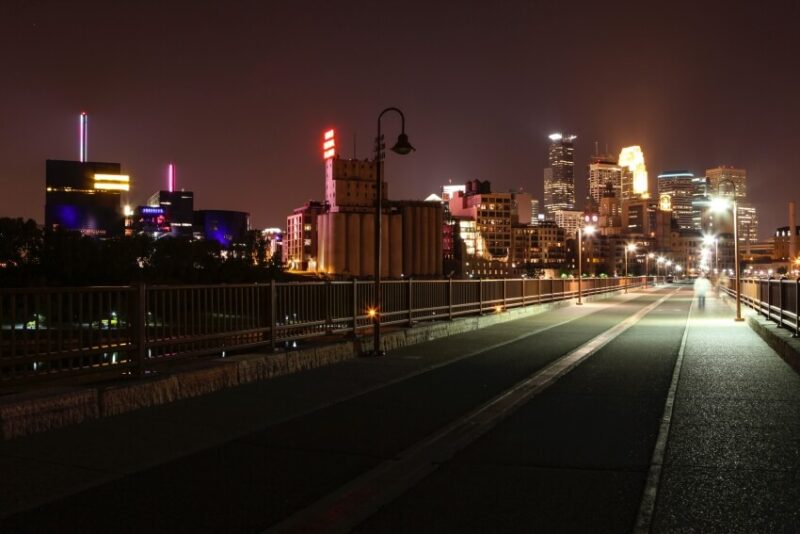
Historic bridge with stunning views and sunsets.
- Universal Appeal and Cultural Authenticity
- It offers picturesque views, making it a destination for photographers and sunset enthusiasts.
- The bridge remains true to its historical architecture, preserving its authentic 19th-century appeal.
- Hosts local activities, such as musicians and artists, which reflect the vibrant culture of Minneapolis.
- Cultural Richness and Educational Value
- Historic signs and information about the bridge and surrounding areas enrich visitors’ understanding of its past.
- Proximity to cultural landmarks like the Mill Ruins Museum adds to the educational experience.
- Provides insight into local history, such as the significance of the Pillsbury Building and the Mississippi River.
- Preservation and Integrity
- Maintained in excellent condition, ensuring it lasts for future generations.
- Contributes to the historic landscape of Minneapolis, preserving a piece of the city’s industrial past.
- Efforts to keep the area clean and well-preserved are evident, though issues like discarded scooters need addressing.
- Accessibility and Visitor Engagement
- Easily accessible to pedestrians, cyclists, and people with strollers, ensuring a welcoming environment for all visitors.
- No entrance fee is required, making it an inclusive spot for everyone.
- Interactive elements such as local artists, scenic photography opportunities, and potential lock and dam tours enhance visitor interaction.
- Proximity to parks and cafes provides additional engagement and relaxation opportunities.
History and Significance
The
Stone Arch Bridge, an iconic part of Minneapolis, was built in the 1880s by James J. Hill, a big name in the railroad industry. Imagine walking on a piece of history that helped shape the city’s industrial growth.
Stretching gracefully over the Mississippi River, it’s the only stone arch bridge along the whole river. Pretty cool, right?
This bridge isn’t just a pretty sight; it played a huge role in transportation. In the late 19th century, it was crucial for moving goods and people. Picture bustling trains zooming over it, linking various places and spurring economic growth.
Cultural Importance:
- A symbol of innovation and engineering prowess of its time.
- A beloved landmark for locals and a favorite spot for walks and bike rides.
- Offers incredible views of Saint Anthony Falls, connecting the city’s past and present.
Notable Event:
- The grand opening in 1883 was a big deal, marking a new era for Minneapolis.
You can still feel the bridge’s historical vibe today, blending beautifully with modern urban life. As you stroll across, you’re
walking through history – pretty impressive, don’t you think?
Main Attractions and Activities
Walking across the
Stone Arch Bridge is a real treat. You’ll love the historic feel as you stroll along the 2,100-foot span.
One of my favorite parts is watching the
Mississippi River flow underneath. The view of
Saint Anthony Falls is especially stunning, so don’t forget your camera.
Biking is another popular activity here. The dedicated bike path means you can ride from
Fort Snelling to the bridge without worry. It’s a perfect spot for a leisurely ride or a brisk workout.
If you’re into history, visiting the Mill City Museum is necessary. It’s super close and adds context to the role of the bridge in Minneapolis. You can also check out the Guthrie Theater if you’re into arts.
And if you’re driving, there’s metered parking nearby. Handy, right?
What connected me to this place was how it blends the old with the new. Every stone tells a story, and every visitor adds their little chapter. Trust me, it’s worth your time.
Visitor Experience
When you visit the Stone Arch Bridge, you’re in for a treat. The ambiance is lovely, and you can enjoy scenic views of the Mississippi River and the Minneapolis skyline.
Expect crowds, especially on weekends, but plenty of space to walk or bike. It’s a popular spot for locals and tourists, so you’ll often find a lively atmosphere.
You might also encounter friendly park staff. They maintain the bridge and are always happy to share interesting historical facts. There’s no better way to enjoy the
beauty of Minneapolis!
Tips for Visitors
When visiting the Stone Arch Bridge, timing is key. Early mornings or late afternoons often provide the best experience, with fewer crowds and stunning light for photography.
Dress comfortably! You’ll want good walking shoes since the bridge spans 2,100 feet, and if you plan to explore nearby
Mill City Museum or Guthrie Theater, you’ll be doing even more walking.
There’s no need for tickets—the bridge is free to visit. But some cash will be handy if you want to rent a bike or use local services.
Parking can be tricky. Some metered spots are nearby, but public transport or biking might save you the hassle. If you decide to drive, keep some coins or a parking app ready.
A little tip: Bring a small bag with water and snacks. The views are great for a mini-picnic, and you’ll stay hydrated during your walk.
Accessibility and Facilities
The Stone Arch Bridge is quite accessible and friendly for visitors of all abilities. Ramps and smooth paths make it easier for wheelchairs and strollers. My aunt Betty, who uses a wheelchair, had no trouble getting around.
Facilities are conveniently available. A small shop nearby offers drinks and snacks. Grab a coffee and enjoy the views! Public restrooms are located at both ends of the bridge, which is super handy.
Parking can be tricky during peak hours, but there’s a decent-sized lot a short walk away. If you don’t mind a bit of a stroll, street parking is often available too.
You’ll find plenty of benches along the bridge. Perfect for taking a break or people-watching.
Unique Features
The Stone Arch Bridge in Minneapolis is more than just a bridge; it’s a historic landmark with a unique charm. First, it’s the only arched bridge made of stone that spans the Mississippi River. Its 23 granite and limestone arches are a sight to behold.
Walking or biking across, you can
enjoy fantastic views of the river and the St. Anthony Falls.
The bridge also holds a special place in the local community. Informational displays along the way share stories about the bridge’s history and development.
You’ll learn about James J. Hill’s construction of it in 1883 and its transformation into a pedestrian and bicycle path. On a sunny day, it’s common to see locals and tourists taking pictures, learning about Minneapolis’s industrial past, or simply enjoying a peaceful walk.
There’s something special about feeling the blend of historical significance and natural beauty all in one place. From its arches to its stories, the Stone Arch Bridge offers a unique experience connecting you to Minneapolis’s heart.
Best Time to Visit
- Sunset and Evening Hours: Visiting during the evening offers the most picturesque views as the sun sets over the Mississippi River, casting a beautiful glow over the bridge and skyline. The neon lights start to illuminate, adding to the enchanting atmosphere. This time is also perfect for a relaxing stroll or taking stunning sunset photographs.
- Summer and Early Fall: The weather is pleasant during these seasons, making it ideal for outdoor activities. The bridge is vibrant with local musicians, artists, and various community events. Additionally, the lush greenery and colorful foliage in early fall enhance the scenic beauty, providing a perfect backdrop for sightseeing and photography.
- Special Occasions and Holidays: The bridge becomes a prime location for watching events such as the July 4th fireworks, where visitors can experience spectacular displays over the river. These times often see increased cultural activities, with more artists and performers engaging with visitors, creating a lively and festive atmosphere.
Overall Impressions
Visiting the Stone Arch Bridge is something truly special. You feel the rich history beneath your feet and can’t help but be taken by the
iconic arches stretching over the river. The view at sunset? Just breathtaking.
The bridge’s structure is fascinating. Built from native granite and limestone, its strength is visible and awe-inspiring. Walking across, you can almost imagine the horse-drawn carriages and early trains that used this pathway.
If you’re into photography, the Stone Arch Bridge is a dream. The panoramic views of the city skyline blending with nature are postcard-perfect.
Key Takeaways:
- Historical charm: You get a deep sense of the past.
- Stunning visuals: Perfect for those IG-worthy shots.
- Relaxing atmosphere: Ideal for a leisurely afternoon.
From my perspective, this is a must-visit. Whether you’re a history buff, a nature lover, or just looking for a peaceful stroll, the Stone Arch Bridge delivers.
Would I recommend it? Absolutely. It’s not just a bridge—it’s a journey through time and beauty. So, lace up your walking shoes, grab your camera, and enjoy the experience.
Pros and Cons
Ever wondered what’s so special about stone arch bridges? Well, let’s chat about it. I’ve walked across quite a few in my time, and there’s something unique about these structures.
Pros
- Strength and Durability: Stone arch bridges are strong. There’s a reason they’ve been around for centuries! The design distributes weight evenly, making the bridge very stable.
- Aesthetic Appeal: If you love history or just pretty things, you’ll appreciate the look of a stone arch bridge. They have a timeless beauty that melds with natural landscapes.
- Requires Minimal Maintenance: Because stone is so hardy, these bridges need less upkeep than metal or wooden ones. They’re built to last with less hassle.
- Increased Strength Over Time: Believe it or not, stone arch bridges can get stronger as they age. The compression forces help solidify the structure even more.
Cons
- Limited Span: Stone arch bridges can’t stretch for miles without support. Multiple arches or extra support are necessary if you need a super-long bridge.
- Complex Construction: Building one isn’t easy. It requires skilled labor and precision, which can increase the cost and time required.
- Site Constraints: Location matters a lot. The ground needs to be strong enough to support the arch, which can limit where these bridges can be built.
- Heavy Weight: They are quite hefty, and this can be a problem in areas with soft ground or where weight is a limitation.
A Personal Take
I recall a trip to Italy where I crossed the Ponte Vecchio in Florence. That bridge is not just a way to get from point A to point B; it’s a whole experience. People chat, shop, and even sing on it. Such bridges bring communities together in a way modern constructions simply can’t.