Written by Kyle Kroeger, who was born and raised in Minnesota and lived in the state for nearly all his life. Reviewed by Minnesota resident and editor James Oliver. Last fact-checked August 5, 2026.
ViaTravelers may earn a commission when you book through selected links in this guide. Recommendations are based on reader usefulness, not commission rates.
Answer in brief: Minnesota is at its best when you combine one major region with a few focused stops. A first trip could pair Minneapolis and Saint Paul with Duluth and the North Shore, while a longer trip can add the Boundary Waters, Voyageurs National Park, the Mississippi River towns, or lake country around Brainerd.
I grew up in Minnesota and have spent most of my life here. That local context shapes this list. I have included the places I would send visiting friends, the traditions that explain the state, and the stops worth planning a route around. Images credited to me are my original photographs.
The selection balances scenery, culture, history, family appeal, seasonality, and geographic coverage. Firsthand notes are identified as personal experience; changing details such as tickets, hours, trail conditions, and seasonal operations were checked against official sources. Use our broader Minnesota destination guides when you are ready to build a detailed itinerary.
Quick picks for a first Minnesota trip
| Trip priority | Best starting point | Why choose it |
|---|---|---|
| First statewide trip | Minneapolis, Saint Paul, Duluth, and the North Shore | Combines the state’s strongest urban, cultural, and Lake Superior experiences. |
| Wilderness | Boundary Waters Canoe Area Wilderness | Multi-day paddling, portages, camping, and long stretches without road access. |
| National park | Voyageurs National Park | A water-based park best explored by boat, canoe, kayak, or houseboat. |
| Families | Mall of America or Science Museum of Minnesota | Reliable year-round attractions with enough activities for a full day. |
| Free culture | Minneapolis Institute of Art | Free general admission and a large collection spanning thousands of years. |
| Small town | Stillwater or Grand Marais | Strong sense of place, walkable centers, and access to outdoor activities. |
| Winter | Lutsen Mountains | The state’s most substantial downhill-skiing destination, with Lake Superior nearby. |
| Local food | A Jucy Lucy and a Lake Street food crawl | Pairs a famous Minnesota burger with the Twin Cities’ broader immigrant food culture. |
| Music history | Paisley Park | The most direct way to understand Prince’s creative life in Minnesota. |
How to plan your Minnesota itinerary
| Time available | Recommended route | What fits comfortably |
|---|---|---|
| 2-3 days | Minneapolis and Saint Paul | Museums, lakes, riverfront landmarks, local food, and one suburban attraction. |
| 4-5 days | Twin Cities plus Duluth | Add Canal Park, the Aerial Lift Bridge, and one or two North Shore state parks. |
| 6-8 days | Twin Cities, Duluth, and Grand Marais | Drive Highway 61 slowly and include Split Rock, Tettegouche, and the Gunflint Trail. |
| One week with a wilderness focus | Ely, BWCAW, or Voyageurs | Choose one wilderness region rather than trying to combine several distant areas. |
| Long weekend from the Twin Cities | Stillwater, Lake Pepin, Red Wing, or Northfield | River towns, hiking, historic centers, food, and easier driving logistics. |
Summer is the easiest season for lakes, paddling, road trips, and outdoor attractions. Early fall brings changing leaves and heavy demand along the North Shore. Winter works well for Lutsen, frozen waterfalls, museums, and Twin Cities food trips. Spring can produce powerful waterfalls, but trails are often muddy and conditions change quickly.
For longer routes, use our Minnesota road trip ideas and Minnesota state park guide. Minnesota is too large to treat Duluth, Ely, Rochester, and the western lakes as one compact weekend.
Best things to do in Minnesota
1. Hike at Tettegouche State Park

Location: 5702 MN-61, Silver Bay, MN 55614
Best for: Lake Superior views, waterfalls, and half-day hikes
Tettegouche State Park is one of my favorite parks in Minnesota. The appeal is the variety: Lake Superior cliffs, Shovel Point, inland lakes, forest trails, and the 63-foot High Falls of the Baptism River.
Allow at least half a day if you want more than a roadside viewpoint. Conditions near the lake can be colder, windier, and wetter than they are inland, so carry layers and check trail notices before leaving. A Minnesota state-park vehicle permit is required in the main park areas.
2. Drive Minnesota’s North Shore

Route: Duluth to Grand Portage along Minnesota Highway 61
Best for: Scenic drives, waterfalls, hiking, and fall color
Minnesota’s North Shore follows Lake Superior from Duluth toward the Canadian border. The strongest stops include Gooseberry Falls, Split Rock Lighthouse, Tettegouche, Temperance River, Lutsen, Grand Marais, and Grand Portage.
Do not rush the route as a same-day out-and-back from Minneapolis. Three nights gives you time for Duluth, one park-heavy day, and Grand Marais without spending the entire trip in the car. Fall weekends sell out early, while winter travel requires close attention to road and trail conditions.
3. Hike a section of the Superior Hiking Trail

Location: Multiple trailheads from Duluth to the Canadian border
Best for: Day hikes and multi-day backpacking
The Superior Hiking Trail includes more than 300 miles of main trail plus access and spur trails. You do not need to attempt a thru-hike. Many of its best experiences are half-day sections near state parks, Lutsen, and Grand Marais.
Check the Superior Hiking Trail Association for current closures and trail conditions. Mud, exposed roots, river crossings, steep grades, and fast-changing Lake Superior weather make footwear and preparation more important than the modest elevations suggest.
4. Paddle and camp in the Boundary Waters

Primary gateways: Ely and the Gunflint Trail
Best for: Canoeing, portaging, camping, fishing, and solitude
The Boundary Waters Canoe Area Wilderness is one of my favorite Minnesota experiences. A proper trip usually involves several days of paddling, carrying your canoe and gear across portages, cooking outside, and sleeping far from roads or reliable cell service.
Permits are required year-round, and quota permits apply to overnight paddle trips and certain day-use trips from May 1 through September 30. Reserve through the official U.S. Forest Service system and pack for a canoe and camping trip rather than treating this as an improvised day outing.
In my experience, the period around Labor Day can offer cooler nights and fewer mosquitoes than midsummer, although weather and insects vary. Bring rain protection, a paper map and compass, food-storage equipment, and a plan for cold-water emergencies.
5. Explore Voyageurs National Park by water

Location: Northern Minnesota near International Falls, Ranier, Kabetogama, and Ash River
Best for: Boating, houseboats, paddling, fishing, and dark skies
Voyageurs National Park is Minnesota’s only national park, and water shapes almost every visit. Most campsites are reached by boat, while houseboats provide a more comfortable way to move between lakes and islands.
Reserve campsites and houseboat permits in advance through the National Park Service. Travelers without a boat can use guided tours, rentals, visitor-center programs, and the limited road-accessible areas, but the park makes more sense once you get onto the water.
6. Ski or ride the gondola at Lutsen Mountains

Location: 467 Ski Hill Road, Lutsen, MN 55612
Best for: Downhill skiing, fall views, gondola rides, and the alpine slide
Lutsen is the most substantial downhill-skiing destination in Minnesota and the natural centerpiece of our Minnesota ski-resort guide. In winter, the terrain and Lake Superior setting make it feel distinct from the smaller hills near the Twin Cities.
Summer and fall bring the Summit Express Gondola, hiking, and the weather-dependent alpine slide. Fog, rain, lightning, and high winds can affect operations, so check Lutsen Mountains before driving up the hill.
For an overnight stay with Lake Superior access, Lutsen Sea Villas is a practical alternative to staying directly on the mountain.
7. Walk the prairie hills at Glacial Lakes State Park

Location: 25022 County Road 41, Starbuck, MN 56381
Best for: Prairie hiking, camping, paddling, and quieter state-park trips
Glacial Lakes State Park protects rolling prairie, hardwood forest, kettle lakes, and ridges shaped by retreating glaciers. It gives western Minnesota a place on this list without pretending every outdoor trip needs to follow Lake Superior.
Hike to the higher prairie viewpoints, paddle Mountain Lake, or reserve a campsite and stay for the sunset. The park is less congested than Minnesota’s most famous North Shore sites, but normal vehicle-permit and reservation rules still apply.
8. Photograph the Minneapolis Sculpture Garden

Location: 725 Vineland Place, Minneapolis, MN 55403
Best for: Free art, skyline photos, and a short urban walk
The Minneapolis Sculpture Garden is free and open daily. Claes Oldenburg and Coosje van Bruggen’s Spoonbridge and Cherry is the best-known work, but the surrounding installations make this more than a one-photo stop.
Pair the garden with the adjacent Walker Art Center. The garden itself can take 30 to 60 minutes; add several hours if you plan to see the museum or walk into nearby Loring Park.
9. Spend a day in historic Stillwater

Location: St. Croix River, east of Saint Paul
Best for: Historic architecture, river walks, shopping, and fall weekends
Stillwater is called the Birthplace of Minnesota because the 1848 territorial convention that began the process of establishing Minnesota Territory was held downtown. Its riverfront, preserved commercial district, lift-bridge views, and locally owned shops make it one of the state’s easiest day trips.
Use our guide to the best things to do in Stillwater to add a trolley tour, river cruise, bike ride, or historic walking route. Staying overnight gives you a calmer Main Street after the heaviest afternoon traffic leaves.
10. Spend a few hours at the Minneapolis Institute of Art

Location: 2400 Third Avenue South, Minneapolis, MN 55404
Best for: Free art, rainy days, and multigenerational visits
The Minneapolis Institute of Art, usually called Mia, holds more than 100,000 works representing roughly 5,000 years of global art. General collection admission is free, although certain special exhibitions may require tickets.
Allow at least two hours and choose a few galleries rather than trying to cover everything. The collection ranges across Africa, Asia, Europe, the Americas, photography, decorative arts, textiles, and period rooms. Our Mia video provides a visual introduction before your visit.
11. Tour the Minnesota State Capitol

Location: 75 Rev. Dr. Martin Luther King Jr. Boulevard, Saint Paul, MN 55155
Best for: Architecture, civics, history, and free guided tours
The Minnesota State Capitol is one of the strongest free attractions in Saint Paul. Guided tours cover the Cass Gilbert architecture, legislative chambers, public art, restoration work, and state government.
Tours leave at scheduled times rather than “anytime.” On suitable days, guided groups may reach the roof near the gilded Quadriga. Check the official Capitol schedule, particularly around holidays, legislative sessions, and security changes.
12. Visit Como Park Zoo and Conservatory

Location: 1225 Estabrook Drive, Saint Paul, MN 55103
Best for: Families, tropical plants, animals, and low-cost days
Como Park combines a zoo, the Marjorie McNeely Conservatory, gardens, Como Town rides, and a large public park. Admission to the zoo and conservatory is free, with a suggested voluntary donation.
The conservatory is especially useful during Minnesota winters, while the zoo and surrounding park are busiest on warm weekends. Arrive early when parking demand is high and check Como’s official site for current building hours and seasonal exhibits.
13. Walk through Franconia Sculpture Park

Location: 29836 St. Croix Trail North, Shafer, MN 55074
Best for: Contemporary art, families, and an unusual day trip
Franconia Sculpture Park places large-scale contemporary works across an open rural property about an hour from Minneapolis. It is free, open daily, and much less formal than a conventional museum.
Give yourself time to walk beyond the first cluster of sculptures. Some works invite interaction, while others should only be viewed; follow the signs rather than assuming every structure can be climbed. Donations support the park’s artists and programs.
14. See Minnehaha Falls in every season

Location: 4801 South Minnehaha Drive, Minneapolis, MN 55417
Best for: Waterfall views, walking, biking, and a short city outing
Minnehaha Falls drops 53 feet into a limestone gorge within one of Minneapolis’s most popular parks. Flow is usually strongest in spring or after substantial rain; drought can reduce it significantly, while cold spells may create a dramatic frozen curtain.
Stairs and gorge trails can be wet, icy, or eroded. Stay behind barriers and do not climb onto the frozen falls or wade at the base. The park also connects to trails along Minnehaha Creek and the Mississippi River. Our Minnehaha Falls video shows the setting in more detail.
15. Learn how flour built Minneapolis at Mill City Museum

Location: 704 South Second Street, Minneapolis, MN 55401
Best for: Local history, families, and Mississippi River walks
Mill City Museum occupies the ruins of the Washburn A Mill beside Saint Anthony Falls. Exhibits explain how waterpower, grain, railroads, labor, immigration, and industrial accidents shaped Minneapolis and the companies that eventually became part of General Mills.
Plan roughly two hours and combine the museum with the Minneapolis riverfront, Mill Ruins Park, and Stone Arch Bridge area. Admission is ticketed, while some changing exhibits in the museum’s public areas may be free.
16. Bike, walk, and stay overnight in Lanesboro

Location: Fillmore County in southeastern Minnesota
Best for: Cycling, theater, B&Bs, and a quiet weekend
Lanesboro sits beside the Root River and the 42-mile Root River State Trail. The trail, limestone bluffs, galleries, theater, restaurants, and small inns make the town better suited to a full weekend than a hurried photo stop.
Bring or rent a bicycle, then plan your mileage around daylight and weather. Spring and early summer can bring high river levels, while fall weekends are popular with cyclists and leaf watchers.
17. Tour Split Rock Lighthouse

Location: 3713 Split Rock Lighthouse Road, Two Harbors, MN 55616
Best for: Lake Superior history, photography, and coastal views
Split Rock Lighthouse was completed in 1910 after the destructive 1905 Mataafa Storm exposed the need for better navigation along this stretch of Lake Superior. The historic site includes the lighthouse, keeper’s buildings, exhibits, and cliff-top views.
The classic distant view comes from the shoreline below, while the historic-site ticket covers the buildings and interpretation. Split Rock Lighthouse State Park is a separate state-park unit with hiking and camping, so check which entrance and permit your plans require.
18. Walk Summit Avenue in Saint Paul

Location: Summit Avenue, Saint Paul
Best for: Architecture, local history, and an easy urban walk
Summit Avenue is lined with Victorian and Edwardian homes, churches, schools, and some of Saint Paul’s most recognizable historic properties. The James J. Hill House, Cathedral of Saint Paul, Governor’s Residence, and places associated with F. Scott Fitzgerald give the walk a clear narrative.
A guided option can help distinguish public historic sites from private homes. This private Summit Avenue walking tour is one option, while our broader guide covers other Minnesota tours.
19. Attend the Minnesota State Fair

2026 dates: August 27-September 7
Location: 1265 Snelling Avenue North, Saint Paul, MN 55108
The Minnesota State Fair runs for 12 days through Labor Day and is one of the strongest expressions of the state’s food, agriculture, music, crafts, competitions, and collective enthusiasm. This is where sensible Minnesotans willingly form long lines for cheese curds, seed art, butter sculptures, and food on a stick.
Arrive early, use a park-and-ride or transit when practical, and identify a few priorities before entering. The grounds are large enough that an unplanned visit can become tiring quickly. Check the official fair site for tickets, transportation, accessibility, concerts, and the current food list.
The fair is also an efficient introduction to Minnesota foods worth trying, although the portions and prices reward sharing.
20. Experience lake-country life around Brainerd

Region: Brainerd Lakes, including Gull Lake and nearby Nisswa
Best for: Resorts, cabins, golf, boating, fishing, and family trips
“Going up north” is part of Minnesota life, and the Brainerd Lakes area is one of its most established destinations. The region combines public lake access, golf courses, trails, family attractions, cabins, and full-service resorts.
Our guide to things to do in Brainerd covers the towns and attractions beyond the resort grounds. Summer weekends are the busiest, while fall can offer quieter roads and cooler conditions for golf and hiking.
21. Hear live music at Lake Harriet Bandshell
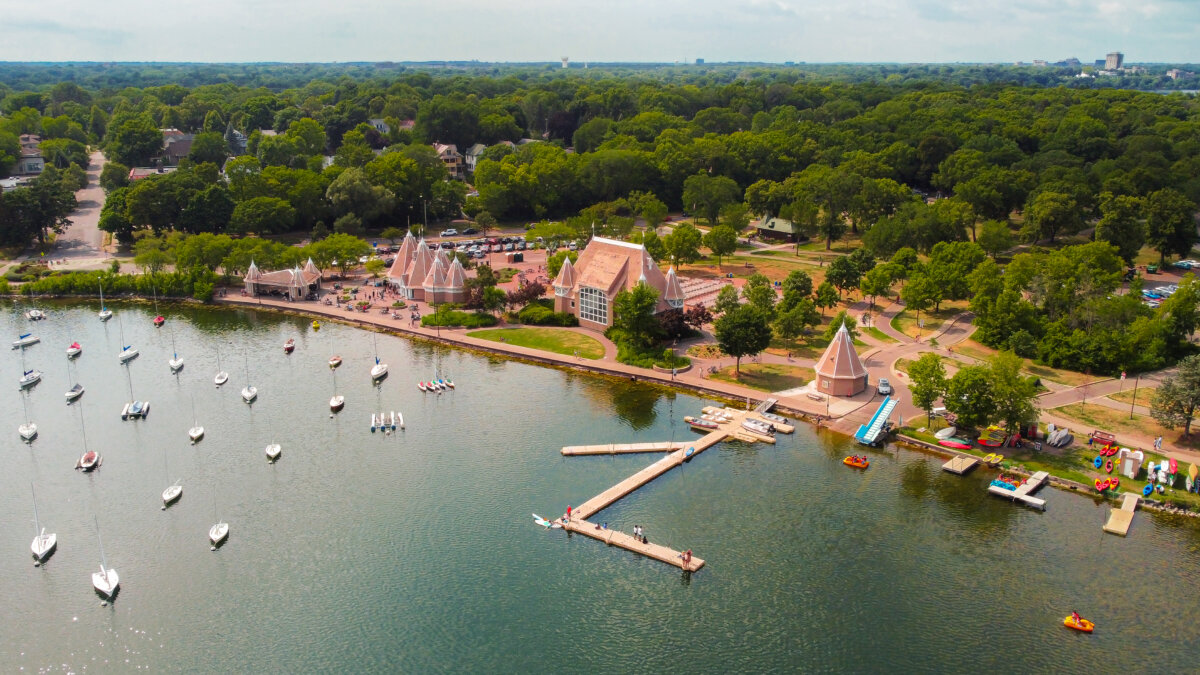
Location: 4135 West Lake Harriet Parkway, Minneapolis, MN 55409
Best for: Summer concerts, walking, picnics, and paddling
Lake Harriet has a 2.75-mile pedestrian loop, a separate bike path, beaches, seasonal watercraft rentals, and a castle-like bandshell. Free music and movie programming turns the lake into one of Minneapolis’s most useful summer gathering places.
Pair the lake with Linden Hills, the rose garden, or another stop from our guide to Minneapolis parks. Parking can be frustrating on warm evenings, so walking, biking, or arriving early is often easier. Our Lake Harriet video shows the lake and bandshell area.
22. Plan a Twin Cities brewery crawl

Best areas: Northeast Minneapolis, North Loop, Lowertown, and western Saint Paul
Best for: Local beer, taprooms, food trucks, and group outings
The Twin Cities have enough breweries that a good crawl should focus on one compact area rather than zigzagging between distant taprooms. Use our guides to Minneapolis breweries and Saint Paul breweries to check which taprooms are currently operating and what each specializes in.
A guided Minneapolis brewery tour removes the driving problem. Otherwise, assign a sober driver or use transit and rideshare services.
23. Meet ambassador eagles in Wabasha

Location: 50 Pembroke Avenue, Wabasha, MN 55981
Best for: Wildlife education and Great River Road trips
The National Eagle Center interprets bald and golden eagles, migration, habitat, and the Mississippi River flyway through ambassador birds and scheduled programs. The close views are memorable, but the education and conservation context are what distinguish the center from a roadside animal stop.
Check the daily program schedule before arriving. Wabasha itself deserves time for the riverfront, seasonal eagle viewing, and the other stops in our guide to things to do in Wabasha.
24. Learn the layered history of Historic Fort Snelling

Location: 200 Tower Avenue, Saint Paul, MN 55111
Best for: Dakota history, military history, archaeology, and guided interpretation
Historic Fort Snelling stands at Bdote, the confluence of the Mississippi and Minnesota rivers and a place central to Dakota history. Interpretation now reaches far beyond the fort’s 19th-century military buildings, addressing thousands of years of human presence, the fur trade, enslaved people, U.S. expansion, and the site’s military roles.
The site must also be understood as the location where Dakota people were forcibly confined after the U.S.-Dakota War of 1862 before exile and removal. Visit through the Minnesota Historical Society, and distinguish the historic site from adjacent Fort Snelling State Park.
25. Visit the International Wolf Center

Location: 1396 MN-169, Ely, MN 55731
Best for: Wolf behavior, ecology, conservation, and family education
The International Wolf Center uses ambassador wolves, exhibits, and educational programs to explain wolf biology, pack behavior, research, and the debates surrounding wild populations. It is an observation and learning facility, not an animal-petting experience.
Program times and wolf visibility vary, so check the center’s current schedule. Combine the visit with other things to do in Ely or use Ely as a BWCAW gateway.
26. Follow the Great River Road

Minnesota route: Approximately 565 miles
Best for: River towns, bluff views, history, birding, and fall drives
Minnesota’s Great River Road follows the Mississippi through 43 communities, 20 counties, and three tribal nations. It reaches from the headwaters region to the southeastern bluff country and works better as a series of regional trips than a single rushed drive.
A strong southern route links Hastings, Red Wing, Frontenac, Lake City, Wabasha, and Winona. Fall color is a major draw, but summer river activity and winter eagle viewing give the corridor year-round value. Our Great River Road video shows one version of the drive.
27. Explore Minnesota’s Swedish heritage in Lindstrom

Location: Chisago Lakes area, northeast of the Twin Cities
Best for: Scandinavian heritage, lake-country drives, and an easy day trip
Lindstrom maintains visible connections to Swedish immigration and is twinned with Tingsryd, Sweden. The town’s signs, public art, heritage events, food, and surrounding lakes make the cultural theme feel rooted in local history rather than added for visitors.
This is one of my favorite short drives from the Twin Cities. I usually build the stop around Swedish pancakes, coffee, and time in the neighboring Chisago Lakes communities rather than treating Lindstrom as a single photo opportunity.
28. See water-inspired art in Winona

Location: 800 Riverview Drive, Winona, MN 55987
Best for: Art, Mississippi River views, and a Winona weekend
The Minnesota Marine Art Museum presents historical and contemporary art connected to water, including changing exhibitions and works from its permanent collection. The subject is broader than boats or regional crafts; artists use rivers, oceans, shorelines, trade, ecology, and human relationships with water as recurring themes.
Check current exhibitions before visiting. The riverfront location pairs naturally with Winona’s bluff overlooks, historic center, and Mississippi River activities.
29. Look for moose along the Gunflint Trail

Route: Approximately 57 miles from Grand Marais toward Saganaga Lake
Best for: Scenic driving, lodges, wildlife, and BWCAW access
The Gunflint Trail is a paved National Scenic Byway connecting Grand Marais with lakes, lodges, trailheads, and Boundary Waters entry points. Moose are sometimes seen near wetlands and road edges, especially around dawn and dusk, but sightings are never guaranteed.
On one trip, we followed enormous fresh hoofprints while carrying our canoe across a portage. The tracks ended at the water, only a few minutes ahead of us, which was my practical introduction to how comfortably moose swim.
Drive slowly and never approach or block a moose. They are powerful, unpredictable animals. Travelers staying overnight can compare our guide to Gunflint Trail resorts.
30. Visit the Walker Art Center

Location: 725 Vineland Place, Minneapolis, MN 55403
Best for: Contemporary art, performance, film, and architecture
The Walker Art Center focuses on contemporary visual art, film, performance, design, and multidisciplinary work. Exhibitions can be challenging, playful, political, or experimental, which makes the Walker a useful contrast to Mia’s broad historical collection.
The museum is ticketed, although free-admission periods and community days are offered. Check current exhibitions and seasonal experiences such as Skyline Mini Golf before choosing a visit date. The Minneapolis Sculpture Garden remains free outside.
31. Spend a day at Mall of America

Location: 60 East Broadway, Bloomington, MN 55425
Best for: Families, indoor entertainment, shopping, and airport-area layovers
Mall of America contains more than 500 stores, but shopping is only one part of the experience. Nickelodeon Universe, SEA LIFE Minnesota Aquarium, Crayola Experience, escape rooms, miniature golf, dining, and rotating events can fill an entire day.
Our Mall of America guide helps narrow the options. Families can reserve a Nickelodeon Universe ride pass or Crayola Experience ticket before arriving.
Choose one or two anchor attractions rather than trying to “complete” the mall. For a convenient overnight stay, the JW Marriott and Radisson Blu connect directly to the complex.
32. See a production at the Guthrie Theater

Location: 818 South Second Street, Minneapolis, MN 55415
Best for: Theater, architecture, and an evening in the Mill District
The Guthrie is a major regional theater producing classic and contemporary work across several stages. Even without a ticket, visitors can check current public-building access, architectural tours, the Yellow Room, and the cantilevered Endless Bridge overlooking the Mississippi.
Pair an evening performance with Mill City Museum, the riverfront, and the nearby Stone Arch Bridge. Productions, tour access, and public-building hours change, so confirm them through the Guthrie Theater.
33. Spend a day on Lake Minnetonka

Location: Western Twin Cities metro
Best for: Boating, lake towns, dining, sunsets, and winter recreation
The line “purify yourself in the waters of Lake Minnetonka” comes from Purple Rain, although the movie scene was filmed elsewhere. The real lake is a large network of bays and channels surrounded by communities including Wayzata, Excelsior, Minnetonka, and Mound.
Our Lake Minnetonka guide covers boat cruises, beaches, trails, towns, and seasonal activities. Summer weekends bring heavy boat traffic, while winter activities depend on verified ice conditions. Never infer that ice is safe because other people are on it.
I am partial to Wayzata Bay around sunset, but Excelsior is often easier for visitors who want a walkable town center. Finish with one of these Lake Minnetonka restaurants.
34. Tour Paisley Park

Location: 7801 Audubon Road, Chanhassen, MN 55317
Best for: Prince fans, music history, fashion, and recording culture
Paisley Park was Prince’s home, studio, rehearsal space, performance venue, and creative headquarters. Guided tours use the building, instruments, costumes, vehicles, artwork, awards, and archival material to explain how he worked.
Timed tickets are required, and photography is restricted to approved areas. Tour types and operating days vary, so book directly through Paisley Park. It remains one of the most culturally significant museums in Minnesota.
Travelers staying near Chanhassen can compare availability at the AmericInn by Wyndham Chanhassen.
35. Eat a Jucy Lucy

Where to start: Matt’s Bar or the 5-8 Club in Minneapolis
Best for: A classic Twin Cities food debate
A Jucy Lucy, or Juicy Lucy, is a burger with cheese sealed inside the meat rather than placed on top. Matt’s Bar uses the “Jucy” spelling; the 5-8 Club uses “Juicy.” Both claim a role in its creation, and the argument is now part of the meal.
The first bite requires patience because the cheese can be extremely hot. Matt’s and the 5-8 are the historical comparison, while The Nook and Blue Door Pub offer respected variations. Our guide to Minnesota foods covers more dishes with a local connection.
36. Visit the Foshay Museum and Observation Deck

Location: 821 South Marquette Avenue, Minneapolis, MN 55402
Best for: Skyline views, Art Deco history, and an evening downtown
Completed in 1929, the Foshay was Minnesota’s first skyscraper and remains one of the most recognizable buildings in downtown Minneapolis. The 31st-floor museum and outdoor observation deck explain Wilbur Foshay’s short-lived empire and provide broad city views.
Prohibition Bar is on the 27th floor rather than directly on the observation deck. Access and bar hours differ, so check both before visiting. The tower now houses W Minneapolis – The Foshay and fits naturally into a broader Minneapolis itinerary.
37. Walk the Treetop Trail at the Minnesota Zoo

Location: 13000 Zoo Boulevard, Apple Valley, MN 55124
Best for: Families, wildlife education, and an active full day
The Minnesota Zoo is a large, ticketed attraction with indoor and outdoor habitats, the Minnesota Trail, sea lions, farm animals, seasonal experiences, play areas, and conservation programming. It requires more time and walking than Como Zoo.
The 1.25-mile Treetop Trail follows the former monorail route as an accessible elevated walking loop, rising as high as 32 feet. It is included with normal admission but can close or open late because of weather and snow removal. Check Minnesota Zoo conditions before leaving.
38. Explore the Minnesota Landscape Arboretum

Location: 3675 Arboretum Drive, Chaska, MN 55318
Best for: Gardens, seasonal color, walking, and photography
Established in 1958, the University of Minnesota Landscape Arboretum covers roughly 1,200 acres of gardens, plant collections, natural areas, trails, research plots, and scenic drives. Spring blooms and fall color are popular, but winter lights and snow-covered trails give it year-round value.
Admission and reservation requirements can change by event and season. Review the arboretum calendar before driving to Chaska, and add one of these things to do in nearby Victoria if you have extra time.
39. Spend a day at the Science Museum of Minnesota

Location: 120 West Kellogg Boulevard, Saint Paul, MN 55102
Best for: Families, dinosaurs, hands-on exhibits, and the Omnitheater
The Science Museum of Minnesota combines paleontology, biology, engineering, human history, Mississippi River science, Indigenous perspectives, rotating exhibitions, and a giant-screen Omnitheater. It works well for children, but the strongest exhibits are not limited to young visitors.
Allow two to four hours depending on whether you add an Omnitheater show. Exhibition schedules change, so verify current galleries and tickets through the Science Museum. It also fits naturally into a broader trip through Saint Paul’s Minnesota museums.
40. Observe bears at the North American Bear Center

Location: 1926 MN-169, Ely, MN 55731
Best for: Black-bear behavior, ecology, and family education
As a bear fan, this is one of my preferred stops in Ely. The North American Bear Center combines resident ambassador bears with exhibits and programs explaining behavior, biology, research, coexistence, and common misconceptions.
The facility operates seasonally, and individual bears may not always be visible. Check current hours and programs. Pair it with the International Wolf Center and other Ely attractions, but leave enough time for each rather than rushing between them.
41. Tour Glensheen Mansion

Location: 3300 London Road, Duluth, MN 55804
Best for: Architecture, decorative arts, local history, and Lake Superior grounds
Chester and Clara Congdon built Glensheen between 1905 and 1908. The 39-room mansion and 12-acre lakeside estate preserve original interiors, gardens, bridges, outbuildings, and details that reflect Duluth’s mining, shipping, political, and social history.
Tour options range from shorter self-guided routes to access across all five floors. Capacity is limited, so advance tickets are sensible. The official interpretation emphasizes the Congdon family, craftsmanship, preservation, and regional history rather than treating the property solely as a true-crime attraction.
See the current options at Glensheen, then use our guide to museums in Duluth for nearby stops.
42. Step inside the James J. Hill House

Location: 240 Summit Avenue, Saint Paul, MN 55102
Best for: Gilded Age architecture, rail history, and guided tours
Completed in 1891, the 36,000-square-foot James J. Hill House was once Minnesota’s largest private residence. Its scale includes 13 bathrooms, 22 fireplaces, a long reception hall, a two-story art gallery, carved woodwork, and advanced mechanical systems for its era.
Guided tours discuss the Hill family, domestic staff, architecture, technology, and the wealth generated through the Great Northern Railway. It is one of the most substantial historic interiors in Saint Paul and pairs easily with a Summit Avenue walk.
43. Understand the state at the Minnesota History Center

Location: 345 West Kellogg Boulevard, Saint Paul, MN 55102
Best for: State history, families, research, and interactive exhibits
The Minnesota History Center uses objects, oral histories, interactive installations, temporary exhibitions, and the Gale Family Library to interpret the state. Its scope includes Native Minnesota, immigration, weather, industry, war, politics, popular culture, and everyday life.
Allow two to three hours and check the current exhibition list. Temporary galleries rotate, and Thursday-evening programs sometimes include free admission. The museum is one of the most efficient introductions to the context behind other Saint Paul attractions.
44. See Frank Gehry’s Weisman Art Museum

Location: 333 East River Parkway, Minneapolis, MN 55455
Best for: Free art, architecture, and a University of Minnesota visit
The Weisman Art Museum is a free university museum with more than 30,000 works and a stainless-steel building designed by Frank Gehry. Its exhibitions connect collection objects and contemporary work to social, cultural, and historical questions.
The building is a destination in its own right, particularly from the Mississippi River side. Gallery hours can be affected by university holidays, exhibitions, and construction, so confirm them through the museum.
45. Tour Mayowood in Rochester

Location: 3720 Mayowood Road Southwest, Rochester, MN 55902
Best for: Mayo family history, architecture, and seasonal guided tours
Dr. Charles H. Mayo and Edith Mayo developed Mayowood as a family home and estate outside Rochester. The 38-room house preserves furnishings, art, decorative objects, and stories connected to several generations of the Mayo family.
Mayowood is not a free, open-access estate. Entry is through scheduled guided tours, and the grounds are closed on non-tour days. Regular and Christmas seasons follow different calendars, and interior photography is restricted.
Reserve through the History Center of Olmsted County, then use our guide to things to do in Rochester to build out the day.
46. Explore Red Wing’s boots, bluffs, and riverfront

Location: Mississippi River southeast of the Twin Cities
Best for: Great River Road stops, hiking, shoes, pottery, and historic architecture
Red Wing Shoes gives the city international name recognition, and its downtown store includes a company museum. The city offers more than footwear, including the riverfront, pottery history, preserved commercial buildings, and views from He Mni Can-Barn Bluff.
The bluff carries cultural and historical importance as well as recreational value; follow current trail rules and respect marked areas. Our guide to things to do in Red Wing helps combine the museum, downtown, river, and hiking without unnecessary backtracking.
47. Walk through downtown Minneapolis
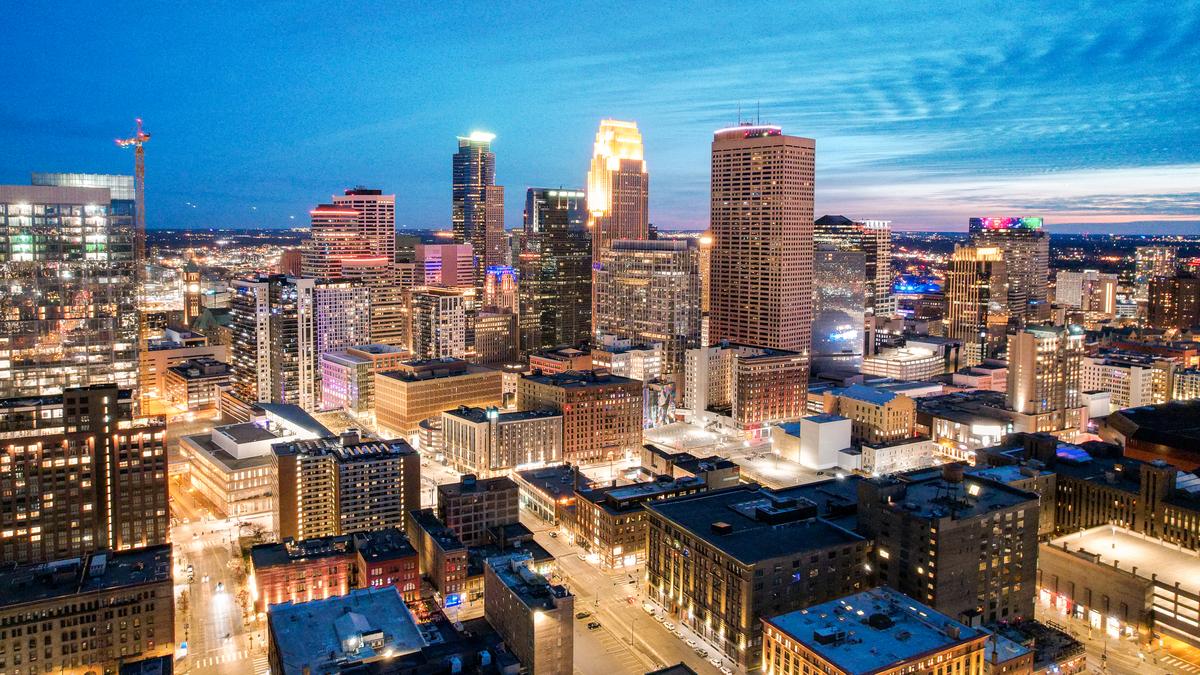
Best areas: Nicollet, North Loop, Mill District, Warehouse District, and the riverfront
Best for: Architecture, sports, theater, restaurants, and urban walking
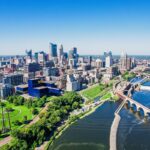
Downtown Minneapolis brings together theaters, stadiums, music venues, public art, restaurants, historic warehouses, skyscrapers, and the Mississippi River. Use our guide to things to do in Minneapolis to choose a district rather than wandering without a route.
The enclosed Skyway system connects approximately 80 blocks, but it is privately operated across many buildings. Hours vary, navigation is not always intuitive, and numerous Skyway businesses keep weekday schedules. Carry a current map and do not assume every bridge remains open at night or on weekends.
Staying downtown can simplify theater, sports, and riverfront plans. Compare these hotels in Minneapolis before choosing between downtown, North Loop, and other neighborhoods.
48. Walk or paddle around Bde Maka Ska

Location: Minneapolis Chain of Lakes
Best for: Walking, cycling, paddling, beaches, and skyline sunsets
Bde Maka Ska is one of my favorite places in Minneapolis. Its pedestrian loop is about 3.1 miles, with a separate bike route, three beaches, seasonal canoe and paddleboard rentals, sailing, and connections to the rest of the Chain of Lakes.
The east and northeast sides provide good skyline views, especially near sunset. Swim only at designated beaches, follow posted water-quality notices, and remember that parking fills quickly on hot evenings. Our guide to Minneapolis beaches compares the city’s other swimming options.
49. Stay in Grand Marais

Location: Lake Superior, northeastern Minnesota
Best for: North Shore trips, the Gunflint Trail, art, paddling, and an overnight base
Grand Marais is my preferred base at the northern end of a North Shore trip. The harbor, Artists’ Point, galleries, independent shops, North House Folk School, and access to the Gunflint Trail give the small city more substance than a scenic lunch stop.
Java Moose remains a personal favorite for coffee before a drive or hike. In summer and fall, book lodging early; in winter, expect shorter business hours and serious driving conditions. Grand Marais also works as a logical turning point in a longer Minnesota road trip.
50. Take a day trip around Lake Pepin

Region: Red Wing, Frontenac, Lake City, Wabasha, and the Wisconsin shore
Best for: Scenic driving, boating, hiking, and river towns
Lake Pepin is a naturally occurring, 21-mile-long widening of the Mississippi River formed where sediment from Wisconsin’s Chippewa River backs up the main channel. Water skiing began here in 1922, and the lake remains an important boating and fishing area.
A practical loop includes Red Wing, Frontenac State Park, Lake City, Wabasha, and one or two Wisconsin river towns. Bluff overlooks and small-town stops make the route worthwhile even when you are not getting onto the water.
51. Combine art and history in Northfield

Location: Cannon River, south of the Twin Cities
Best for: Historic downtown, colleges, galleries, theater, and a relaxed day trip
Northfield combines the Northfield Arts Guild, college museums and performances, public art, independent businesses, riverside spaces, and a preserved downtown. Carleton and St. Olaf give the city a larger cultural calendar than its size might suggest.
The 1876 failed raid by the James-Younger Gang remains central to local history, particularly at the historical museum and annual Defeat of Jesse James Days. Our guide to things to do in Northfield separates the year-round sites from event-specific activities.
52. Take a Duluth vacation

Location: Western Lake Superior
Best for: Harbor views, museums, parks, food, and the start of a North Shore trip
Duluth is one of the places Minnesotans return to repeatedly, myself included. Canal Park, the working Aerial Lift Bridge, Lakewalk, Park Point, Glensheen, Great Lakes Aquarium, Lincoln Park, and the city’s hills give it enough range for several days.
Ship watching is free and uniquely Duluth. The bridge rises for commercial vessels using the canal, and the official schedule helps you time a visit. The nearby Lake Superior Maritime Visitor Center explains the port, shipping, and Great Lakes navigation.
Use our complete guide to things to do in Duluth and compare the best hotels in Duluth. For a close view of bridge traffic, South Pier Inn has a particularly useful location.
53. Walk across the Mississippi headwaters at Itasca

Location: North of Park Rapids
Best for: Mississippi River history, hiking, paddling, and family trips
Itasca is Minnesota’s oldest state park and protects the recognized headwaters of the Mississippi River. Visitors can walk across the shallow outlet from Lake Itasca, then explore lakes, old-growth pine, trails, interpretive displays, and the park’s scenic drive.
The headwaters area is busy during summer afternoons, so an early visit is calmer. Use the Jacob V. Brower Visitor Center to understand the watershed and the complicated history of how the river’s source was identified and promoted.
Park Rapids is a useful base with food, shops, and family attractions. Our guide covers more things to do in Park Rapids beyond the state park.
54. Visit the SPAM Museum

Location: 101 Third Avenue Northeast, Austin, MN 55912
Best for: Quirky museums, food history, families, and road-trip breaks
The free SPAM Museum explains the product’s development, Hormel Foods, wartime distribution, international popularity, advertising, manufacturing, and its long afterlife in popular culture. Interactive exhibits prevent the subject from feeling like one extended advertisement.
The gift shop is part of the attraction. On my last visit, I bought playing cards printed with a different SPAM recipe on each card. I still did not cook any of them because I do not actually like SPAM, which has never stopped me from enjoying the museum.
Admission is free, but check current museum hours and weather closures before driving to Austin.
55. Build a food crawl along Lake Street

Area: Lake Street across south Minneapolis
Best for: Mexican, East African, Middle Eastern, Asian, Scandinavian, and independent local food
Lake Street runs east-west across south Minneapolis through several distinct commercial districts and communities. Midtown Global Market, Mercado Central, East Lake businesses, restaurants, bakeries, grocery stores, cafes, murals, and small shops make it better suited to several focused stops than one continuous walk.
Start with the current recommendations in our guide to Lake Street restaurants. Confirm opening days before setting out, order one or two items per stop, and share when possible. Midtown Global Market provides a simple starting point with parking and many vendors in one building.
How I would approach a first Minnesota visit
Do not try to check off all 55 entries. For a first trip, spend two days in Minneapolis and Saint Paul, one day in Duluth, and at least one additional day farther up the North Shore. Add the Boundary Waters, Voyageurs, or the Great River Road only when you have enough time to make that region a central part of the trip.
A Minnesota itinerary improves when it has room for weather changes, lake time, trail conditions, and unplanned stops. The state’s strongest experiences are rarely the ones that reward the tightest schedule.
The state splits neatly in two for trip planning. For the bluff country, the caves and the Mississippi river towns, see things to do in southern Minnesota.
Frequently asked questions
What is the best time to visit Minnesota?
June through September is the easiest period for lake days, road trips, and most outdoor attractions. Late September into early October is often best for fall color, while January and February suit skiing and other winter activities. Exact conditions vary by region and year.
What should I see on my first trip to Minnesota?
Start with Minneapolis and Saint Paul, then add Duluth and the North Shore if you have four or five days. This route covers major museums, lakes, local food, Lake Superior scenery, waterfalls, and historic landmarks without excessive driving.
What are some unique things to do in Minnesota?
Distinctive Minnesota experiences include paddling in the Boundary Waters, touring Paisley Park, attending the Minnesota State Fair, visiting the SPAM Museum, walking through Franconia Sculpture Park, eating a Jucy Lucy, and crossing the Mississippi headwaters at Itasca State Park.
What are the best free things to do in Minnesota?
Strong free options include the Minneapolis Institute of Art, Minneapolis Sculpture Garden, Como Park Zoo and Conservatory, Minnesota State Capitol, SPAM Museum, Lake Harriet, Bde Maka Ska, Minnehaha Falls, and many city parks. Parking, donations, special exhibitions, or activity rentals may still cost money.
How many days do you need in Minnesota?
Three days is enough for a focused Twin Cities visit. Plan four or five days to include Duluth and part of the North Shore. A week or more gives you time to add Grand Marais, Voyageurs, the Boundary Waters, lake country, or the Great River Road without spending most of the trip driving.