MenuClose

A place worth knowing

Václavské náměstí

Historical landmarks · Square in Czech RepublicUpdated

  • Google rating4.6/5 (55,000 reviews)
  • Typical visit30-90 minutes (longer with museum visits or during Christmas Market)
  • EntranceFree
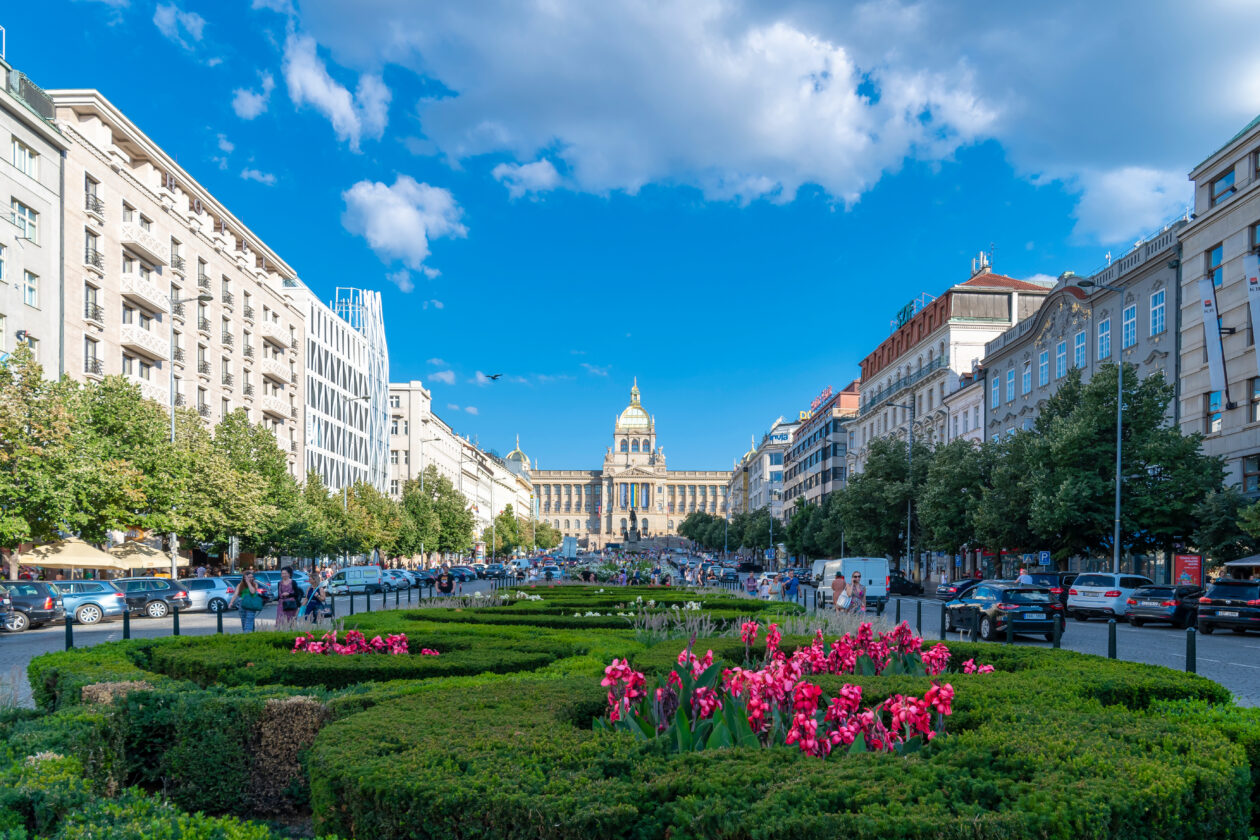
Pragues Wenceslas Square view: National Museum, ornate façades, pink blossoms, trees, urban life in Bohemia.
  • Today (Tuesday)Open 24 hours
  • Typical visit30-90 minutes (longer with museum visits or during Christmas Market)
  • EntranceFree
  • Google rating4.6/5 55,000 reviews
  • WebsiteOfficial site ↗
Opening hours all week
Monday
Open 24 hours
Tuesday
Open 24 hours
Wednesday
Open 24 hours
Thursday
Open 24 hours
Friday
Open 24 hours
Saturday
Open 24 hours
Sunday
Open 24 hours
Quiet times
"{}"
Busy times
"{}"
Accessibility
"{"parking": "Limited street parking, underground garages available", "assistance": "Tourist Information Centre provides accessibility information", "facilities": "Accessible restrooms in shopping centers and National Museum", "transportation": "Multiple metro lines (A, B) at Muzeum and Můstek stations", "wheelchair_access": "Fully accessible pedestrian area with smooth paving"}"
The short answer

Why it matters

Prague's grand 750-meter boulevard lined with Art Nouveau facades, anchored by the National Museum and the equestrian statue of Saint Wenceslas.

Prague’s main commercial and cultural boulevard, a 700-meter plaza lined with shops, restaurants, and historic buildings, dominated by the National Museum and St. Wenceslas statue.

Cultural Context

The heart of modern Prague social and commercial life, serving as the primary gathering place for celebrations, demonstrations, and daily urban activities for over a century.

Historical Context

Originally a horse market, the square became central to Czech national identity, witnessing major events including the 1968 Prague Spring protests, the 1989 Velvet Revolution demonstrations, and the end of communist rule.

Plan your visit with our complete Czech Republic travel guide featuring top sights, itineraries, and local travel tips.
Context

Story and significance

About

Václavské náměstí (Wenceslas Square) is a 750-metre-long boulevard in Prague’s New Town, less a square than a grand promenade flanked by Art Nouveau, Gothic, and Brutalist buildings. Named after the patron saint of Bohemia, whose equestrian statue commands the top of the square in front of the National Museum, it has been the site of countless historic gatherings — from the 1918 declaration of Czechoslovak independence to the 1989 Velvet Revolution that ended communist rule.

Historical significance

Václavské náměstí holds profound historical significance as a witness to key moments that have shaped both Prague and the Czech nation. Its role in the 1918 proclamation of Czechoslovak independence marked the square as a site of national liberation and democratic aspiration. Later, during the Prague Spring of 1968 and the subsequent Soviet invasion, the square was again a focal point for political expression and resistance. The 1989 Velvet Revolution saw Václavské náměstí transform into a massive gathering place for peaceful protests that ultimately led to the end of communist rule in Czechoslovakia, underscoring its importance as a symbol of freedom and civic engagement. The square’s historical legacy is also marked by tragic events, such as Jan Palach’s self-immolation in 1969, which became a catalyst for renewed opposition to authoritarianism. These events have cemented Václavské náměstí’s status as a national symbol of resilience, democracy, and the enduring quest for human rights. Its historical significance continues to resonate today, making it a vital site for understanding Czech history and identity.

Historical context

Originally a horse market, the square became central to Czech national identity, witnessing major events including the 1968 Prague Spring protests, the 1989 Velvet Revolution demonstrations, and the end of communist rule.

Cultural context

The heart of modern Prague social and commercial life, serving as the primary gathering place for celebrations, demonstrations, and daily urban activities for over a century.

Architecture

Václavské náměstí is an architectural showcase that blends a variety of styles reflecting Prague’s evolution from the 19th century to the modern era. The square features elegant examples of Art Nouveau, Neo-Renaissance, and Functionalist architecture, with buildings designed by notable Czech architects such as Osvald Polívka and Jan Kotěra. The National Museum, located at the top of the square, is a prime example of Neo-Renaissance style, with its grand façade, intricate stonework, and dome symbolizing Czech cultural pride. Surrounding buildings display ornate decorative elements, including sculptural reliefs, stained glass, and wrought iron details. The square’s layout, stretching approximately 750 meters in length and 60 meters in width, was designed for both pedestrian use and public gatherings, emphasizing openness and accessibility. Modern interventions have introduced contemporary materials and lighting, enhancing the square’s functionality while respecting its historic character. Václavské náměstí’s architectural diversity offers visitors a visual journey through Prague’s urban development and artistic movements spanning over a century.

Local significance

For Prague’s residents, Václavské náměstí functions as more than just a physical space; it is an essential part of the city’s social and civic life. Locals regard the square as a traditional meeting place where community, politics, and culture converge. It is a common venue for public demonstrations, celebrations, and daily social interactions, reflecting its role as a democratic space accessible to all citizens. Many locals frequent the square’s cafes, shops, and cultural venues, integrating it into their routines and lifestyles. Václavské náměstí is also a site of collective memory, where stories of resistance, hope, and national identity are continually shared and renewed. The square’s significance is reinforced by its presence in Czech literature, music, and film, which often portray it as a symbol of Prague’s spirit. Through its ongoing use as a place for public discourse and cultural expression, Václavské náměstí maintains a vital connection to the people who live in and shape the city, making it an indispensable part of Prague’s urban fabric.

Experience

Make the most of it

Local tips
  • Museum cafes often serve quality local food
  • Members get free entry and skip lines
  • Visit during weekdays for fewer crowds
  • Check for combo tickets with nearby attractions
  • Gift shops have unique souvenirs
  • Special exhibitions require separate tickets
  • Late night openings often have unique events
Hidden gems nearby
  • Staff recommendations for must-see pieces
  • Rooftop terraces often have great city views
  • Free guided tours at specific times
  • Hidden courtyards perfect for photos
  • Lesser-known wings have remarkable collections
  • Archive rooms sometimes open for special tours
  • Secret passages between galleries
Special features
  • One of Václavské náměstí’s most distinctive features is the equestrian statue of Saint Wenceslas, created by sculptor Josef Václav Myslbek in the early 20th century. This iconic monument stands prominently near the National Museum and serves as a powerful symbol of Czech statehood and resilience. The square is also notable for its wide, tree-lined boulevard that accommodates both pedestrians and vehicular traffic, creating a dynamic urban space. Various cafes, shops, and theaters line the square, contributing to its lively atmosphere. Another special element is the presence of numerous plaques and memorials commemorating significant historical events and figures, including those related to the Velvet Revolution and Jan Palach. Seasonal markets and cultural events often incorporate temporary installations and decorations, adding to the square’s unique character throughout the year. Additionally, the square’s proximity to important landmarks, such as the Lucerna Palace and the Czech National Bank, enhances its role as a central node in Prague’s cityscape. These features collectively make Václavské náměstí a multifaceted public space rich in symbolism and activity.
Editorial scores

How we rate it

Authenticity8/10
Accessibility score9/10
Family-friendly score8/10
Off-the-beaten-path3/10

Editorial scores on a 10-point scale, judged against places of the same kind.

Bookable experiences

Worth booking ahead in Czech Republic

Hand-picked from the operators our guides already send readers to. Prices and availability are live on the partner site.

We earn a commission if you book through these links, at no extra cost to you. It is how we keep the guides free and independent.

Updated Data: Editorial research · Google Places ratings · Verified coordinates