The best things to do in North Rhine-Westphalia include visiting Cologne Cathedral, exploring the Zollverein industrial complex, spending a full day at Phantasialand, and hiking the marked trails of Eifel National Park. For a first trip, prioritize Cologne Cathedral, Zollverein, one outdoor destination, and either Phantasialand or Düsseldorf.
North Rhine-Westphalia, usually shortened to NRW, is a federal state rather than a single city. Its attractions are spread across Cologne, Düsseldorf, the Ruhr Area, the Eifel, and smaller destinations such as Brühl, Königswinter, Bottrop, and Bielefeld. See our guide to more places to visit in western Germany for ideas beyond the state.
This guide compares 15 attractions by location, trip style, approximate visit time, and admission requirements. The time estimates are practical planning ranges rather than official limits.
Visitor information was checked on August 5, 2026. Prices, schedules, ticket rules, and access restrictions can change, so check the linked official page before traveling.
North Rhine-Westphalia trip essentials
- Best first-time combination: Cologne Cathedral, Zollverein, Düsseldorf, and either Phantasialand or Eifel National Park.
- Best base for southern NRW: Cologne, particularly for the cathedral, Chocolate Museum, Brühl, and Königswinter.
- Best base for Düsseldorf and the Ruhr: Düsseldorf or Essen.
- Strong free attractions: Zollverein’s outdoor grounds, Landschaftspark Duisburg-Nord, Wildpark Düsseldorf, Heimat-Tierpark Olderdissen, Hofgarten, Nordpark, and the Stadterhebungsmonument.
- Best car-free options: Cologne Cathedral, the Chocolate Museum, Zollverein, Düsseldorf’s central sights, Westfalenpark, and Movie Park Germany.
- Most important safety rule: Remain on marked trails in Eifel National Park, particularly around the former Dreiborn military training area.
North Rhine-Westphalia attractions at a glance
| Attraction | Location | Best for | Typical time | Cost and access |
|---|---|---|---|---|
| Cologne Cathedral | Cologne | Gothic architecture and history | 1.5–3 hours | Tourist interior, tower, and treasury ticketed separately |
| Zollverein | Essen | Industrial heritage and design | 3–5 hours | Outdoor site free; museums and tours paid |
| Phantasialand | Brühl | Rides and family days | Full day | Dated online ticket required |
| Eifel National Park | Southwest NRW | Hiking and nature | Half or full day | Choose a marked route and trailhead before departure |
| Schloss Drachenburg | Königswinter | Architecture, interiors, and Rhine views | 2–3 hours | Paid admission; some areas have steps |
| Landschaftspark Duisburg-Nord | Duisburg | Industrial photography and evening lights | 2–4 hours | Grounds and viewing platform free |
| Cologne Chocolate Museum | Cologne | Families and rainy days | 1–2 hours | Paid; advance time slot recommended |
| Westfalenpark | Dortmund | Gardens, tower views, and families | 2–4 hours | Paid; event prices may differ |
| Grugapark | Essen | Botanical displays and relaxed walks | 2–4 hours | Paid; open until nightfall |
| Movie Park Germany | Bottrop | Movie-themed rides and shows | Full day | Seasonal; dated prices vary |
| Wildpark Düsseldorf | Düsseldorf | Native animals and budget family trips | 1.5–3 hours | Free; dogs prohibited |
| Heimat-Tierpark Olderdissen | Bielefeld | Regional wildlife and families | 1.5–3 hours | Free year-round |
| Hofgarten | Düsseldorf | A central walk between city sights | 30–90 minutes | Free public park |
| Nordpark | Düsseldorf | Formal gardens and fountains | 1–2 hours | Free park; Aquazoo ticketed separately |
| Stadterhebungsmonument | Düsseldorf | Old Town history | 10–20 minutes | Free outdoor monument |
How to plan a North Rhine-Westphalia trip
How many days to spend in NRW
- Two days: Choose one city cluster and one major day trip. Cologne plus Phantasialand, or Düsseldorf plus Zollverein, works better than trying to cross the state repeatedly.
- Four days: Allocate one day to Cologne, one to Düsseldorf, one to Ruhr industrial heritage, and one to either the Eifel, Phantasialand, or Schloss Drachenburg.
- Six or seven days: Add Dortmund, Grugapark, Bielefeld, or a second nature day without compressing each stop into a short visit.
Choose a base that matches your itinerary
Cologne is the most convenient base for Cologne Cathedral, the Chocolate Museum, Phantasialand, and Schloss Drachenburg. It also has direct intercity and regional rail connections.
Düsseldorf works well for the city’s parks and Old Town, with practical access to Duisburg and other western Ruhr destinations. Compare where to stay in Düsseldorf before choosing a district.
Essen is a useful alternative for travelers concentrating on Zollverein, Grugapark, Dortmund, Bottrop, and the central Ruhr. For a trip of four days or longer, splitting the stay between Cologne and Düsseldorf or Essen reduces repeated journeys.
Getting around by train and local transit
Cologne, Düsseldorf, Essen, Dortmund, Duisburg, and Bottrop have extensive rail, tram, and bus networks. Most urban attractions in this guide can be reached without a car. Rural trailheads in the Eifel require closer timetable planning, particularly on weekends and public holidays.
In 2026, the Deutschland-Ticket costs €63 per month and covers participating local and regional public transport across Germany. It is a personal subscription and does not cover ICE, IC, or EC trains. Check cancellation deadlines before buying it for a short visit.
A practical four-day route
- Day 1: Cologne. Visit Cologne Cathedral in the morning, walk through the Old Town, and reserve the Chocolate Museum for the afternoon.
- Day 2: Choose Brühl or Königswinter. Give Phantasialand a complete day, or combine Schloss Drachenburg with Drachenfels and the Rhine.
- Day 3: Ruhr industrial heritage. Begin at Zollverein. Continue to Landschaftspark Duisburg-Nord in the late afternoon if you have enough time and want to see the evening lights.
- Day 4: Düsseldorf or the Eifel. Choose Düsseldorf for a city day with Hofgarten, the Old Town, and Nordpark. Choose the Eifel when hiking is the higher priority.
Seasonal planning
Gardens are strongest from spring through early autumn, while theme parks use seasonal calendars and may close selected rides in winter. Landschaftspark’s full light program normally runs on Fridays, Saturdays, Sundays, and public holidays. Winter visitors can also combine city sightseeing with Germany’s seasonal markets; compare the German Christmas markets worth planning around.
15 best things to do in North Rhine-Westphalia
1. Cologne Cathedral
Address: Domkloster 4, 50667 Köln, Germany
Best for: Architecture, religious history, city views
Allow: 1.5–3 hours
Cost and access: Tourist interior, tower, and treasury tickets are sold separately
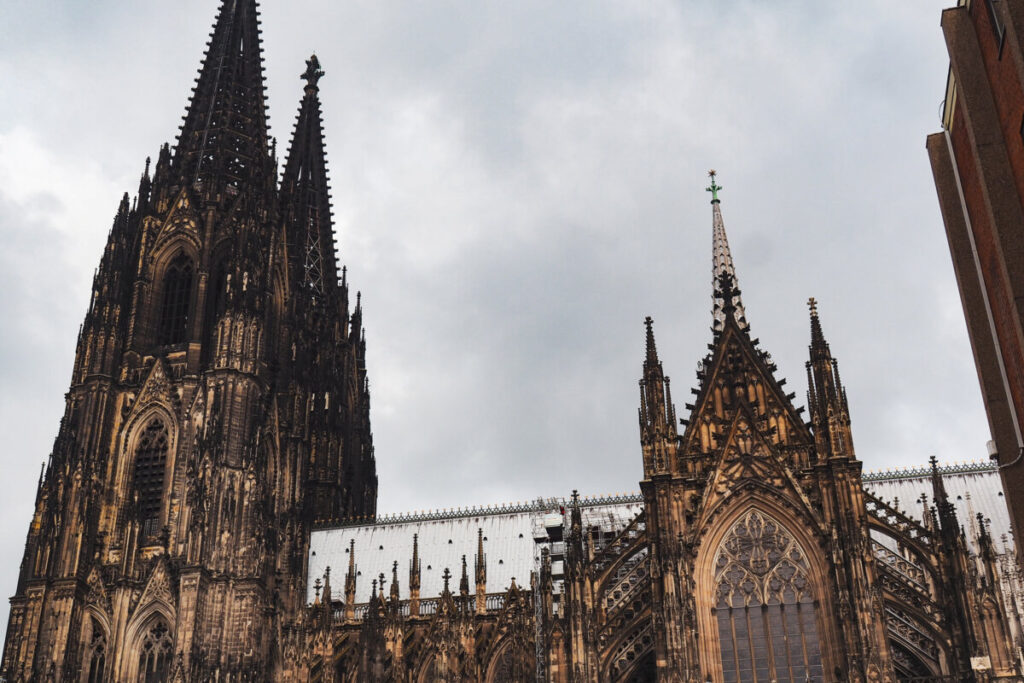
Cologne Cathedral is NRW’s defining architectural landmark and a practical starting point for a first visit. Construction began in 1248 and was completed in 1880. UNESCO added the cathedral to the World Heritage List in 1996. Its tower façade reaches 157.22 meters.
Since July 1, 2026, sightseeing inside the cathedral requires a ticket. General tourist hours are Monday through Saturday from 10:00 a.m. to 5:45 p.m. and Sundays and church holidays from 1:30 p.m. to 4:30 p.m. Services, construction work, and religious events can change access at short notice.

Visitors entering for prayer, quiet reflection, or lighting a candle may use the north-transept entrance free of charge outside service times. The South Tower climb has 533 steps and no lift. Allow another 30 to 45 minutes for the climb, and skip it if steep spiral stairs or tight spaces present a problem.
Review the cathedral’s official visitor and ticket information before arriving. Our guide to the best things to do in Cologne can help fill the rest of the day.
2. Zollverein UNESCO World Heritage Site

Address: Gelsenkirchener Str. 181, 45309 Essen, Germany
Best for: Industrial history, architecture, design, photography
Allow: 3–5 hours
Cost and access: Outdoor grounds free; museums and guided tours paid
Zollverein preserves the infrastructure of a major coal mine and coking complex while using its buildings for museums, exhibitions, restaurants, events, and public space. UNESCO inscribed the site in 2001. Its geometric red-steel structures and Bauhaus-influenced architecture make it useful even for travelers who do not usually seek out industrial history.
The outdoor World Heritage grounds are open to the public at all times. Start at the Ruhr Visitor Center in the former Coal Washery, which is generally open daily from 10:00 a.m. to 6:00 p.m. The Ruhr Museum uses the same daily hours and currently charges €10 for its permanent exhibition, with reduced and combination tickets available.
A self-guided visit covers the main architecture, but a guided Monument Path tour provides far more context on mining and coke production. The core outdoor area includes a paved circular route, although old rails, gradients, and uneven surfaces remain in places.
Use the official Zollverein planning page to compare current museum tickets, English-language tours, temporary exhibitions, and transit information.
3. Phantasialand

Address: Berggeiststraße 31–41, 50321 Brühl, Germany
Best for: Roller coasters, themed environments, families
Allow: Full day
Cost and access: Limited dated tickets sold online only
Phantasialand is the strongest choice in this guide for travelers who want a complete theme-park day. Its themed areas combine major rides, indoor attractions, live entertainment, restaurants, and family facilities within a relatively compact site.
For the 2026 main season through November 13, the park opens at 9:00 a.m., attractions begin operating at 10:00 a.m., and the park remains open until at least 6:00 p.m. From July 18 through August 29, 2026, the scheduled closing time is 7:00 p.m. Wintertraum follows a separate calendar.
Tickets are limited by date and are sold exclusively online. There is no on-site box office. Buying ahead is especially important for school holidays and weekends, although same-day online tickets may remain available until 2:00 p.m.
Arrive before the rides begin operating, identify the attractions with the longest queues, and avoid pairing Phantasialand with another major destination. Check the official Phantasialand calendar and current ticket availability before traveling.
4. Eifel National Park

Location: Multiple trailheads in southwest North Rhine-Westphalia
Best for: Forest walks, reservoirs, wildlife habitat, longer hikes
Allow: Half or full day
Cost and access: No single entrance gate; tours and visitor-center experiences may carry separate charges
Eifel National Park provides the strongest nature break from NRW’s urban corridor. Its marked network includes about 240 kilometers of walking trails through woodland, open plateaus, and reservoir landscapes. Route lengths vary, so select a trailhead before leaving Cologne, Bonn, or another base.
Stay on the marked paths, keep dogs on a lead, do not light fires, and carry out everything you bring. These rules protect both wildlife and visitors.
Do not leave approved trails on the Dreiborn Plateau. This land was used as the Vogelsang military training area until 2005, and the national park warns of a fatal risk from unexploded ordnance off the marked routes.
Weather can also create falling-branch and trail hazards. Check alerts, daylight, return transport, and the difficulty of your selected route before setting out. The national park’s official walking information includes marked circuits and current rules.
5. Schloss Drachenburg
Address: Drachenfelsstraße 118, 53639 Königswinter, Germany
Best for: Nineteenth-century architecture, furnished rooms, gardens, Rhine views
Allow: 2–3 hours
Cost and access: Paid admission; some terraces and towers require stairs
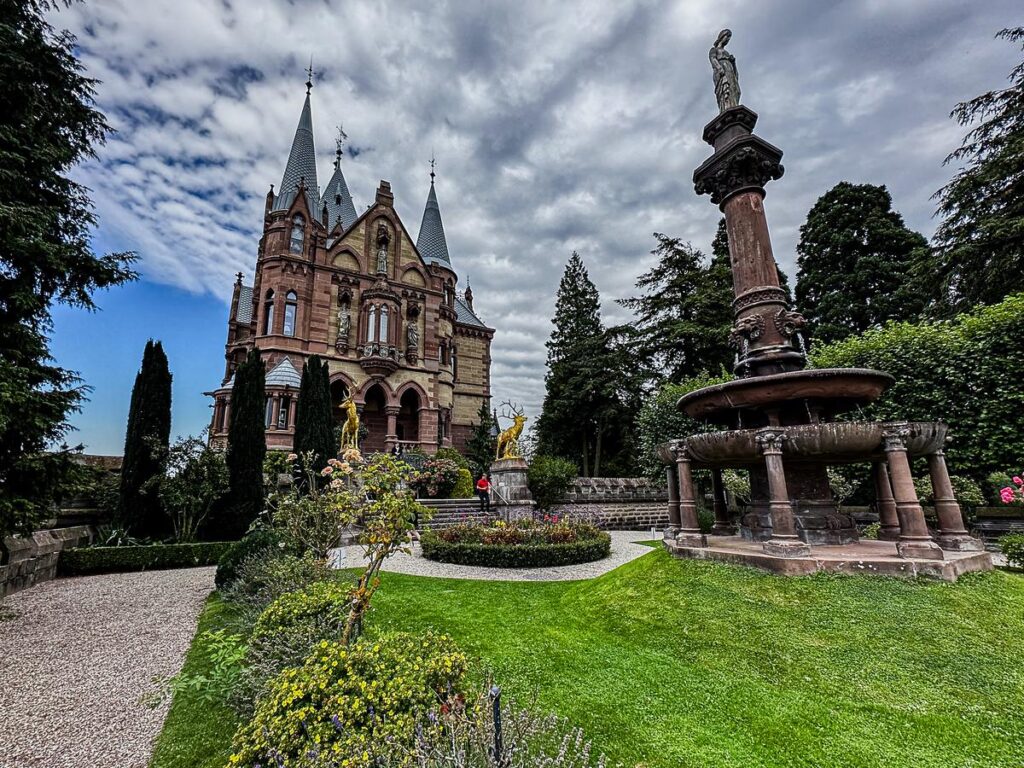
Schloss Drachenburg looks medieval from a distance, but it was built between 1882 and 1884. The villa combines historicist architecture, decorated interiors, formal grounds, and a hillside position below the Drachenfels summit.
At the time of verification, adult admission is €10, reduced admission is €8, and a family ticket is €25. The main season from March 1 through November 1 runs daily from 11:00 a.m. to 6:00 p.m.; winter hours are shorter and December 24 and 31 are closed.
Parts of the park, terraces, and north tower are accessible only by steps. The exhibition rooms can be reached step-free with staff assistance, so visitors with limited mobility should speak to the ticket office on arrival.
Combine the villa with the Drachenfels railway or a walk toward the summit when weather and mobility allow. Read the full Schloss Drachenburg visitor guide, compare other castles in Germany, and check the official hours and prices.
6. Landschaftspark Duisburg-Nord

Address: Emscherstraße 71, 47137 Duisburg, Germany
Best for: Industrial architecture, photography, evening visits
Allow: 2–4 hours
Cost and access: Grounds and Blast Furnace 5 viewing platform free
Landschaftspark Duisburg-Nord turns a former ironworks into a public landscape of furnaces, pipes, rail lines, gardens, walking paths, and recreational facilities. Rather than removing the industrial structures, the design incorporates them into the park.
Visitors can climb 252 steel steps to the Blast Furnace 5 viewing platform. Access is free and generally available around the clock, but the furnace closes during snow, ice, storms, or other unsafe conditions.
The evening light installation changes the atmosphere of the site. Its full program normally runs on Fridays, Saturdays, Sundays, and public holidays after dusk. A reduced program illuminates the chimney stacks on other evenings, and operating times shift with sunset and season.
Wear shoes with reliable grip and allow more time than the map initially suggests. Continue planning with our guide to things to do in Duisburg and the park’s official visitor information.
7. Cologne Chocolate Museum

Address: Am Schokoladenmuseum 1a, 50678 Köln, Germany
Best for: Families, food history, rainy-day sightseeing
Allow: 1–2 hours for the main exhibition
Cost and access: Paid admission; advance time slot recommended
The Cologne Chocolate Museum follows cocoa from cultivation and trade through industrial production and finished chocolate. Working demonstrations, exhibits, tastings, and the Rhine-facing setting make it one of the easiest family attractions to combine with central Cologne.
The museum’s standard 2026 hours are 10:00 a.m. to 6:00 p.m., with several Monday closures in November and separate holiday arrangements. Last admission is one hour before closing, and production ends approximately 30 minutes before the museum closes.
The museum recommends allowing one to two hours for the exhibition. Courses, guided tours, tastings, the café, and the shop can extend the visit. Buying a timed ticket online reduces the risk of waiting at the box office.
Compare other museums in Cologne, and check the Chocolate Museum’s official visitor page for current tickets and closures.
8. Westfalenpark

Address: An der Buschmühle 3, 44139 Dortmund, Germany
Best for: Gardens, playgrounds, picnics, city views
Allow: 2–4 hours
Cost and access: Paid admission; special events may use separate pricing
Westfalenpark is a large landscaped park south of central Dortmund. Its main draws include the Deutsches Rosarium, broad lawns, children’s areas, seasonal plantings, public art, and the Florianturm observation tower.
For the 2026 summer season from March 1 through October 31, standard individual park admission is €4.50. A park-and-tower combination ticket is €7, while a tower-only ticket is €4. Entrance and tower hours vary, and weather can affect tower operations.
The park works best when you allow time to walk rather than trying to reach every feature. Check the calendar before attending concerts or major festivals because admission and access arrangements can differ on event days.
See more things to do in Dortmund and confirm the park’s current gate hours and ticket prices.
9. Grugapark Essen

Address: Virchowstraße 167, 45147 Essen, Germany
Best for: Botanical collections, family outings, low-key afternoons
Allow: 2–4 hours
Cost and access: Adult day ticket currently €5
Grugapark provides a botanical counterpoint to Essen’s industrial heritage. Its grounds include specialty gardens, mature trees, planted displays, lawns, play areas, and seasonal attractions.
The park is open throughout the year from 9:00 a.m. until nightfall. Adult admission is currently €5, children ages six through 15 pay €1.50, and children under six enter free with an adult.
Dogs are permitted on a short lead. Cycling is not allowed inside the park, and bicycle stands are available near the entrances. Some activities and facilities follow seasonal schedules, so the full experience varies through the year.
Review the official Grugapark visitor information for current operating details and ticket categories.
10. Movie Park Germany

Address: Warner-Allee 1, 46244 Bottrop-Kirchhellen, Germany
Best for: Movie-themed rides, shows, and family entertainment
Allow: Full day
Cost and access: Seasonal opening; dated tickets from €34.90
Movie Park Germany combines roller coasters, family rides, live shows, and themed settings inspired by film and television. It is a better fit for travelers seeking a conventional amusement-park day than for those prioritizing museums or historic architecture.
The park follows a seasonal operating calendar rather than opening every day of the year. Dated tickets currently begin at €34.90, with actual prices depending on the chosen date, ticket type, and availability.
Public transport is practical: Feldhausen station is approximately 400 meters from the park. Regional trains connect the station with Essen, Oberhausen, Dortmund, and other Ruhr cities, while bus line 267 stops near the main entrance.
Check the official opening calendar and current ticket prices before selecting a travel date.
11. Wildpark Düsseldorf in Grafenberg Forest

Address: Rennbahnstraße 60, 40629 Düsseldorf, Germany
Best for: Native animals, forest walks, budget family trips
Allow: 1.5–3 hours
Cost and access: Free; open daily with seasonal hours
Wildpark Düsseldorf keeps animals associated with the region in a wooded setting rather than arranging the visit like a conventional city zoo. Depending on the day and season, visitors may see wild boar, wildcats, mouflon, raccoons, deer, and other species.
Admission is free. Hours change through the year: summer access generally runs from 9:00 a.m. to 7:00 p.m., while the shortest winter schedule closes at 4:00 p.m.
Dogs are not allowed, including dogs kept on a lead. The forest environment also means animals may choose to remain out of view, so this is best approached as a combined wildlife and woodland visit rather than a checklist of guaranteed sightings.
Check the city’s official Wildpark information and combine the park with other things to do in Düsseldorf.
12. Heimat-Tierpark Olderdissen

Address: Dornberger Str. 149A, 33619 Bielefeld, Germany
Best for: Regional wildlife, children, free outings
Allow: 1.5–3 hours
Cost and access: Free, 365 days a year
Heimat-Tierpark Olderdissen occupies approximately 16 hectares beside the Teutoburg Forest. Around 450 animals live at the park, with a strong emphasis on species native to the region or historically associated with it.
Admission is free throughout the year. During the summer schedule, the main entrance opens at 6:00 a.m. and remains open until as late as 10:00 p.m. Facilities such as the information point and shop use shorter daytime hours.
Dogs are allowed on a short lead. Bicycles, scooters, e-scooters, skateboards, and similar vehicles are prohibited inside, correcting older advice that suggested cycling on the park’s internal paths.
Check the City of Bielefeld’s official Tierpark page for current entrance, shop, parking, and event information.
13. Hofgarten Düsseldorf
Location: Heinrich-Heine-Allee, Hofgartenstraße, and surrounding central Düsseldorf streets
Best for: A short central walk, lawns, ponds, public art
Allow: 30–90 minutes
Cost and access: Free public park
Hofgarten is a central park between Düsseldorf’s opera house, theater district, Goethe Museum, Königsallee area, and northern Old Town. Its oldest section was laid out in 1769 by Nicolas de Pigage and expanded in 1804 by Maximilian Weyhe.
The 27.73-hectare park combines formal avenues, English-style landscaped areas, lawns, ponds, mature trees, monuments, and three playgrounds. Its location makes it more useful as part of a city route than as a separate half-day excursion.
Walk through Hofgarten between the city center and the museums of Düsseldorf. The official city park page provides public-transport and facility information.
14. Nordpark Düsseldorf

Address: Kaiserswerther Str. 365, 40474 Düsseldorf, Germany
Best for: Formal gardens, fountains, families, a calm city break
Allow: 1–2 hours
Cost and access: Free park; Aquazoo admission separate
Nordpark covers 36 hectares near the Rhine, Messe Düsseldorf, and Aquazoo Löbbecke Museum. Its defining feature is a 170-meter water basin with fountains along the main axis.
The park also contains formal flower beds, lawns, sculptures, play areas, and a Japanese Garden. Düsseldorf’s Japanese community and local Japanese companies presented the garden to the city in 1975.
Allow extra time if you plan to enter Aquazoo, which is a separately ticketed attraction. The Nordpark/Aquazoo public-transport stop provides direct access to the area.
Check the city’s official Nordpark page and compare more of the best parks in Germany.
15. Stadterhebungsmonument

Location: Corner of Josef-Wimmer-Gasse and Müller-Schlösser-Gasse, Düsseldorf Old Town
Best for: Local history and a short Old Town stop
Allow: 10–20 minutes
Cost and access: Free outdoor monument
Düsseldorf sculptor Bert Gerresheim created the Stadterhebungsmonument in 1988. The dense bronze relief depicts scenes connected with the Battle of Worringen, Düsseldorf’s city deed, and the elevation of St. Lambertus into a collegiate church.
The monument rewards close inspection because the historical scenes and figures overlap across its surface. It is a compact stop rather than a destination requiring a separate journey.
Pair it with St. Lambertus, the Rhine promenade, and one of the traditional Düsseldorf breweries. Visit Düsseldorf’s official monument page for additional historical context.
Frequently asked questions
What is North Rhine-Westphalia best known for?
North Rhine-Westphalia is best known for Cologne Cathedral, the cities of Cologne and Düsseldorf, the Ruhr Area’s industrial heritage, major theme parks, and outdoor areas such as Eifel National Park. The state also contains six UNESCO World Heritage properties.
How many days do you need in North Rhine-Westphalia?
Four days gives most travelers enough time for Cologne, Düsseldorf, one Ruhr industrial-heritage day, and either Phantasialand, Schloss Drachenburg, or the Eifel. Six or seven days allows a slower route with Dortmund, Essen’s parks, or Bielefeld.
What is the best city to use as a base in North Rhine-Westphalia?
Cologne is the best base for the cathedral, Chocolate Museum, Phantasialand, and Königswinter. Düsseldorf or Essen is more convenient for the Ruhr Area and Düsseldorf attractions. A split stay works best for trips of four days or longer.
Can you travel around North Rhine-Westphalia without a car?
Yes. Major cities, Zollverein, Movie Park Germany, and many urban attractions are accessible by train, tram, or bus. Eifel National Park is also reachable by public transport, but trailheads and return schedules require more advance planning.
Is Cologne Cathedral free to visit?
Tourist visits to Cologne Cathedral’s interior are no longer free. Since July 1, 2026, sightseeing requires a ticket. Access for worship, prayer, or lighting a candle remains free through the north-transept entrance outside service times. The South Tower and Treasury use separate tickets.
Choose your priorities before adding stops
A strong first trip does not require visiting all 15 places. Start with Cologne Cathedral and Zollverein, then choose attractions that fit your interests: Phantasialand for rides, Eifel National Park for hiking, Schloss Drachenburg for architecture and Rhine scenery, or Düsseldorf for a city-focused day.
Group attractions by location and leave enough time for the experience that brought you to each city. That approach produces a better trip than crossing the state to collect short visits.