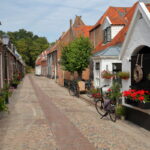
Maastricht, the Netherlands’ oldest city and southernmost provincial capital, offers a distinctive blend of Dutch practicality and Southern European joie de vivre, set along the Maas (Meuse) River where the Netherlands meets Belgium and Germany. Founded as a Roman settlement in 50 BCE, this compact city preserves layers of history spanning two millennia, from Roman ruins and medieval churches to Renaissance townhouses and Baroque squares. The city’s strategic significance is evident in its impressive fortifications, including the extensive underground tunnel network of the Casemates and Fort Sint Pieter. Maastricht’s atmospheric center revolves around two main squares: Vrijthof, dominated by the red tower of Sint-Janskerk and adjacent Sint-Servaasbasiliek housing the tomb of the Netherlands’ first bishop; and Markt, where the 17th-century town hall overlooks bustling markets. The city’s distinctive character stems partly from its location in Limburg province, where the local dialect, burgundian lifestyle, and hillier terrain contrast with stereotypical images of the Netherlands. Maastricht achieved international prominence as the birthplace of the European Union through the 1992 Maastricht Treaty, and its international outlook continues through Maastricht University, which attracts students from across Europe. Beyond historical and intellectual attractions, the city offers exceptional culinary experiences from Michelin-starred restaurants to bustling café terraces, sophisticated shopping in repurposed historical buildings like the Dominicanen bookstore inside a 13th-century Gothic church, and creative arts scenes centered around repurposed industrial spaces in the Wyck and Sphinxkwartier neighborhoods. With its multilingual population, rich cultural programming, beautiful natural surroundings along the river valley, and position at the crossroads of three countries, Maastricht embodies a uniquely cosmopolitan yet intimate European experience.
The destination guide
Maastricht

City in Netherlands, EuropeUpdated
- Overall6/10
- Best forBudget travelers, Families
- CurrencyEUR
Maastricht is the Dutch city that feels French — a hilltop fortress, the oldest church in the Netherlands, and a bookshop inside a Dominican church that’s been converted perfectly.
Travel guides for Maastricht
Things to do (1)
Destination stories (1)
More guides featuring Maastricht (10)
At a glance
- Dutch
- River Maas city
- Limestone hills
- Historic center
- Dutch-Belgian border
How Maastricht scores
Character
Editorial scores on a 10-point scale, weighed against destinations of the same kind.
Travel safety snapshot
SafePlace indicators use their source 100-point scale; higher is more favourable. Planning context, not a live travel advisory — check official government guidance before you go.
When to go
Best months to visit: April, May, June, July, August, September, October and December.
- January: 1.3 to 6 degrees Celsius, 91.2 millimetres of rain, best-time score 2 out of 5.
- February: 2.3 to 8.5 degrees Celsius, 73.8 millimetres of rain, best-time score 2 out of 5.
- March: 3.3 to 11.3 degrees Celsius, 73.8 millimetres of rain, best-time score 3 out of 5.
- April: 5.3 to 14.5 degrees Celsius, 49.9 millimetres of rain, best-time score 5 out of 5.
- May: 9.2 to 18.7 degrees Celsius, 70.1 millimetres of rain, best-time score 5 out of 5.
- June: 13.6 to 22.7 degrees Celsius, 83.5 millimetres of rain, best-time score 5 out of 5.
- July: 14.5 to 23.5 degrees Celsius, 71 millimetres of rain, best-time score 4 out of 5.
- August: 14.8 to 23.7 degrees Celsius, 70.6 millimetres of rain, best-time score 4 out of 5.
- September: 12 to 20.4 degrees Celsius, 71.5 millimetres of rain, best-time score 5 out of 5.
- October: 9.5 to 15.7 degrees Celsius, 76.6 millimetres of rain, best-time score 5 out of 5.
- November: 4.8 to 10 degrees Celsius, 71.9 millimetres of rain, best-time score 3 out of 5.
- December: 3.1 to 7.4 degrees Celsius, 82.8 millimetres of rain, best-time score 4 out of 5.
Month-by-month conditions and packing advice
- January
- Cold, some rain January in Maastricht: cold, damp winter weather makes this a more indoor-focused trip. Crowds: January in Maastricht is workable with normal seasonal planning; build in layers, weather checks, and a mix of indoor and outdoor activities. Pack: Pack warm layers, a coat, and comfortable shoes for cold mornings and evenings. Add a rain jacket or compact umbrella.
- February
- Cold, some rain February in Maastricht: cold, damp winter weather makes this a more indoor-focused trip. Crowds: February in Maastricht is workable with normal seasonal planning; build in layers, weather checks, and a mix of indoor and outdoor activities. Pack: Pack warm layers, a coat, and comfortable shoes for cold mornings and evenings. Add a rain jacket or compact umbrella.
- March
- Cool to mild, some rain March in Maastricht: variable spring or late-fall weather narrows outdoor plans. Crowds: March in Maastricht is workable with normal seasonal planning; build in layers, weather checks, and a mix of indoor and outdoor activities. Pack: Pack layered clothing and comfortable walking shoes. Add a rain jacket or compact umbrella.
- April
- Cool to mild, occasional rain April in Maastricht: old-town walks, terraces, caves, cycling, food, and cross-border day trips balance mild weather and atmosphere. Crowds: April in Maastricht is workable with normal seasonal planning; build in layers, weather checks, and a mix of indoor and outdoor activities. Pack: Pack layered clothing and comfortable walking shoes.
- May
- Cool to mild, some rain May in Maastricht: old-town walks, terraces, caves, cycling, food, and cross-border day trips balance mild weather and atmosphere. Crowds: May in Maastricht is workable with normal seasonal planning; build in layers, weather checks, and a mix of indoor and outdoor activities. Pack: Pack layered clothing and comfortable walking shoes. Add a rain jacket or compact umbrella.
- June
- Mild to warm, some rain June in Maastricht: old-town walks, terraces, caves, cycling, food, and cross-border day trips balance mild weather and atmosphere. Crowds: June in Maastricht is workable with normal seasonal planning; build in layers, weather checks, and a mix of indoor and outdoor activities. Pack: Pack layered clothing and comfortable walking shoes. Add a rain jacket or compact umbrella.
- July
- Mild to warm, some rain July in Maastricht: summer or festive winter timing can work well with crowd or cold-weather planning. Crowds: July in Maastricht is workable with normal seasonal planning; build in layers, weather checks, and a mix of indoor and outdoor activities. Pack: Pack layered clothing and comfortable walking shoes. Add a rain jacket or compact umbrella.
- August
- Mild to warm, some rain August in Maastricht: summer or festive winter timing can work well with crowd or cold-weather planning. Crowds: August in Maastricht is workable with normal seasonal planning; build in layers, weather checks, and a mix of indoor and outdoor activities. Pack: Pack layered clothing and comfortable walking shoes. Add a rain jacket or compact umbrella.
- September
- Mild to warm, some rain September in Maastricht: old-town walks, terraces, caves, cycling, food, and cross-border day trips balance mild weather and atmosphere. Crowds: September in Maastricht is workable with normal seasonal planning; build in layers, weather checks, and a mix of indoor and outdoor activities. Pack: Pack layered clothing and comfortable walking shoes. Add a rain jacket or compact umbrella.
- October
- Cool to mild, some rain October in Maastricht: old-town walks, terraces, caves, cycling, food, and cross-border day trips balance mild weather and atmosphere. Crowds: October in Maastricht is workable with normal seasonal planning; build in layers, weather checks, and a mix of indoor and outdoor activities. Pack: Pack layered clothing and comfortable walking shoes. Add a rain jacket or compact umbrella.
- November
- Cool to mild, some rain November in Maastricht: variable spring or late-fall weather narrows outdoor plans. Crowds: November in Maastricht is workable with normal seasonal planning; build in layers, weather checks, and a mix of indoor and outdoor activities. Pack: Pack layered clothing and comfortable walking shoes. Add a rain jacket or compact umbrella.
- December
- Cold, some rain December in Maastricht: summer or festive winter timing can work well with crowd or cold-weather planning. Crowds: December in Maastricht is workable with normal seasonal planning; build in layers, weather checks, and a mix of indoor and outdoor activities. Pack: Pack layered clothing and comfortable walking shoes. Add a rain jacket or compact umbrella.
Know before you go
About
Maastricht defies every stereotype about the Netherlands. There are no windmills, no flat polders, no clogs — instead, this southernmost Dutch city rolls across gentle hills along the River Maas, its limestone buildings and Burgundian café culture feeling closer to Brussels or Liège than to Amsterdam. Two thousand years of continuous habitation have layered Roman ruins beneath medieval churches beneath a 13th-century city gate beneath a Dominican church converted into what many call the world’s most beautiful bookshop. The university city’s 16,000 students keep the atmosphere young and energized, while its position at the crossroads of three countries injects Belgian warmth and German precision into the Dutch pragmatism.
Best time to visit
April through October. Maastricht’s Carnival (February) is one of the Netherlands’ largest celebrations.
Season by season
Spring (April-May): 10-18°C, mild and pleasant with blooming parks. Fewer crowds, ideal for city walks and terrace season beginning.
Summer (June-August): 17-25°C, warm and lively with outdoor festivals including André Rieu’s hometown concerts on the Vrijthof. Peak tourist season.
Autumn (September-October): 10-18°C, warm September fading to crisp autumn colors. September is often considered the best month — warm weather without summer crowds.
Winter (November-February): 1-7°C, cold and sometimes damp. Magical Christmas markets on the Vrijthof. Quieter, more local atmosphere.
Crowds
Maastricht is busiest in May–September and during cultural events and European school holidays with crowded Vrijthof and historic center; quietest November–February (excluding Christmas Market weekends) when tourism is subdued.
Getting there and around
Getting there
Maastricht Aachen Airport (MST) handles limited flights, but most visitors fly into Amsterdam Schiphol (AMS, 2.5 hours by train), Brussels Airport (BRU, 1.5 hours by train), or Düsseldorf Airport (DUS, 2 hours by train). Maastricht’s central train station has direct IC connections to Amsterdam (2 hours 20 minutes), Utrecht, and Eindhoven, plus international trains to Liège (30 minutes) and Brussels. The city’s position in the tri-border region of the Netherlands, Belgium, and Germany makes it easily accessible by car from all three countries — Aachen is 35 km east, Liège is 30 km south.
Getting around
Maastricht’s compact historic center is best explored on foot — most major attractions sit within a 20-minute walk of each other. Cycling is popular and practical, with rental bikes available near the central station. The Arriva bus network connects the center with surrounding neighborhoods and nearby towns. An OV-chipkaart (Dutch transit card) works on all buses and trains. Taxis are available at stands or by phone but are rarely necessary within the center. For day trips to Aachen, Liège, or Valkenburg, regional trains depart regularly from Maastricht Centraal.
Top experiences in Maastricht
Vrijthof Square & Basilica of Saint Servatius
Maastricht’s grand main square anchors civic life beneath the twin towers of the Basilica of Saint Servatius, one of the oldest churches in the Netherlands. The basilica’s treasury holds medieval reliquaries and religious artifacts spanning 1,600 years of Christian worship. Adjacent St. Janskerk’s red tower offers the best panoramic views in the city. The square itself serves as the stage for Carnival celebrations, André Rieu concerts, and the atmospheric Christmas market that fills it with wooden chalets and glow each December.
Boekhandel Dominicanen
A 13th-century Dominican church that underwent one of Europe’s most celebrated adaptive reuse projects, reopening as a bookshop that regularly appears on lists of the world’s most beautiful. The Gothic interior retains its soaring vaulted ceilings and original frescoes while three stories of bookshelves rise along the nave. A café in the former choir area serves drinks beneath the painted ceiling. The combination of sacred architecture and contemporary retail creates an atmosphere that transcends both categories.
Sint Pietersberg Caves
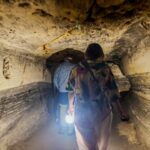
Beneath the Sint Pietersberg hill lies a labyrinth of over 20,000 passages carved over centuries as limestone was quarried for the city’s buildings. The caves served as hiding places during sieges and wars — during World War II, Rembrandt’s ‘The Night Watch’ was stored here to protect it from Nazi bombing. Guided tours navigate through narrow corridors lined with centuries of visitors’ charcoal signatures and carved artworks, revealing an underground world that runs parallel to the city’s surface history.
Bonnefanten Museum
Housed in a distinctive building designed by Italian architect Aldo Rossi — its rocket-shaped tower is visible across the river — the Bonnefanten Museum holds an impressive collection spanning medieval sculpture to contemporary art. The Old Masters collection focuses on early Italian and South Netherlandish paintings, while the contemporary wing features rotating exhibitions of international modern art. The museum’s riverside location in the Céramique district offers views back across to Maastricht’s historic center.
Helpoort & City Fortifications
The Helpoort, built in 1229, holds the distinction of being the oldest surviving city gate in the Netherlands. It anchors a preserved section of Maastricht’s medieval fortifications that include towers, wall segments, and underground passages. Walking the fortification route traces the city’s defensive perimeter, passing remnants of the multiple sieges Maastricht endured — including the famous 1673 siege by Louis XIV’s forces, during which D’Artagnan (the real musketeer who inspired Dumas’ character) was killed.
Editor-curated picks carried over from our original guide. Where a full place guide exists, the card links to it.



Worth booking ahead in Maastricht
Hand-picked from the operators our guides already send readers to. Prices and availability are live on the partner site.
Timed ticketGetYourGuide
Van Gogh Museum timed-entry ticket (opens GetYourGuide in a new tab)
The museum sells timed slots online only, so book the hour first and plan the rest of the day around it.
Day tripViator
Giethoorn day trip with village boat tour (opens Viator in a new tab)
Coach out, guided boat through the village, and back the same day without working out the train-and-bus connection.
Where to stayBooking.com
Stays in Maastricht (opens Booking.com in a new tab)
Live rates and availability for Maastricht on Booking.com; filter by neighbourhood once you know where your days start.
We earn a commission if you book through these links, at no extra cost to you. It is how we keep the guides free and independent.
Where to stay
Hotel Monastère Maastricht
Tongerseplein 7, 6211 CL Maastricht, Netherlands
Housed in a former 16th-century monastery, this luxury hotel preserves the building’s historic character — vaulted ceilings, stone corridors, cloistered garden — while adding contemporary comforts. The transformation from religious retreat to boutique hotel maintains the contemplative atmosphere in unexpected ways: breakfast is served in the former chapel, and original architectural details remain visible throughout. The central location, steps from the Vrijthof, combines heritage charm with walkable access to Maastricht’s main attractions.
Kruisherenhotel Maastricht
Kruisherengang 19-23, 6211 NW Maastricht, Netherlands
This five-star hotel occupies a 15th-century Gothic monastery and church, making it one of the most architecturally dramatic hotel conversions in the Netherlands. The former nave of the Kruisherenkerk serves as the lobby, with soaring stone arches and stained glass overhead. Rooms blend the monastery’s original stone walls with contemporary designer furnishings. The restaurant, set in the historic refectory, serves modern European cuisine. Located at the eastern edge of the old town, a short walk from both the train station and the Vrijthof.
Boutique Hotel Sint Jacob
Sint Jacobstraat 6, 6211 LP Maastricht, Netherlands
This intimate boutique property occupies a converted townhouse in the medieval heart of Maastricht, combining the personal attention of a B&B with boutique hotel standards. The individually decorated rooms reflect the building’s heritage with exposed beams and period details alongside modern amenities. The location on a quiet street near the Basilica of Our Lady places guests within easy walking distance of all major sights while maintaining a peaceful residential atmosphere.
Editor-curated stays carried over from our original guide. Where we have reviewed the hotel, the card links to the review.
Tips from the field
Highlights
- Vrijthof Square – Grand cobblestone square flanked by the Basilica of Saint Servatius and St. Janskerk
- Boekhandel Dominicanen – 13th-century Dominican church converted into a stunning bookshop
- Sint Pietersberg Caves – Underground labyrinth of 20,000+ passages with WWII hiding history
- Helpoort – The oldest surviving city gate in the Netherlands, dating to 1229
- Bonnefanten Museum – Contemporary and Old Masters art in a striking Aldo Rossi building
- River Maas Waterfront – Scenic promenades, historic bridges, and boat tours
- Burgundian Food Culture – Vlaai pastries, Belgian-influenced brasseries, and André Rieu's hometown charm
Best activities
- Start at the Vrijthof, Maastricht's grand main square. Climb the red tower of St. Janskerk for panoramic views over the city's rooftops and the Limburg hills beyond. Cross the square to the Basilica of Saint Servatius, one of the oldest churches in the Netherlands, housing a treasury of medieval religious artifacts.
- Walk south to the Boekhandel Dominicanen, a 13th-century Dominican church that now operates as a bookshop — the soaring Gothic interior lined with bookshelves creates one of Europe's most photographed retail spaces. Continue to the Helpoort, the oldest city gate in the Netherlands, then descend into the Sint Pietersberg Caves for a guided tour through the underground tunnel network where locals hid art treasures and sheltered during World War II.
- Spend an afternoon at the Bonnefanten Museum for its mix of medieval sculpture and contemporary art, then stroll along the River Maas as evening settles. Cross the Saint Servatius Bridge — one of the oldest bridges in the Netherlands — for views back across the waterfront. End the day as the locals do: with a slice of Limburgse vlaai (the region's signature fruit tart) at a Burgundian café on the Onze Lieve Vrouweplein.
Local experiences
- Join the locals for Carnival celebrations in February — Maastricht transforms completely. Browse the weekly market on the Markt square on Wednesday and Friday mornings. Take a boat trip on the River Maas at sunset. Sample vlaai from a traditional bakery in the Wyck district. Watch the Vrijthof come alive during the André Rieu summer concerts.
Practical tips
- Currency: Euro (€). Cards accepted almost everywhere; some market stalls prefer cash
- Language: Dutch, but English widely spoken. Many locals also speak German and French
- OV-chipkaart: Get one for buses and trains if staying multiple days
- Vlaai: Try Limburgse vlaai (fruit tart) — it's the regional specialty
- Caves: Book Sint Pietersberg cave tours in advance; they sell out in summer
- Shopping: Stokstraat is the upscale shopping street; Wyck district for boutiques
- Three-Country Point: Day trip to the Drielandenpunt where Netherlands, Belgium, and Germany meet
Photography tips
- Golden Hour: The Vrijthof faces west — evening light illuminates the basilica facades beautifully. River Maas: Shoot from the east bank for golden-hour reflections of the old town skyline. Boekhandel Dominicanen: Wide-angle lens essential for the church-bookshop interior. Sint Pietersberg: Tripod needed for underground cave photography. Street Photography: The narrow alleys between Vrijthof and Onze Lieve Vrouweplein offer atmospheric compositions.
Timing
- Peak Season (June-August, Carnival period): Highest prices and busiest attractions. Book accommodations well ahead for André Rieu concerts.
- Shoulder Season (April-May, September-October): Best value with excellent weather. September particularly recommended.
- Off Season (November-March): Lowest prices, quietest atmosphere. Christmas markets bring a festive surge in December.
- Key Events: Carnival (February/March), André Rieu Vrijthof concerts (July), TEFAF Art Fair (March), Preuvenemint food festival (August).
Keeping it authentic
- Maastricht maintains an authenticity that larger Dutch tourist cities struggle with. The Vrijthof functions as a genuine community gathering space year-round, not just a tourist attraction. The university keeps the population young and the cultural calendar full. The Burgundian café culture — extended meals, good wine, unhurried conversation — is genuinely how locals live, not a performance for visitors. The city's southern Dutch identity, distinct dialect, and tri-border cultural influences create something that feels genuinely different from the rest of the Netherlands.
Culture, customs and safety
Cultural heritage
Maastricht’s history stretches back to the Roman settlement of Trajectum ad Mosam, a strategic river crossing established around 50 BC. The city became an early center of Christianity in the Low Countries — Saint Servatius established his bishopric here in the 4th century, making Maastricht one of the oldest pilgrimage sites in Northern Europe. Through the medieval period, the city prospered as a fortified trading center, its strategic position attracting sieges by Spanish, French, and various German forces. The 1992 Maastricht Treaty, which created the European Union, was signed here, adding a modern chapter to the city’s history as a crossroads of European civilization.
Local customs & etiquette
Maastricht’s Burgundian culture means life moves at a more relaxed pace than in northern Dutch cities — rushing through meals or social interactions is uncommon. Greet shopkeepers when entering and leaving stores. Tipping is appreciated but not obligatory; rounding up or adding 5-10% is standard. The local dialect (Maastrichts/Limburgs) is distinct from standard Dutch, though everyone speaks standard Dutch and most speak English. Carnival (February/March) is Maastricht’s biggest celebration — the city essentially shuts down for three days of costumes, music, and festivities.
Safety notes
Maastricht is one of the safest cities in the Netherlands, with a low crime rate and a welcoming atmosphere. Standard urban awareness applies: keep valuables secure in crowded areas, especially during festival periods and at the train station. Bicycle theft is the most commonly reported crime — always lock bikes with a quality lock. The student population contributes to a lively nightlife scene, and most areas feel safe to walk at night. Emergency number: 112.