Goblin Valley State Park is worth visiting for its walkable hoodoo fields, short desert hikes, dark skies, and easy fit into a Utah road trip. Allow at least two hours to see the overlook, walk through Valley 1, and stop at the Three Sisters. A half day gives you time for Valley 2 or a marked trail; a full day works best if you add a longer hike or nearby Little Wild Horse Canyon.
The park sits on the southeastern edge of the San Rafael Swell, between Green River and Hanksville. Its main attraction is the nearly three-square-mile Valley of Goblins, where visitors may explore among Entrada Sandstone hoodoos without following a fixed trail. This guide covers the current entrance fee, official trail distances, camping and yurt details, seasonal risks, drone rules, and practical itineraries.
Last verified July 15, 2026. Fees, fire restrictions, capacity alerts, and drone rules can change. Check the official Goblin Valley State Park page before driving to the park.
Goblin Valley State Park quick facts
| Planning detail | Current information |
|---|---|
| Address | 18630 Goblin Valley Road, Green River, UT 84525 |
| Park hours | 6 a.m. to 10 p.m. daily |
| Day-use fee | $20 per private vehicle; check the official fee page for other vehicle and walk-in rates |
| Time needed | Two hours for the main valley; half a day for a trail; a full day for deeper exploration or a nearby slot canyon |
| Best seasons | Spring and fall for milder hiking weather; early morning and late afternoon help with heat and crowds |
| Camping | 24 campsites, two yurts, one group site, restrooms, and showers; no electrical hookups |
| Pets | Allowed under control on a leash no longer than 6 feet; owners must clean up promptly |
| Drones | A $15 in-person permit is required year-round, with additional seasonal and location restrictions |
- Arrive early or later in the afternoon on spring weekends and holidays, when the entrance road and parking areas can fill.
- Download the park map before arrival. Valley 1 is easy to navigate, but the remote valleys and washes are unmarked.
- Carry more water than you expect to drink. Utah State Parks recommends at least one gallon per person per day in summer.
- Do not climb, carve, or move the hoodoos. The formations and biological soil crust are fragile.

Why Goblin Valley looks the way it does
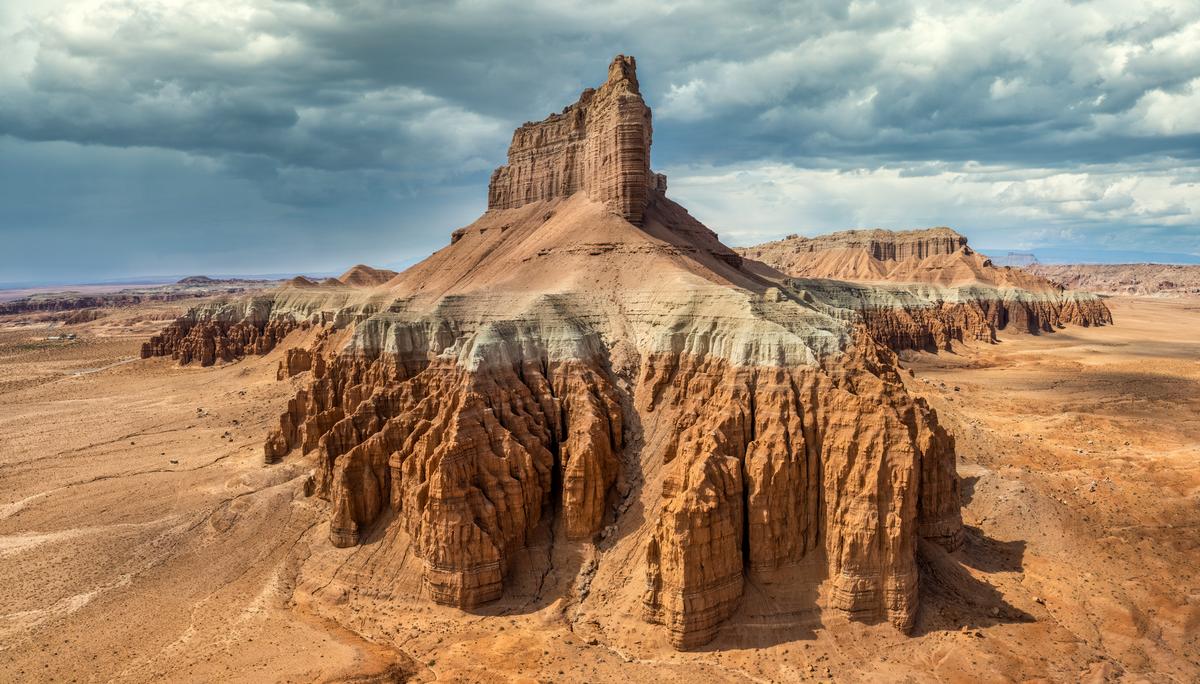
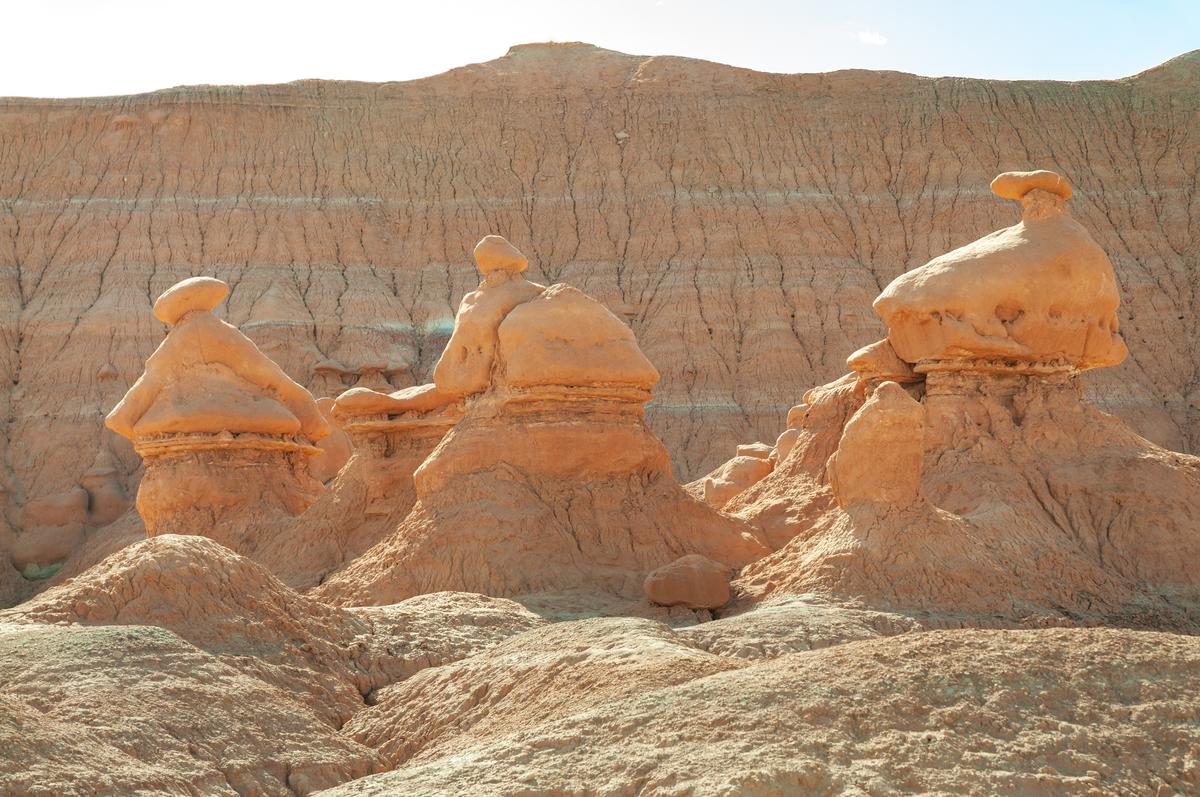
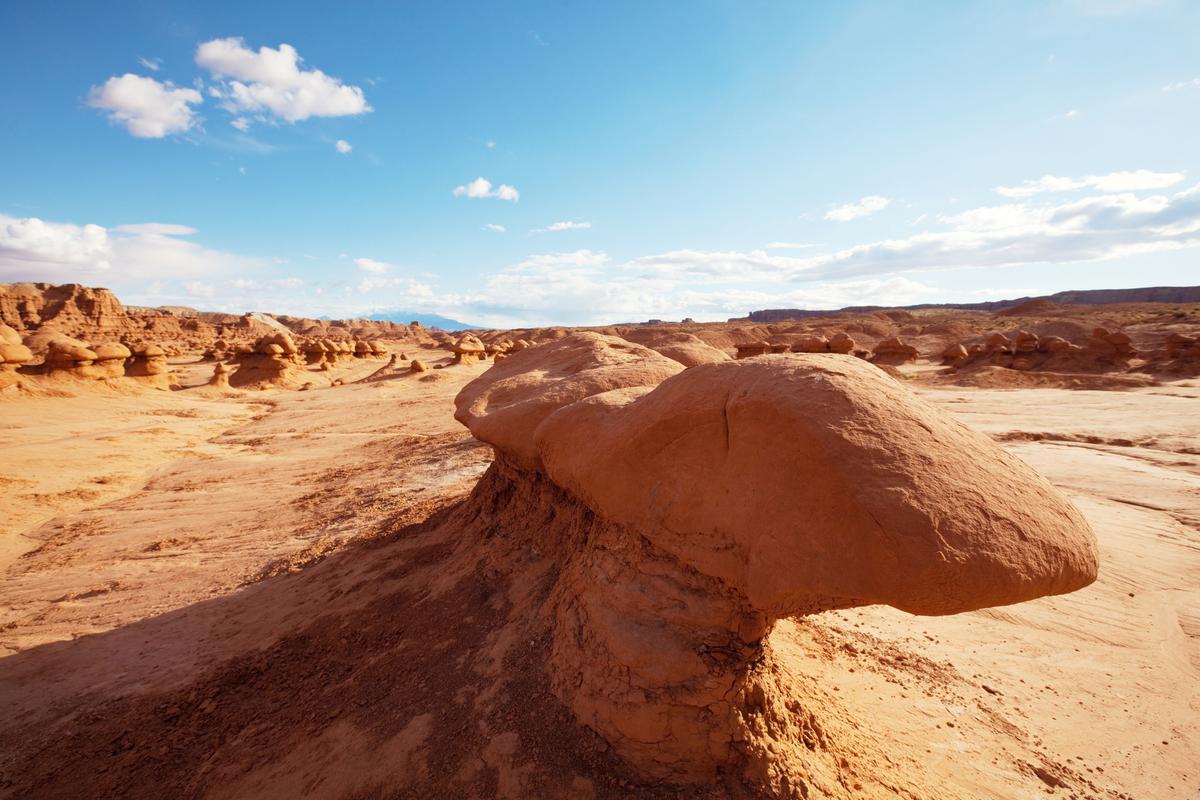
According to the official park history and geology page, Goblin Valley lies at the southern end of the San Rafael Swell. The rock layers were uplifted roughly 40 to 70 million years ago, exposing Entrada Sandstone that had been deposited about 170 million years ago near an ancient sea. Softer siltstone and shale erode faster than harder sandstone. Cracks, wind, water, and a process called spheroidal weathering gradually round the remaining rock into the caps, knobs, and mushroom-like forms called hoodoos.
Arthur Chaffin reached the area in the late 1920s while searching for a route between Green River and Caineville. He returned in 1949 to explore and photograph what he called Mushroom Valley. Utah acquired the land and designated Goblin Valley a state park in 1964. The formations later became a recognizable film location; Visit Utah identifies the park as the foundation for the Rock Monster sequence in Galaxy Quest.

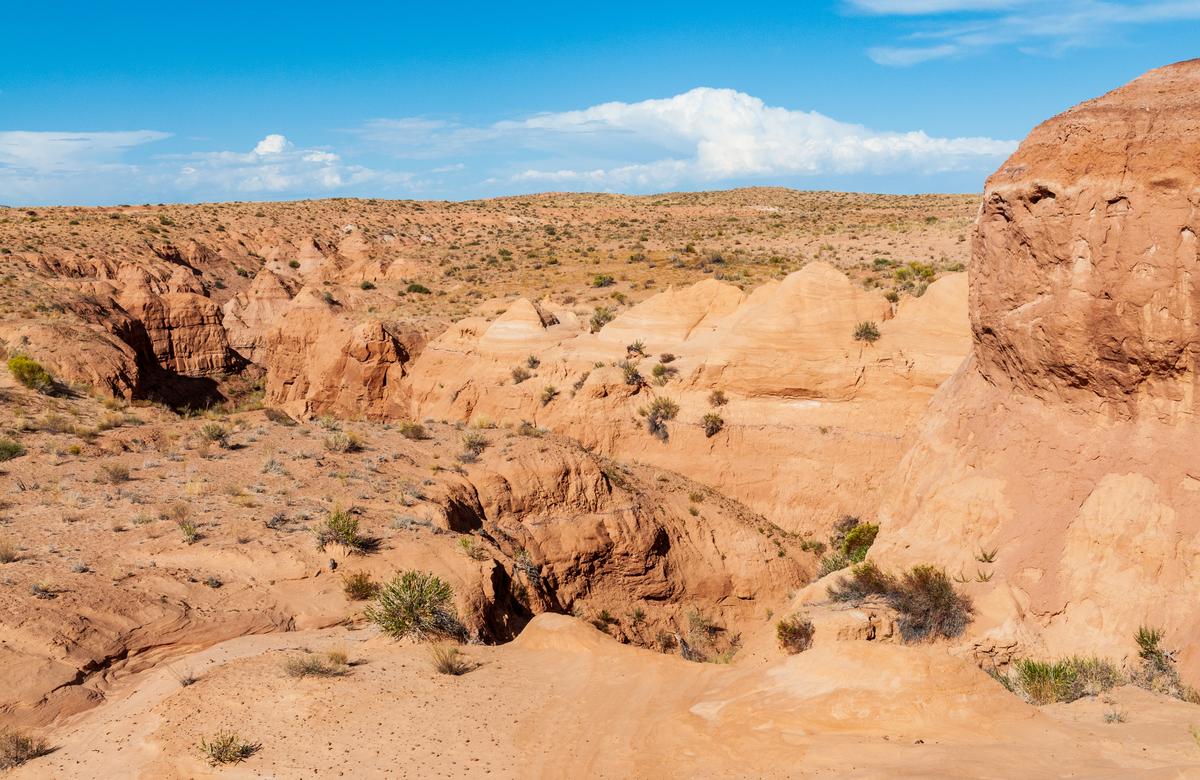
Goblin Valley photo gallery




Best things to do in Goblin Valley State Park
Explore Valley 1 and Valley 2
The main reason to visit is the freedom to walk among the goblins. Stairs from the observation point descend into Valley 1, the flattest and most convenient section. There is no prescribed route, so you can spend 30 minutes near the stairs or wander farther south toward denser formations in Valley 2.
Families and short-visit travelers should prioritize Valley 1. Valley 2 gives photographers more separation from the parking area and taller formations around branching drainages. Valley 3 is more than a mile south of the observation point, has no trail markers, and requires desert navigation. Utah State Parks describes Valley 3 and Goblin Square as all-day backcountry excursions, not casual extensions of the main walk.

Stop at the Three Sisters
The Three Sisters is the park’s most recognizable roadside formation. You can see it while driving toward the observation point, then follow the marked 250-yard path for a closer look. This is the best short add-on for travelers with limited time or anyone who does not want a longer hike.
Hike to Goblin’s Lair
Goblin’s Lair is a three-mile out-and-back hike when measured from the observation area. The official trail page rates it strenuous and notes scree, boulders, and moderate scrambling near the hiker entrance. The destination is a large chamber formed where rockfall sealed part of a slot canyon.
Walking into the chamber does not require a rappel permit, but rappelling the 89-foot canyoneering route requires technical equipment, skills, and a $4 per-person backcountry permit issued at the visitor center. Permit time slots can sell out on busy days. Review the official Goblin’s Lair canyoneering rules before planning a rappel.
Play the 20-hole disc golf course
Goblin Valley’s redesigned disc golf course has 20 holes. The first 11 cross relatively level terrain; holes 12 through 20 continue through canyons and sand dunes with steeper climbs and descents. Playing the full course covers about two miles. The course is free, and discs are available to rent for $1. Check the official course page and scorecard before starting.
Ride the Wild Horse mountain bike trails
The Wild Horse Mountain Biking Trail System contains five beginner-to-intermediate loops west of the main hoodoo field. Bikes must remain on designated routes, and riders should avoid the trails when the surface is muddy. Class 1 pedal-assist e-bikes are allowed; Class 2 and Class 3 e-bikes are not. Review the current mountain biking rules before your ride.

Stay for the dark sky
Goblin Valley is an International Dark Sky Park. On clear, moonless nights, the hoodoos create a strong foreground for Milky Way photography and constellation viewing. Use a red headlamp, keep light levels low, and do not shine bright spotlights on the rock walls. The park also schedules ranger-led night programs during parts of the year. See the official dark-sky page and our guide to the best places for stargazing.

Bring a picnic and check ranger programs
Picnic shelters near the observation area make it practical to eat before or after exploring the valley. Pack food before leaving Hanksville or Green River because services near the park are limited. Check the official events calendar for geology talks, guided walks, telescope programs, and other ranger activities.

Best Goblin Valley hiking trails

| Trail or area | Distance | Official difficulty | Best for | Important note |
|---|---|---|---|---|
| Valley 1 | Flexible | Unrated free-roaming area | First visits, families, short stops | No fixed route; remain aware of the stairs and parking area |
| Three Sisters | 250 yards one way | Easy | A quick landmark stop | Visible from the observation-point road |
| Carmel Canyon Loop | 1.5 miles round trip | Moderate | Views and short narrows | Includes minor rock scrambling |
| Goblin’s Lair | 1.5 miles one way | Strenuous | Experienced hikers seeking a chamber hike | Scree, boulders, and scrambling; rappel rules are separate |
| Entrada Canyon | 1.5 miles one way | Moderate | Campers walking to the observation point | Point-to-point unless you arrange a return or retrace the route |
| Curtis Bench | About 1.5 miles round trip on the current park trail page | Easy | Henry Mountains and valley views | A cutoff can connect to Valley 1 for a longer loop |
| Toadstool Canyon | About 2.7-mile loop | Moderate to strenuous | Confident hikers wanting a quieter route | Flash-flood and rockfall risk; scrambling and crawling required |
| Valley 3 | About 5 miles round trip | Unmarked backcountry route | Experienced desert navigators | No signs or maintained trail; allow most of a day |
For most first-time visitors, the best sequence is Valley 1, Valley 2, and the Three Sisters. Add Carmel Canyon if you want a marked hike without committing to Goblin’s Lair. Choose Toadstool Canyon or Valley 3 only when the weather is stable and your group has the navigation, mobility, and time required. Confirm conditions on the official hiking page.

How long should you spend at Goblin Valley?
Two-hour itinerary
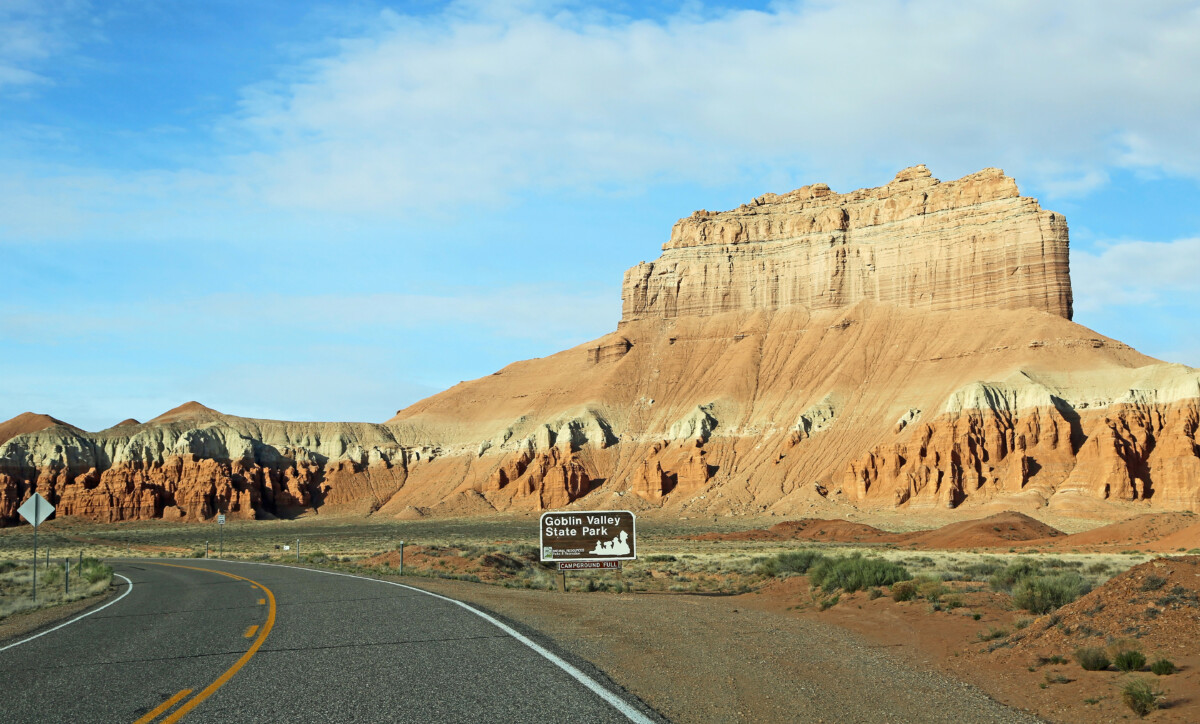
- Stop at the entrance sign and Three Sisters.
- Continue to the observation point for the broad valley view.
- Spend 60 to 75 minutes walking through Valley 1 and the near edge of Valley 2.
- Return to the picnic area, refill water, and leave time for the exit drive.
Half-day itinerary
- Explore Valley 1 and Valley 2 for 90 minutes.
- Hike the Carmel Canyon Loop, or continue to Goblin’s Lair if your group is comfortable with scrambling.
- Eat at the picnic area and stop at the visitor center for current conditions or a ranger program.
Full-day itinerary
Spend the morning in the Valley of Goblins, then choose one substantial afternoon objective: Toadstool Canyon, several marked park trails, the full disc golf course, or the nearby Little Wild Horse and Bell Canyon route. Do not enter a slot canyon when storms are possible anywhere in its drainage. If you plan to stargaze, build in a long rest and carry food, warm layers, and lighting for the return to your vehicle.
Best time to visit Goblin Valley
Spring and fall offer the most comfortable daytime hiking conditions, but they also bring the greatest crowd pressure. Summer visits require early starts, strict heat planning, and a conservative route. Winter can be quiet and photogenic, although nights regularly fall below freezing and snow is possible.
| Season | What to expect | Best approach |
|---|---|---|
| Spring | Milder temperatures, wild weather swings, and busy weekends or spring-break periods | Visit on a weekday or arrive near opening time |
| Summer | Daytime temperatures can exceed 100°F; exposed trails offer little shade | Explore shortly after opening, carry at least one gallon of water per person per day, and avoid strenuous afternoon hikes |
| Fall | Generally favorable hiking weather, with lingering heat early in the season | Use the same early-arrival strategy as spring and monitor late-summer storm forecasts |
| Winter | Cold nights, occasional snow, shorter daylight, and generally fewer visitors | Carry traction if snow or ice is present and pack warmer layers than the daytime forecast suggests |
Safety and what to pack

- Water: Utah State Parks recommends at least one gallon per person per day in summer. Carry extra for children, dogs, and unexpected delays.
- Sun protection: Bring a broad-brimmed hat, sunscreen, sunglasses, and sun-protective clothing. Shade is limited.
- Footwear: Wear closed-toe shoes with grip. Several trails cross sand, scree, slickrock, or boulders.
- Navigation: Download the map and an offline map layer. Do not rely on a phone signal for unmarked valleys.
- Weather: Leave exposed areas when thunder develops. Seek shelter in a building or hard-topped vehicle, not beneath a hoodoo or isolated shelter.
- Flash floods: Avoid washes, narrows, and slot canyons when rain is forecast locally or upstream.
- Temperature change: Pack a warm layer for evenings, especially if camping or waiting for the stars.
- Camera protection: Fine sand can enter lenses and tripods. Carry a simple dust cover or sealable bag.
Current fire alert: At the July 15, 2026 verification, Goblin Valley was under Stage 2 restrictions that prohibited open fires, including established fire pits and charcoal or pellet grills. Properly shielded gas or liquid-fueled stoves with shut-off valves were allowed under specified conditions. Recheck the official park alert before arrival because restrictions can change quickly.
Camping, yurts, and hotels near Goblin Valley

Camping inside the park
The developed campground has 24 sites and two yurts. The campsites include 10 walk-in tent pads and 14 RV spaces, plus a separate group site for up to 40 people and 10 vehicles. Each standard site has a picnic table, shade shelter, and metal fire ring, although active fire restrictions may prohibit using the ring. There are restrooms and showers, but no electrical hookups.
The current standard campsite fee is $45 per night and includes entry for one vehicle. Yurts are $150 plus tax. Reservations open four months to the day in advance at 8 a.m. Mountain time. Check the official camping rules, then use Utah State Parks’ reservation portal for availability.

Hotels in Hanksville and Green River
Hanksville is the closest town with basic traveler services, while Green River has a broader selection of hotels and restaurants. Choose Hanksville when your priority is minimizing the morning drive. Choose Green River when you want more lodging inventory or are continuing toward Interstate 70, Moab, or Canyonlands.
Affiliate disclosure: ViaTravelers may earn a commission from eligible lodging bookings made through the links below, at no additional cost to you. Availability and prices are controlled by the booking provider.

How to get to Goblin Valley State Park

From Interstate 70, travel south on Utah Highway 24 for about 24 miles, turn at the Temple Mountain junction, and follow the signs another 12 miles. From Hanksville, drive north on Highway 24 for about 20 miles, turn at the same junction, and continue 12 miles to the park. The official physical address is 18630 Goblin Valley Road, Green River, Utah.
The correct route is paved. If a navigation app directs you onto a dirt road, turn around and return to the signed Highway 24 approach. Review the official directions before leaving reliable service.
Can you drive through Goblin Valley?
You can drive the paved park roads to the campground, Three Sisters viewpoint, and main observation point, but there is no scenic drive through the hoodoo field itself. The Valley of Goblins is explored on foot. Travelers with limited mobility can still see the broad valley from the observation area; contact the park directly for current accessibility details and ranger guidance.

Park rules that affect trip planning
- Pets: Keep pets under control on a leash no longer than 6 feet and remove waste. A maximum of two dogs may stay in a yurt for an additional fee per dog.
- Drones: A $15 daily permit is required and must be obtained in person. From March 1 through October 31, drones are prohibited on weekends and holidays. Permitted flights are limited to Valley 1 from the observation-point drone platform. Read the full drone policy.
- Hoodoos and soil: Do not climb or damage formations, collect natural objects, or step on intact biological soil crust when a durable route is available.
- Bikes: Ride only on paved roads and approved bike trails, not in the Valley of Goblins or on hiking trails.
- Camping: Camp only in designated developed sites unless you have separately confirmed a legal dispersed site and the current land-management rules. Follow current fire and waste-disposal rules.
What to see near Goblin Valley
Goblin Valley works well as a stand-alone half-day stop or as part of a longer Utah road trip. Little Wild Horse Canyon is the closest major add-on, but it requires separate time, weather screening, and slot-canyon judgment. Farther afield, compare more of the best state parks in Utah, plan things to do in Moab, or continue to Canyonlands National Park.
Do not confuse Goblin Valley with Devils Garden
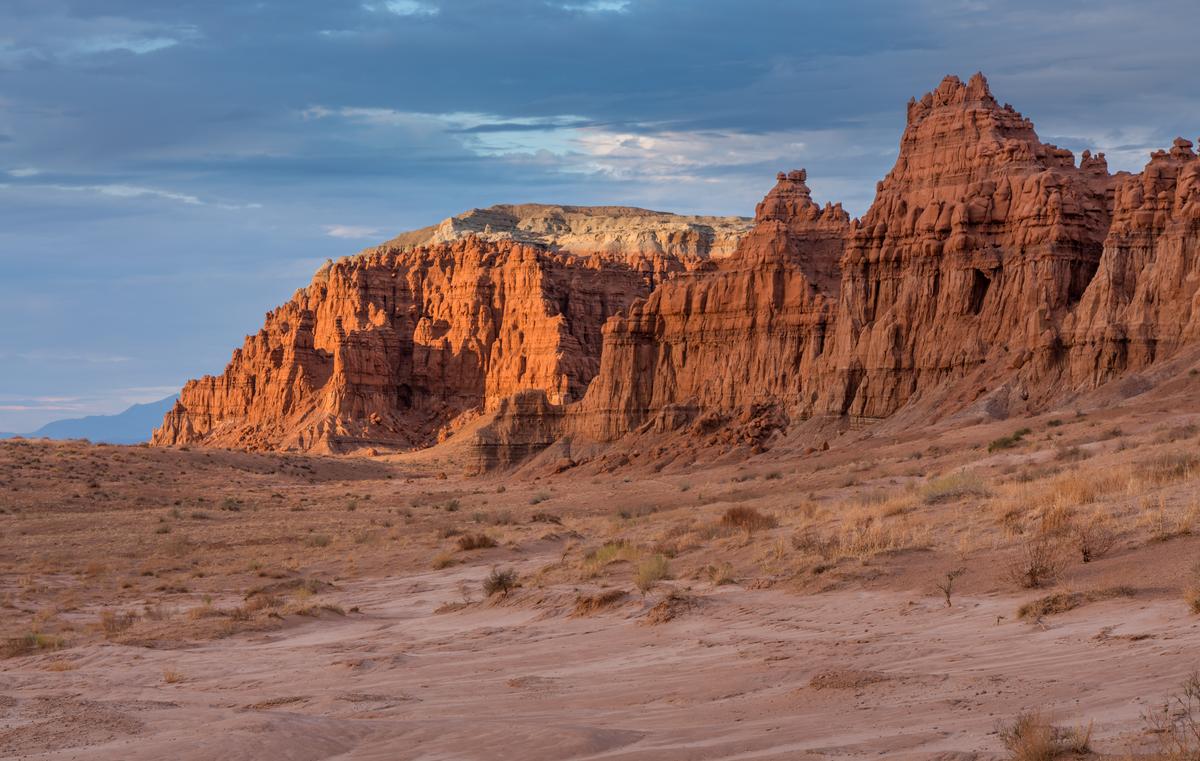
Devils Garden Outstanding Natural Area is a separate Utah destination, not an attraction inside Goblin Valley State Park. The image below is retained to clarify that distinction. Use the park’s official map rather than a broad image-search result when building your itinerary.

Goblin Valley State Park FAQ
Where is Goblin Valley State Park?
Goblin Valley State Park is on the southeastern edge of Utah’s San Rafael Swell, between Green River and Hanksville. The official address is 18630 Goblin Valley Road, Green River, UT 84525.
How much does it cost to enter Goblin Valley State Park?
At the July 15, 2026 verification, day use cost $20 per private vehicle. Motorcycle, bicycle, pedestrian, commercial, camping, yurt, drone, and rappel fees differ, so check the official fee page before travel.
How long do you need at Goblin Valley State Park?
Allow about two hours for the observation point, Valley 1, and the Three Sisters. Plan a half day if you want Valley 2 or a marked trail, and a full day for a longer park hike, disc golf, biking, stargazing, or nearby Little Wild Horse Canyon.
Are dogs allowed at Goblin Valley State Park?
Yes. Pets must remain under control on a leash no longer than 6 feet, and owners must clean up promptly. Up to two dogs may stay in a yurt for an additional fee per dog.
Can you drive through Goblin Valley State Park?
You can drive paved park roads to the campground, Three Sisters viewpoint, and observation point, but you cannot drive through the main hoodoo field. The Valley of Goblins is explored on foot.
What is the best time to visit Goblin Valley?
Spring and fall usually offer the most comfortable hiking weather. Visit early or late in the day to reduce heat and crowd exposure. Summer can exceed 100°F, while winter nights often fall below freezing.
Does the Goblin Valley campground have RV hookups?
No. The campground has RV spaces, tent pads, restrooms, showers, a dump station, and two yurts, but Utah State Parks states that there are no electrical hookups.
Is the Goblin’s Lair hike easy?
No. The official park trail page rates the 1.5-mile one-way route as strenuous. It includes scree, boulders, and scrambling. Rappelling into the chamber is a separate technical activity requiring skills, gear, and a permit.
Can you fly a drone at Goblin Valley State Park?
Only with a $15 daily permit issued in person, and additional restrictions apply. During the busy season, weekend and holiday flights are prohibited, and permitted flights are limited to Valley 1 from the designated observation-point platform.
Is Goblin Valley worth visiting?
Yes, especially when you want a compact Utah stop that feels different from a conventional overlook or trail-only park. The main valley is accessible within minutes of parking, and you control how far you walk. Two hours is enough for the defining experience; a half day gives the visit more depth.
Choose a cooler time of day, verify the park alert, and decide before arrival whether your priority is free-roaming among the hoodoos, a marked hike, camping, biking, disc golf, or stargazing. That choice will determine how much water, daylight, and reservation planning you need.
Next planning step: Confirm current conditions and fees on the official park website, save an offline map, and choose a two-hour, half-day, or full-day plan before leaving Highway 24.