MenuClose

A place worth knowing

Gyeongbokgung Palace

Culture · Royal palace in SeoulUpdated

  • Google rating4.6/5
  • Typical visit2-3 hours (longer if visiting the National Folk Museum within the complex)
  • EntranceAdmission required — check https://royal.khs.go.kr/ for tickets
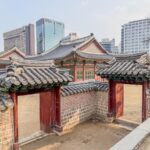
Seoul palace with city skyline at sunset, iconic Korea travel destination
Seoul Palace at Sunset (Kyle Kroeger / ViaTravelers)
  • Today (Thursday)9:00 AM – 5:00 PM
  • Typical visit2-3 hours (longer if visiting the National Folk Museum within the complex)
  • EntranceAdmission required — check https://royal.khs.go.kr/ for tickets
  • Google rating4.6/5
  • WebsiteOfficial site ↗
Opening hours all week
Monday
9:00 AM – 5:00 PM
Tuesday
Closed
Wednesday
9:00 AM – 5:00 PM
Thursday
9:00 AM – 5:00 PM
Friday
9:00 AM – 5:00 PM
Saturday
9:00 AM – 5:00 PM
Sunday
9:00 AM – 5:00 PM
The short answer

Why it matters

Seoul's grandest Joseon Dynasty palace with a changing of the guard ceremony and sweeping views of Bugaksan mountain

Gyeongbokgung Palace stands as the grand embodiment of Korea’s royal heritage, a majestic complex that served as the principal seat of the Joseon Dynasty for over five centuries. Constructed in 1395 at the dynasty’s founding, this vast compound with its iconic blue-tiled roofs represents Korean architecture at its most refined, with elegant wooden structures arranged according to Confucian principles and cosmic harmony. Despite suffering near-complete destruction during the Japanese occupation, a meticulous, ongoing restoration has revived over 40% of its original 330 buildings, including the imposing Gwanghwamun Gate, the stately Geunjeongjeon throne hall, and the serene Gyeonghoeru Pavilion floating above an artificial pond. The palace grounds offer changing seasonal beauty, from spring cherry blossoms to fall foliage framing the buildings against the dramatic backdrop of Bugaksan Mountain. Visitors can witness the colorful changing of the royal guard ceremony performed in authentic Joseon-era uniforms and explore the National Folk Museum within the complex, making Gyeongbokgung not just an architectural treasure but a living museum of Korean cultural heritage at its most splendid.

Cultural Context

Primary palace of Joseon Dynasty embodying Korean royal culture and Confucian governance ideals, birthplace of Hangul script under King Sejong, symbol of Korean sovereignty and cultural identity through turbulent history

Historical Context

Built 1395 as first Joseon palace meaning Palace Greatly Blessed by Heaven, flourished under Sejong 1418-1450, destroyed 1592 Japanese invasion, abandoned 270 years, restored 1867 then damaged under Japanese rule, ongoing restoration

Plan your visit with our complete Seoul travel guide featuring top sights, itineraries, and local travel tips.


Context

Story and significance

About

Gyeongbokgung Palace is the largest and most iconic royal palace of the Joseon Dynasty, built in 1395 by King Taejo as the seat of power in the newly established capital of Hanyang (modern Seoul). The complex includes Geunjeongjeon throne hall, the Gyeonghoeru Pavilion on an artificial island, and the Gwanghwamun main gate. Destroyed during the 1592 Japanese invasions and again during the 1910–1945 occupation, it has undergone extensive restoration since the 1980s and was designated a UNESCO World Heritage Site in 2023.

Historical significance

As the principal palace of Joseon rulers, Gyeongbokgung was the political and ceremonial heart of premodern Korea and a locus for governance and royal ritual. Its survival and restoration are significant for understanding Korean state formation, court culture, and modern heritage preservation amid periods of foreign occupation and rapid urban change.

Historical context

Built 1395 as first Joseon palace meaning Palace Greatly Blessed by Heaven, flourished under Sejong 1418-1450, destroyed 1592 Japanese invasion, abandoned 270 years, restored 1867 then damaged under Japanese rule, ongoing restoration

Cultural context

Primary palace of Joseon Dynasty embodying Korean royal culture and Confucian governance ideals, birthplace of Hangul script under King Sejong, symbol of Korean sovereignty and cultural identity through turbulent history

Architecture

Exemplary Korean palace architecture featuring Geunjeongjeon throne hall as largest in Korea, traditional wooden structures with dancheong colors, geometric layout following Confucian principles, surrounded by mountains per feng shui

Local significance

Gyeongbokgung Palace is a central symbol of Korea’s royal past and national resilience; residents see it as a living reminder of Joseon-era culture, statecraft and architecture after periods of war and reconstruction. The grounds host national ceremonies, school trips and cultural demonstrations, and many Seoulites visit for leisure, celebrations or to wear hanbok for free entry, reinforcing its role as a public cultural focal point.

Updated Data: Editorial research · Google Places ratings · Verified coordinates