MenuClose

A place worth knowing

Jogyesa Temple

Churches · Temple in SeoulUpdated

  • Google rating4.4/5 (15,000 reviews)
  • Typical visit1-2 hours average visit (longer with Temple Stay program participation)
  • EntranceFree (donations welcome)
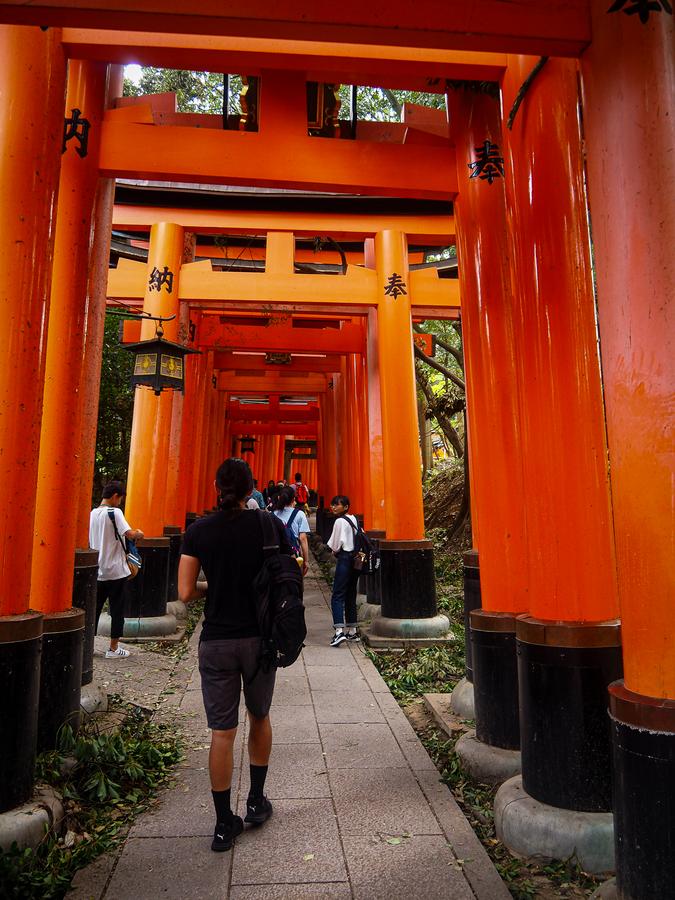
Travelers exploring historic vermilion torii gates of Fushimi Inari Taisha Shrine, Kyoto
Vermilion torii gates at Fushimi Inari Kyle Kroeger / ViaTravelers
  • Today (Thursday)9:00 AM – 6:00 PM
  • Typical visit1-2 hours average visit (longer with Temple Stay program participation)
  • EntranceFree (donations welcome)
  • Google rating4.4/5 15,000 reviews
  • WebsiteOfficial site ↗
Opening hours all week
Monday
9:00 AM – 6:00 PM
Tuesday
9:00 AM – 6:00 PM
Wednesday
9:00 AM – 6:00 PM
Thursday
9:00 AM – 6:00 PM
Friday
9:00 AM – 6:00 PM
Saturday
9:00 AM – 6:00 PM
Sunday
9:00 AM – 6:00 PM
Accessibility
"{"mobility": "Some areas accessible, main courtyard reachable", "assistance": "Temple volunteers can provide guidance for accessibility", "facilities": "Basic facilities available, check with temple staff", "wheelchairAccess": "Limited due to traditional architecture and steps"}"
The short answer

Why it matters

The headquarters of Korean Buddhism's Jogye Order, a city-centre temple sheltering a 500-year-old white pine and offering templestay programmes for visitors.

Jogyesa Temple stands as the spiritual heart of Korean Buddhism and headquarters of the Jogye Order, Korea’s largest Buddhist sect. Established in 1395 during the early Joseon Dynasty, though rebuilt in 1938, this urban sanctuary provides a striking contrast to Seoul‘s modern cityscape with its vibrant traditional architecture. The temple complex centers around the magnificent Daeungjeon (Main Buddha Hall), adorned with intricate dancheong (traditional multicolored paintwork) and housing three imposing gilded Buddha statues representing past, present, and future. Particularly impressive are the temple grounds’ ancient trees—a 500-year-old lacebark pine and a 450-year-old Chinese juniper—both designated natural monuments. Jogyesa comes alive during Buddha’s Birthday celebrations in spring when thousands of paper lanterns transform the complex into a kaleidoscope of colors. Unlike many Korean temples secluded in mountains, Jogyesa’s central location in bustling Insadong makes it exceptionally accessible, offering visitors an authentic glimpse into living Korean Buddhist traditions. The temple remains fully functional with regular ceremonies, chanting, and meditation practices. For travelers seeking cultural authenticity, Jogyesa offers a Temple Stay program where visitors can experience monastic life firsthand—participating in meditation, tea ceremonies, and Buddhist rituals that have remained largely unchanged for centuries.

Cultural Context

Jogyesa Temple is the central hub of Korean Seon (Zen) Buddhism and serves as the spiritual heart of the Jogye Order, the largest Buddhist sect in South Korea. The temple is deeply woven into the cultural fabric of Seoul and Korean Buddhist practices, hosting numerous traditional ceremonies and festivals throughout the year. One of the most significant cultural events held here is the annual Lotus Lantern Festival, which celebrates the birth of the Buddha with vibrant lantern parades, prayers, and cultural performances. The temple grounds are a living space where monks and laypeople alike engage in meditation, chanting, and Dharma talks, reflecting the ongoing practice of Buddhist teachings in contemporary Korean society. Visitors can witness the blend of ancient rituals and modern devotion, as Jogyesa functions not only as a religious site but also as a cultural center promoting Buddhist art, calligraphy, and philosophy. The temple’s role in preserving Korean Buddhist heritage while adapting to urban life makes it a vital cultural landmark for locals and international visitors alike, fostering a deeper understanding of Korea’s spiritual traditions and communal values.

Historical Context

Jogyesa Temple traces its origins back to the late 14th century, originally established as a hermitage during the Joseon Dynasty. It became the main temple of the Jogye Order in the early 20th century, specifically in 1910, when it was relocated to its current site in central Seoul. Throughout its history, Jogyesa has witnessed significant transformations, including damage during the Japanese occupation and the Korean War, followed by extensive restorations that reaffirmed its status as a vital religious institution. The temple has played a crucial role in the revival of Korean Buddhism in the modern era, serving as a center for Buddhist education and social activism. Key historical figures associated with Jogyesa include prominent monks who contributed to the spread of Seon Buddhism and the modernization of Korean Buddhist practices. The temple’s evolution reflects broader historical trends in Korea, including the struggle for cultural identity under colonial rule and the post-war reconstruction of spiritual life. Jogyesa stands today as a symbol of resilience and continuity, embodying centuries of religious devotion and cultural perseverance in the heart of Seoul.

Context

Story and significance

About

Jogyesa Temple is the chief temple of the Jogye Order, the dominant school of Korean Buddhism, situated in central Seoul near Insadong. Originally established in 1395 and re-founded at its current site in 1910, the temple became the headquarters of Seon (Zen) Buddhism in Korea. The Daeungjeon main hall (1938) houses three gilded Buddha statues over 4.8 metres tall. The grounds hold two natural monuments: a rare 500-year-old baeksong lacebark pine and a 450-year-old Chinese scholar tree. The annual Lotus Lantern Festival around Buddha’s birthday fills the courtyard with thousands of illuminated paper lanterns. Templestay programs offer tea ceremonies and meditation.

Historical context

Jogyesa Temple traces its origins back to the late 14th century, originally established as a hermitage during the Joseon Dynasty. It became the main temple of the Jogye Order in the early 20th century, specifically in 1910, when it was relocated to its current site in central Seoul. Throughout its history, Jogyesa has witnessed significant transformations, including damage during the Japanese occupation and the Korean War, followed by extensive restorations that reaffirmed its status as a vital religious institution. The temple has played a crucial role in the revival of Korean Buddhism in the modern era, serving as a center for Buddhist education and social activism. Key historical figures associated with Jogyesa include prominent monks who contributed to the spread of Seon Buddhism and the modernization of Korean Buddhist practices. The temple’s evolution reflects broader historical trends in Korea, including the struggle for cultural identity under colonial rule and the post-war reconstruction of spiritual life. Jogyesa stands today as a symbol of resilience and continuity, embodying centuries of religious devotion and cultural perseverance in the heart of Seoul.
Cultural context

Jogyesa Temple is the central hub of Korean Seon (Zen) Buddhism and serves as the spiritual heart of the Jogye Order, the largest Buddhist sect in South Korea. The temple is deeply woven into the cultural fabric of Seoul and Korean Buddhist practices, hosting numerous traditional ceremonies and festivals throughout the year. One of the most significant cultural events held here is the annual Lotus Lantern Festival, which celebrates the birth of the Buddha with vibrant lantern parades, prayers, and cultural performances. The temple grounds are a living space where monks and laypeople alike engage in meditation, chanting, and Dharma talks, reflecting the ongoing practice of Buddhist teachings in contemporary Korean society. Visitors can witness the blend of ancient rituals and modern devotion, as Jogyesa functions not only as a religious site but also as a cultural center promoting Buddhist art, calligraphy, and philosophy. The temple’s role in preserving Korean Buddhist heritage while adapting to urban life makes it a vital cultural landmark for locals and international visitors alike, fostering a deeper understanding of Korea’s spiritual traditions and communal values.

Architecture

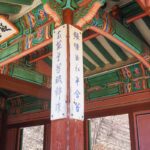
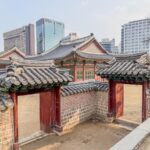
Jogyesa Temple exemplifies traditional Korean Buddhist architecture while integrating elements that reflect its urban environment and historical renovations. The temple complex features classic Joseon Dynasty architectural styles characterized by wooden structures, gracefully curved tiled roofs, and vibrant dancheong (decorative multicolored paintwork) that adorns the eaves and beams. The main hall, Daeungjeon, is constructed with intricate wooden joinery and painted motifs symbolizing Buddhist cosmology and teachings. The temple grounds include several smaller shrines, a bell pavilion, and a stone pagoda, each showcasing craftsmanship that dates back to various periods of Korean history. Notably, the temple’s central courtyard is dominated by a large, ancient locust tree, which is considered sacred and adds to the serene atmosphere. The use of natural materials such as timber and stone, combined with meticulous attention to symmetry and balance, reflects the principles of harmony with nature central to Buddhist philosophy. Despite being situated in a bustling metropolis, Jogyesa’s architecture maintains a peaceful ambiance that invites contemplation and spiritual reflection, making it a prime example of Korean religious architectural heritage.

Local significance

Jogyesa Temple holds profound significance for the local community in Seoul, functioning as both a spiritual sanctuary and a cultural gathering place. It is a vital center for religious activities, providing a space where locals come to pray, meditate, and participate in Buddhist rituals that mark important life events such as weddings, funerals, and ancestral rites. Beyond its religious role, the temple acts as a community hub, hosting cultural events, educational programs, and volunteer initiatives that foster social cohesion and promote mental well-being. The temple is also a symbol of national identity and pride, representing the endurance of Korean traditions amidst rapid urban development and modernization. Local residents often regard Jogyesa as a peaceful retreat from the city’s hustle, a place where they can reconnect with nature and spirituality. The temple’s presence enriches the cultural landscape of Seoul by offering a living link to Korea’s historical and religious roots. Its role in daily life extends beyond worship, as it continues to inspire art, literature, and social consciousness within the local population, making Jogyesa a cherished landmark in the heart of the city.

Experience

Make the most of it

Local tips
  • Lighting candles follows local customs
  • Attend a service for full experience
  • Respectful behavior appreciated
  • Local festivals bring special ceremonies
  • Guided tours explain symbolism
  • Early morning visits most peaceful
  • Gift shops support maintenance
Hidden gems nearby
  • Acoustic properties for music
  • Sacred relics in side chambers
  • Meditation gardens for quiet reflection
  • Ancient crypts open limited hours
  • Hidden chapels with unique artwork
  • Original architectural elements preserved
  • Historical graves of notable figures
Special features
  • One of the most distinctive features of Jogyesa Temple is its massive, centuries-old locust tree, which stands prominently in the temple courtyard and is revered as a symbol of longevity and spiritual endurance. The temple is also renowned for its vibrant and intricately designed lanterns, especially during the Lotus Lantern Festival, when thousands of colorful lanterns illuminate the temple grounds in a breathtaking display. Inside the main hall, visitors can admire an impressive collection of Buddhist statues, including a large statue of the Buddha seated in meditation, flanked by bodhisattvas and guardian deities. The temple houses a significant repository of Buddhist scriptures and calligraphy works, some of which date back several centuries, reflecting Korea’s rich literary and religious traditions. Additionally, the temple’s bell pavilion contains a large bronze bell, used to mark important ceremonies and times of meditation. Jogyesa also features a meditation hall and a cultural center that offers classes and workshops on Buddhist teachings, traditional arts, and temple cuisine. These special features combine to make Jogyesa not only a place of worship but also a vibrant cultural institution dedicated to preserving and sharing Korean Buddhist heritage.
Editorial scores

How we rate it

Authenticity9/10
Accessibility score8/10
Family-friendly score8/10
Off-the-beaten-path4/10

Editorial scores on a 10-point scale, judged against places of the same kind.

Updated Data: Editorial research · Google Places ratings · Verified coordinates