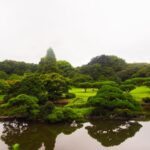
Tokyo's most visited Shinto shrine, set within a 70-hectare evergreen forest near Harajuku, dedicated to Emperor Meiji and Empress Shōken, with a towering torii gate, iris garden, and traditional wedding ceremonies year-round.
Certainly! Here are the key points regarding the global influence, historical impact, and preservation of Meiji Jingu in Shibuya City:
- Meiji Jingu is one of the most prominent Shinto shrines in Japan, known for its vast forested grounds spanning 70 hectares.
- The shrine was established in 1920 and is dedicated to the deified spirits of Emperor Meiji and Empress Shoken, who played crucial roles in the modernization of Japan.
- Emperor Meiji’s reign marked a transformative period in Japan’s history, leading the country through the Meiji Restoration and the rapid adoption of Western practices and technologies.
- Meiji Jingu holds significant cultural and historical importance, serving as a symbol of Japan’s transition into a modern nation and its enduring traditions.
- The shrine’s architectural and natural elements reflect a harmonious blend of traditional Shinto design and the surrounding natural environment, attracting visitors from around the world.
- The preservation of Meiji Jingu is a testament to Japan’s commitment to safeguarding its cultural heritage, exemplified by ongoing efforts to maintain the shrine’s structures and surroundings.
- Through its global recognition and historical significance, Meiji Jingu continues to contribute to the appreciation and understanding of Japanese culture and history on an international scale.
– Cultural Authenticity: Meiji Jingu maintains and represents local traditions and cultural practices through its Shinto rituals, ceremonies, and architectural style, providing visitors with an authentic cultural experience (source: [Japan Guide](https://www.japan-guide.com/e/e3002.html)).
– Historical Significance: Meiji Jingu holds historical importance as a shrine dedicated to Emperor Meiji and Empress Shoken, playing a significant role in Japan’s cultural and national context (source: [Meiji Jingu Official Website](https://www.meijijingu.or.jp/en/about/enshrined/)).
– Artistic Value: The shrine features authentic wooden buildings and original architecture, contributing to its artistic value. It also symbolizes the combination of traditional Japanese culture and identity promoted by Emperor Meiji (source: [Japan Travel](https://en.japantravel.com/places/tokyo/meiji-jingu-shrine/8)).
– Social Impact: Meiji Jingu serves as a sacred sanctuary where tradition, spirituality, and nature intertwine, playing a significant role in the community and supporting social values associated with Shinto beliefs (source: [Live Japan](https://livejapan.com/en/in-tokyo/in-pref-tokyo/in-shibuya/article-a0000152/)).
– Accessibility and Preservation: The shrine is accessible to the public and is located in the middle of Tokyo, with efforts in place to preserve its vast forested grounds (source: [Meiji Jingu Official Website](https://www.meijijingu.or.jp/en/about/)).
– Visitor Engagement: Meiji Jingu offers opportunities for visitors to engage with the culture through Shinto rituals, traditional Japanese weddings, and various events, providing an interactive cultural experience (source: [Japan Travel](https://en.japantravel.com/places/tokyo/meiji-jingu-shrine/8)).
– Educational Value: The shrine provides learning opportunities about Shinto, Japan’s ancient original religion, and the history and cultural significance of Emperor Meiji and Empress Shoken (source: [East-West Center](https://www.eastwestcenter.org/sites/default/files/filemanager/ASDP/Infusing_2014/Meiji_Shrine_Web_Site.pdf)).
- Universal Appeal and Cultural Authenticity: Meiji Jingu scores highly for its authentic representation of Shinto practices and traditional architecture, which closely adheres to Japanese cultural norms and offers a genuine cultural experience to visitors.
- Cultural Richness and Educational Value: The shrine provides substantial educational content regarding the Shinto religion and the historical role of Emperor Meiji, though certain aspects like detailed descriptions and multilingual support might be enhanced to improve educational outreach.
- Preservation and Integrity: Meiji Jingu is exemplary in its preservation efforts, maintaining the natural forest and the shrine in excellent condition, and instilling respect for its sanctity among visitors.
- Accessibility and Visitor Engagement: While the shrine is highly accessible and offers various engagement opportunities through rituals and cultural events, the massive crowds and limited personal interaction guidance sometimes hinder a deeper, more personalized engagement.
Meiji Jingu stands as Tokyo‘s most sacred Shinto shrine, honoring Emperor Meiji and Empress Shoken within a serene 175-acre forest that provides spiritual sanctuary in the heart of the bustling metropolis. Completed in 1920, this magnificent shrine complex features towering wooden torii gates, traditional architecture constructed without a single nail, and peaceful gravel paths that wind through dense woods of over 100,000 trees donated from across Japan. Visitors can witness authentic Shinto rituals including traditional weddings, seasonal festivals, and daily purification ceremonies, while participating in customs like writing wishes on wooden ema tablets and cleansing hands and mouth at the temizuya water basin. The shrine’s Inner Garden showcases seasonal beauty through iris blooms and autumn foliage, while the adjacent Meiji Jingu Gyoen offers additional tranquil walking paths. This revered spiritual site perfectly demonstrates how ancient Japanese traditions continue to thrive within modern Tokyo.
Cultural Context
Meiji Jingu Shrine embodies a pivotal period in Japanese history, honoring Emperor Meiji (1852-1912) and Empress Shoken (1849-1914) who presided over Japan’s transformation from an isolated feudal society to a modern nation. Emperor Meiji ascended the throne in 1867 during the Meiji Restoration, which ended the 260-year Tokugawa shogunate and restored imperial rule. Under his leadership, Japan rapidly modernized, adopting Western technologies and governance systems while maintaining Japanese cultural identity. The shrine, completed in 1920, represents this balance between tradition and progress. Destroyed during Allied bombing in World War II, its 1958 reconstruction through public donations symbolizes Japan’s post-war resilience and continuing reverence for its imperial heritage.
Historical Context
Meiji Jingu, originally established in 1920, is a Shinto shrine dedicated to Emperor Meiji and Empress Shoken, who were instrumental in Japan’s modernization during the late 19th and early 20th centuries. Emperor Meiji reigned from 1867 to 1912 and oversaw the Meiji Restoration, a pivotal period that transformed Japan from a feudal society into a modern industrialized nation. The shrine was constructed to honor their spirits and contributions to Japan’s rapid modernization and westernization. The site was built on a vast forested area in Tokyo’s Shibuya ward, symbolizing harmony between tradition and nature. Despite suffering damage during World War II air raids, the shrine was meticulously rebuilt by 1958 using traditional methods and materials, preserving its original spiritual and cultural essence. Over the decades, Meiji Jingu has evolved into a major cultural and religious landmark, hosting numerous annual festivals and ceremonies that continue to celebrate Japan’s imperial heritage and Shinto beliefs. The shrine’s history embodies the fusion of Japan’s past and present, making it a vital link between the nation’s imperial era and contemporary society. Visitors can appreciate not only the shrine’s religious significance but also its role as a monument to Japan’s transformative historical journey.