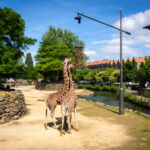
Located within Amsterdam‘s historic Artis Royal Zoo complex but operating as a distinct scientific institution, Micropia stands as the world’s first museum dedicated entirely to the invisible realm of microorganisms. Through ingenious interactive displays and specialized microscopes connected to large screens, visitors observe living microbes—from beneficial bacteria to exotic extremophiles—carrying out their essential biological processes in real-time. The museum transforms the abstract concept of microorganisms into tangible experiences: visitors can compare their personal microbiome with others through body-scanning installations, observe how many bacteria transfer during a kiss at the “Kiss-o-Meter,” and watch lab technicians cultivate live specimens in the visible laboratory. Interactive exhibits demonstrate microbes’ critical role in everything from food production (with displays on cheese, beer, and yogurt cultures) to maintaining human health and cleaning the environment. Sophisticated microscopy techniques, including specialized scanning electron microscope images, reveal the surprisingly beautiful and complex structures of microscopic life forms typically invisible to human perception. Beyond its entertainment value, Micropia serves as an educational platform challenging common misconceptions about microorganisms as merely disease agents, instead promoting understanding of their fundamental importance to all life on Earth and their growing applications in medicine, agriculture, and environmental restoration.
Cultural Context
The museum stands as a testament to “ISO3166-2-lvl4”: “NL-NH”}’s cultural significance, featuring exhibitions that highlight the unique artistic traditions and cultural practices of “neighbourhood”: “Plantage”.
Historical Context
Micropia Amsterdam was established in 2014 as an innovative extension of the Artis Royal Zoo, which itself dates back to 1838, making it one of the oldest zoos in the Netherlands. The museum was conceived to fill a unique niche in public science education by focusing specifically on microorganisms, an often overlooked but fundamentally important domain of life. Its creation was driven by the growing scientific recognition of microbes’ critical role in ecosystems, human health, and biotechnology. Over the years, Micropia has evolved from a niche scientific curiosity into a prominent institution that bridges microbiology with public awareness, showcasing the invisible world that shapes much of our environment and bodies. The museum’s development reflects broader trends in science communication, emphasizing interactive learning and the democratization of scientific knowledge. Since its opening, Micropia has hosted numerous exhibitions, educational programs, and scientific collaborations, contributing to a deeper public understanding of microbiology in the 21st century. It stands as a testament to Amsterdam’s long-standing commitment to science and education, continuing the legacy of the Artis complex while charting new territory in museum innovation. The historical context of Micropia is thus rooted in both the heritage of the Artis Zoo and the contemporary expansion of microbiological science to a wider audience, making it a significant cultural and educational landmark in Amsterdam today.