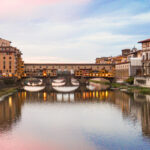
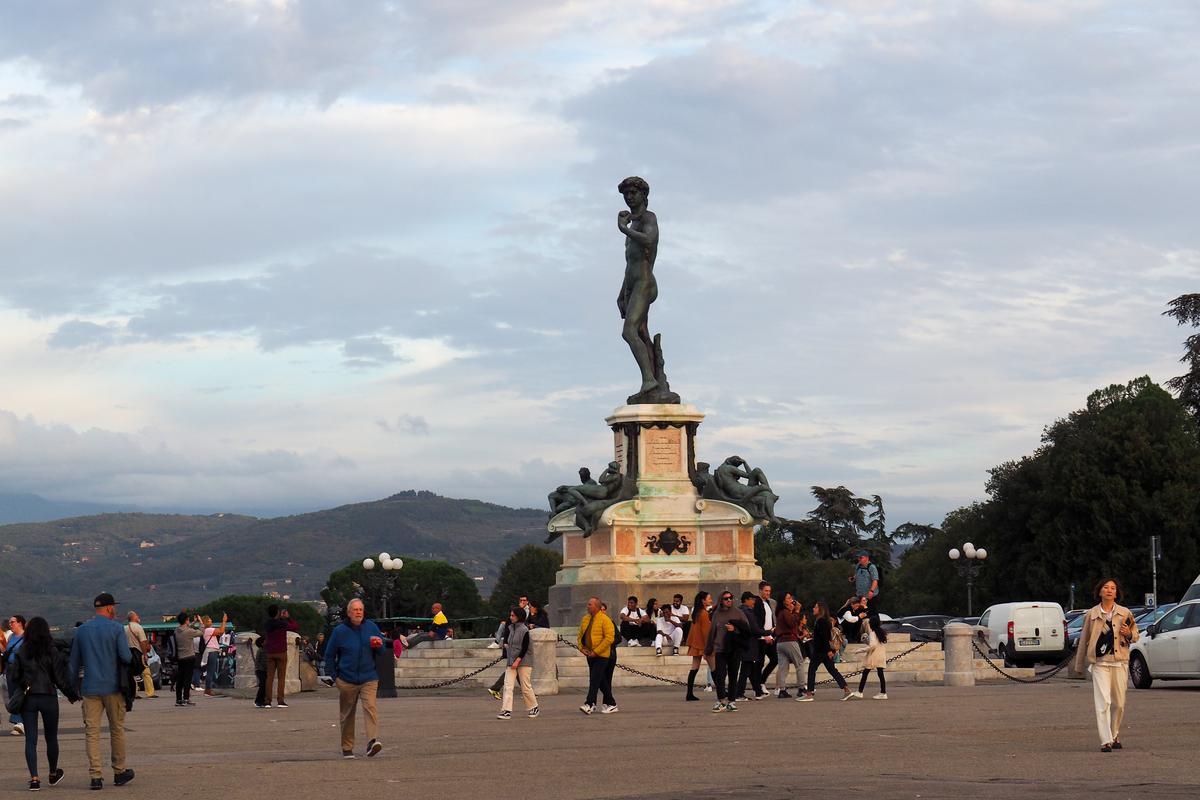
Piazzale Michelangelo commands the most spectacular panoramic view of Florence, offering visitors a breathtaking perspective of the Renaissance city that changed the world. This elevated terrace, designed by architect Giuseppe Poggi in 1869, frames the entire historic center of Florence including the Duomo, Palazzo Vecchio, and the Arno River in one magnificent vista. The piazzale features bronze replicas of Michelangelo’s David and his four statues from the Medici Chapel, creating an open-air museum that celebrates Florence’s artistic heritage against the backdrop of the city itself. Sunset visits reveal why this viewpoint has inspired artists, writers, and travelers for over 150 years as golden light illuminates the red-tiled roofs and marble facades of Renaissance palaces. The panorama encompasses the architectural evolution of Florence from medieval towers to Renaissance domes to modern suburbs, telling the story of a city that gave birth to the Renaissance. Photographers capture iconic shots of the Duomo’s dome rising above terracotta rooftops while the Arno River winds through the valley below. The surrounding Oltrarno neighborhood offers authentic trattorias and artisan workshops that maintain Florence’s traditional craftsmanship. Whether reached by walking through the historic Oltrarno district or by bus up the winding road, Piazzale Michelangelo provides an unforgettable perspective of one of the world’s most beautiful cities and serves as the perfect introduction to Florence’s Renaissance splendor.
A place worth knowing
Piazzale Michelangelo
An elevated terrace above the Arno offering Florence’s most famous panoramic view, with the Duomo, Ponte Vecchio, and rolling Tuscan hills in frame
Attractions · Viewpoint in FlorenceUpdated
- Google rating4.8/5
- Typical visit30-90 minutes (longer with photography and exploring the surrounding area)
- EntranceFree
Why it matters
An elevated terrace above the Arno offering Florence's most famous panoramic view, with the Duomo, Ponte Vecchio, and rolling Tuscan hills in frame
Story and significance
About
Perched on the left bank of the Arno River, Piazzale Michelangelo is not just a square; it’s an open-air theater to Florence’s Renaissance symphony. Conceived in the 19th century, this piazza offers more than a mere replica of Michelangelo’s David. It unfolds a panoramic canvas, where the Duomo, Ponte Vecchio, and the sprawl of terracotta roofs dance under the Tuscan sun.
The unique vantage point invites visitors to absorb the city’s architectural masterpiece at a glance, making it a magnetic spot for sunset chasers and daydreamers alike. Here, the essence of Florence’s cultural fabric is woven into the very air, beckoning travelers into its historic embrace.
Historical significance
The piazzale is significant for how it frames and presents Florence’s monumental core to residents and visitors, reinforcing civic identity through sightlines. As a late-19th-century urban intervention, it reflects changing approaches to heritage display and public access to scenic city viewpoints.
Historical context
The terrace was developed in the late 19th century as part of urban projects to create viewpoints and modern promenades that celebrated Florence’s artistic heritage and cityscape. Its name and the presence of replicas of famous sculptures link the site to Florence’s Renaissance legacy.
Cultural context
Piazzale Michelangelo is a popular panoramic terrace that functions as a social and photographic focal point for residents and tourists seeking sweeping views of Florence at sunrise, sunset and throughout the day. It hosts informal gatherings and is often included in walking itineraries that emphasize the city’s skyline and river vistas.
Architecture
Primarily a designed urban viewpoint rather than a building, Piazzale Michelangelo is organized as a terraced square with balustrades, staircases and bronze replicas positioned for framed views. Its formal arrangement and placement maximize panoramic sightlines over the Arno, Duomo and historic center.
Local significance
Piazzale Michelangelo has become an informal meeting point and source of local pride because of its sweeping panoramic view of Florence; residents and visitors alike go there to take in sunsets, celebrate occasions and photograph the cityscape. The terrace functions as a social focal point where city identity is experienced visually, and it is often used by locals for relaxed gatherings, street food vendors and as a starting place for walks down into historic neighborhoods.





Where to find it
- Address
- Piazzale Michelangelo, 50125 Florence, Italy
- Map
- Open map ↗ Directions ↗ Verified location
- Coordinates
- 43.7628, 11.265
- Destination
- Florence