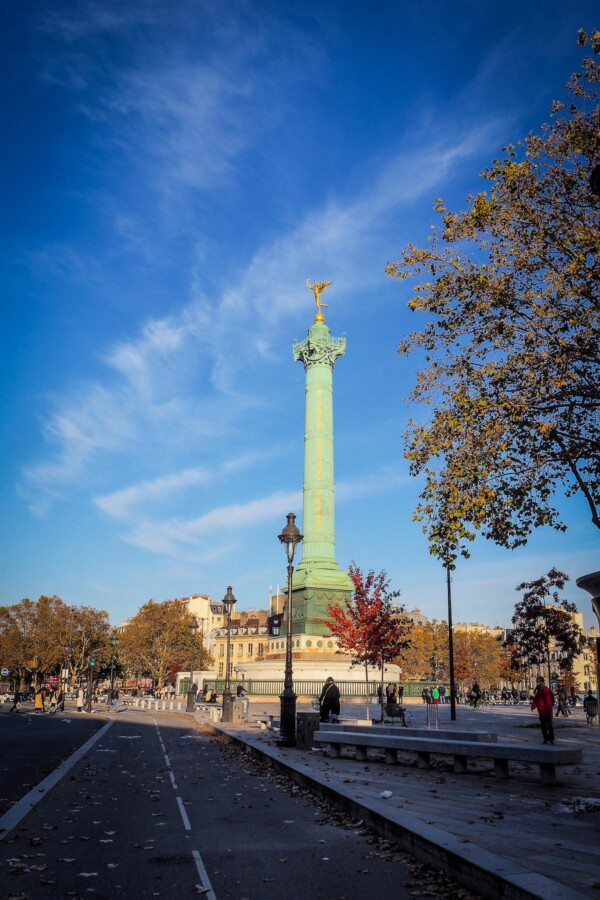

Place de la Bastille stands as the symbolic heart of French revolutionary spirit, where the storming of the Bastille fortress on July 14, 1789, ignited the French Revolution and changed the course of world history. This historic square in eastern Paris embodies the eternal struggle for liberty, equality, and fraternity that defines the French national character. The towering July Column, crowned by the golden Spirit of Liberty, commemorates not only the 1789 revolution but also the July Revolution of 1830 that established constitutional monarchy in France. The column’s bronze reliefs and inscription honor the citizens who died fighting for democratic principles, making this site a pilgrimage destination for those who value freedom and human rights. The modern Opera Bastille, one of the world’s most prestigious opera houses, represents contemporary France’s commitment to making culture accessible to all citizens, embodying the revolutionary ideals of equality and cultural democracy. The surrounding Bastille neighborhood pulses with creative energy through art galleries, independent theaters, trendy bistros, and vintage boutiques that attract artists, intellectuals, and free spirits from around the world. Sunday’s Bastille Market transforms nearby Boulevard Richard-Lenoir into a vibrant display of French culinary culture where locals select fresh produce, artisanal cheeses, and regional specialties. Place de la Bastille serves as both a monument to historical courage and a living symbol of Paris’ ongoing cultural revolution, where past and present unite in celebration of human dignity and artistic expression.
Cultural Context
Place de la Bastille holds profound cultural significance as a symbol of liberty and resistance in French society. It is deeply intertwined with the French revolutionary spirit, celebrated annually on July 14th during Bastille Day, which marks the storming of the Bastille prison in 1789—a pivotal event that ignited the French Revolution. The plaza serves as a gathering place for political demonstrations, cultural festivals, and public celebrations, reflecting its ongoing role as a site of civic expression and collective memory. Local customs often include commemorations of freedom and democracy, with music, speeches, and communal activities that reinforce the plaza’s identity as a space where history and contemporary culture converge. The Place de la Bastille also resonates with artists and performers, contributing to Paris’s vibrant cultural scene. It is a place where the ideals of liberty, equality, and fraternity continue to be honored, making it a living symbol of French cultural values. Visitors and locals alike engage with the site not only as a historical landmark but as a dynamic cultural hub that embodies the enduring spirit of the French people. Its cultural relevance is maintained through ongoing events that celebrate social justice and human rights, ensuring that the legacy of the revolution remains a vital part of Parisian identity today.
Historical Context
Place de la Bastille is historically significant as the site of the former Bastille fortress, a royal prison whose storming on July 14, 1789, marked the beginning of the French Revolution. Originally constructed in the 14th century as a fortress to defend the eastern approach to Paris, the Bastille evolved into a symbol of royal tyranny and oppression. Its fall was a dramatic event that galvanized revolutionary forces and led to the eventual overthrow of the monarchy. After the fortress was demolished in the months following the storming, the site remained a powerful reminder of the struggle for freedom. Over the 19th and 20th centuries, the Place de la Bastille transformed into a major urban square, reflecting France’s changing political landscape. The July Column, erected in 1835, commemorates the Revolution of 1830 and stands as a testament to the ongoing fight for democratic ideals. Throughout its history, the square has been a focal point for political rallies, uprisings, and public gatherings, reinforcing its role as a symbol of resistance and popular sovereignty. The site’s evolution from a prison fortress to an open public space encapsulates the broader historical narrative of France’s journey toward republicanism and civil liberties.