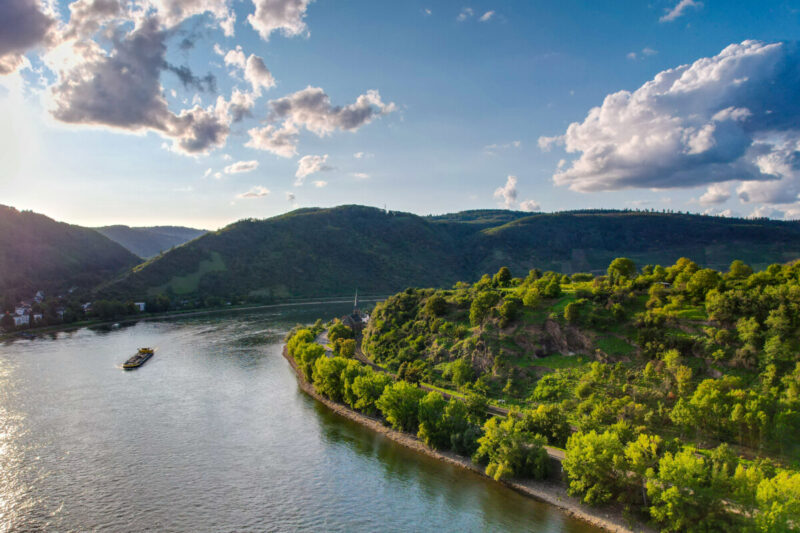
Rhineland-Palatinate is best explored as a series of regional trips rather than one long checklist. The strongest first visit combines Koblenz and the Upper Middle Rhine, the Moselle around Eltz Castle and Cochem, Roman Trier, and the Palatinate around Speyer and the German Wine Route. The state also has forest trails, family parks, industrial museums, and the Nürburgring.
Three days is enough for one or two regions. Five to seven days gives you time to see the Rhine, Moselle, Trier, and part of the Palatinate without spending most of the trip in transit. This guide organizes 19 of the best things to do in Rhineland-Palatinate by practical value, geography, and the time each stop deserves.
Visitor information was last checked in August 2026. Opening hours, tour languages, ticket prices, seasonal transport, and restoration access can change. Confirm details on the linked official website before setting out.
In this guide
- Rhineland-Palatinate at a glance
- 19 best things to do in Rhineland-Palatinate
- More worthwhile castles and family attractions
- Nearby side trips outside the state
- How to plan a Rhineland-Palatinate itinerary
- Frequently asked questions
Rhineland-Palatinate at a glance
- Best first-time bases: Koblenz, Cochem, Trier, Mainz, Speyer, or Neustadt an der Weinstraße.
- Best for castles: Eltz, Marksburg, Thurant, Rheinfels, and the Rhine and Moselle valleys.
- Best for ancient history: Trier, especially the Porta Nigra and the city’s UNESCO-listed Roman monuments.
- Best for wine and scenery: the German Wine Route and the Palatinate Forest.
- Best for families: Eifelpark, Gartenschau Kaiserslautern, Technik Museum Speyer, Landau Zoo, and Kurpfalz-Park.
- Best without a car: Koblenz, Cochem, Trier, Mainz, Speyer, and Kaiserslautern. Rural castles and trailheads require more planning.
| Place | Area | Best for | Allow |
|---|---|---|---|
| Deutsches Eck | Koblenz / Rhine | River views and orientation | 30 to 60 minutes |
| Ehrenbreitstein Fortress | Koblenz / Rhine | Views, history, museums | 2 to 3 hours |
| Eltz Castle | Moselle / Eifel | Medieval interiors | 2 to 3 hours |
| Marksburg Castle | Upper Middle Rhine | Guided castle tour | 1.5 to 2 hours |
| Cochem Castle | Moselle | Castle and old-town day | 2 to 4 hours |
| Thurant Castle | Lower Moselle | Views and compact ruins | 1 to 2 hours |
| Rheinfels Castle | Upper Middle Rhine | Large ruin complex | 1.5 to 2.5 hours |
| Porta Nigra | Trier | Roman history | 45 to 90 minutes |
| Trier Cathedral | Trier | Architecture and religious history | 30 to 60 minutes |
| Speyer Cathedral | Speyer | Romanesque architecture | 45 to 90 minutes |
| Technik Museum Speyer | Speyer | Aircraft, space, and vehicles | 3 to 5 hours |
| Gutenberg Museum MOVED | Mainz | Printing and media history | 2 to 3 hours |
| Hambach Castle | Palatinate | German democratic history | 1.5 to 2.5 hours |
| German Wine Route | Palatinate | Wine towns and road trip | Full day |
| Palatinate Forest | Palatinate | Hiking and sandstone scenery | Half or full day |
| Nürburgring | Eifel | Motorsport | 2 hours to full day |
| Geierlay Suspension Bridge | Hunsrück | Walk and viewpoint | 2 to 4 hours |
| Eifelpark | Eifel | Rides and wildlife | Full day |
| Gartenschau Kaiserslautern | Kaiserslautern | Gardens and family activities | 3 to 5 hours |
The times above are planning estimates, not official visit durations. Add time for parking, hikes, guided-tour departures, meals, and seasonal traffic.
The existing companion video offers a visual introduction to several stops in the region:
19 best things to do in Rhineland-Palatinate
1. Start at Deutsches Eck in Koblenz

Address: Konrad-Adenauer-Ufer, 56068 Koblenz, Germany
Deutsches Eck, or the German Corner, is the point where the Moselle joins the Rhine. The broad riverside plaza and the monument to Emperor Wilhelm I give you an immediate sense of Koblenz’s geography. It is free to visit and works well as the first stop in the city.
Walk the promenade, look across to Ehrenbreitstein Fortress, and continue to the cable-car station. The location is more useful than a stand-alone monument visit because it connects several of the best things to do in Koblenz within a compact waterfront area.
Practical note: Allow extra time early in the morning or near sunset if photography is a priority. Read the ViaTravelers guide to Deutsches Eck or check Koblenz Tourism’s Deutsches Eck information.
2. Ride the Koblenz Cable Car to Ehrenbreitstein Fortress

Address: 56077 Koblenz, Germany
Ehrenbreitstein Fortress rises 118 meters above the Rhine opposite Deutsches Eck. The present Prussian complex was built between 1817 and 1828, although fortifications occupied the hill much earlier. Inside are large courtyards, viewpoints, temporary exhibitions, and parts of the Landesmuseum Koblenz.
The cable car is the most memorable approach. It crosses the Rhine from the riverside near Deutsches Eck and removes a steep climb from the day. Operating times vary around events and seasons, so check the day-specific schedule rather than relying on an old timetable.
Best plan: Buy enough time for the cable-car ride, the Rhine-Moselle viewpoint, and at least one exhibition. See our Ehrenbreitstein Fortress guide, then confirm current access through the official fortress visitor page and Koblenz Cable Car schedule.
3. Tour Eltz Castle

Address: Burg Eltz 1, 56294 Wierschem, Germany
Eltz Castle is the strongest single castle choice for many first-time visitors. The same family line has held the site for centuries, and the interior tour shows furnished rooms, armor, art, and domestic details that are absent from many Rhine ruins. The castle also sits in a wooded side valley rather than directly above a town or river.
The 2026 visitor season runs daily from March 29 to November 1. Interior access is tied to the castle’s tour system, and ongoing restoration means parts of the inner courtyard and carriage-house area are scaffolded in 2026. The castle remains open.
Getting there: Drivers use the signed parking area and continue on foot or by the paid shuttle when it operates. Seasonal RegioBus 365 connects Hatzenport station with the parking area twice per hour from April 1 to November 1. Arrive near opening time if you want lighter crowds.
Photography note: Personal photography rules apply, and drones are prohibited. Check the official Eltz Castle visitor information before traveling. For more ideas, see our guide to the best castles in Germany.
4. See an intact medieval stronghold at Marksburg

Address: 56338 Braubach, Germany
Marksburg is the clearest counterpoint to the romanticized castles rebuilt in the nineteenth century. It is the only hilltop castle on the Middle Rhine that was never destroyed, which makes its defensive rooms, gates, kitchen, armory, and keep especially useful for understanding how a working castle functioned.
The castle can only be visited on a guided tour. In the 2026 summer season, tours run regularly from March 21 to November 1, with scheduled English tours at 1:00 p.m. and 4:00 p.m.; winter access continues on a reduced timetable. A standard visit lasts about 50 minutes, plus the uphill approach and viewpoint stops.
Practical note: The paths and stairs are uneven, so supportive footwear is a better choice than sandals. Confirm the current tour language and departure time through the official Marksburg visitor page. Pair the castle with Braubach or another stop along the Rhine River.
5. Combine Cochem Castle with the Moselle old town

Address: Schlossstraße 36, 56812 Cochem, Germany
Reichsburg Cochem dominates the Moselle skyline above Cochem. The medieval castle was destroyed in the seventeenth century and rebuilt in the nineteenth century, so the visit is best understood as a mix of older foundations and a later romantic reconstruction.
The castle and courtyards are accessible only through a guided tour. Tours begin throughout the day, and English departures are generally offered according to demand. There is no visitor parking at the castle; walk up from town or use the seasonal shuttle.
Best plan: Give the castle about two hours including the climb, then add the old town, riverfront, or a Moselle cruise. Current opening information is posted on the official Reichsburg Cochem website.
6. Visit the twin-towered Thurant Castle

Address: Burg Thurant, 56332 Alken, Germany
Thurant Castle sits above Alken on the lower Moselle. Its unusual layout reflects a medieval division between the archbishoprics of Trier and Cologne, leaving the complex with two main towers and two historically distinct sections.
This is a smaller, quieter stop than Eltz or Cochem. It works best for travelers who want vineyard views, compact castle grounds, and a less structured visit. Seasonal opening can vary, so confirm access before making it the anchor of a day.
Route idea: Combine Thurant with Cochem, Kobern-Gondorf, or a drive along the Moselle. See the Rhineland-Palatinate tourism listing for Thurant Castle.
7. Explore the ruins of Rheinfels Castle

Address: Schlossberg 47, 56329 Sankt Goar, Germany
Rheinfels is one of the largest castle ruins on the Middle Rhine and offers a different experience from a furnished interior tour. Visitors move through walls, courtyards, passageways, and viewpoints above Sankt Goar. The scale is the main attraction.
Restoration work is scheduled to continue in stages through 2028, so individual areas may close while the wider site remains open. Summer access is broader than winter access, and the castle can close during snow or ice.
Practical note: Bring stable shoes and allow time for the uphill walk, limited parking, or seasonal shuttle. Check the official Rheinfels visitor page for current opening hours and tour availability.
8. Walk through Trier’s Porta Nigra

Address: Porta-Nigra-Platz, 54290 Trier, Germany
The Porta Nigra is Trier’s defining Roman monument and one of the best-preserved Roman city gates north of the Alps. It forms part of Trier’s UNESCO World Heritage ensemble and is easy to reach on foot from the old town.
You can admire the exterior for free or buy admission to climb through the interior levels for elevated views along Simeonstraße. Parts of the gate are currently scaffolded for restoration, but the monument remains open to visitors.
Best plan: Start here, continue through the Hauptmarkt to Trier Cathedral and the Church of Our Lady, then add another Roman site such as the Imperial Baths or amphitheater. Check the official Porta Nigra page before your visit.
9. Visit Trier Cathedral and the Church of Our Lady

Address: Liebfrauenstraße 12, 54290 Trier, Germany
Trier Cathedral incorporates a fourth-century core with later Romanesque, Gothic, and Baroque additions. That layered construction makes the building more informative than a single-period monument. Next door, the Church of Our Lady adds an important early Gothic contrast.
General cathedral admission is free outside services and special events. This is an active place of worship, so check the service schedule, keep voices low, and avoid sightseeing during liturgies.
Practical note: The cathedral, Church of Our Lady, and Porta Nigra fit easily into one walking route. Confirm opening and service restrictions on the official Trier Cathedral visitor page.
10. See the Romanesque Speyer Cathedral
Address: Domplatz, 67346 Speyer, Germany
Speyer Cathedral was founded in 1030 and is one of Europe’s major Romanesque monuments. Its imperial burials, long nave, crypt, and restrained scale make it a strong stop even for travelers who have already visited several German cathedrals. UNESCO added the cathedral to the World Heritage List in 1981.
The cathedral is central to Speyer and pairs naturally with the old town, the Historical Museum of the Palatinate, or Technik Museum Speyer. Check worship times before planning an interior visit, since religious services take priority.
Source and planning: Read the UNESCO description of Speyer Cathedral and check the official Speyer visitor page for current access and tour details.
11. Spend half a day at Technik Museum Speyer

Address: Am Technik Museum 1, 67346 Speyer, Germany
Technik Museum Speyer is the best rainy-day or family option in the southern part of the state. Major displays include the Buran space shuttle, a walk-in Boeing 747, an Antonov An-22, submarine U9, locomotives, motorcycles, fire engines, and maritime exhibits.
The museum recommends at least three to four hours, and enthusiasts can spend most of a day. Most ground-level exhibition areas are accessible, but upper galleries and the interiors of large aircraft or vessels involve stairs and tight passages.
Practical note: The museum is open year-round, but hours and IMAX schedules vary. Check the official Technik Museum Speyer planning page before booking the rest of your day.
12. Visit Gutenberg Museum MOVED in Mainz
Address: Reichklarastraße 1, 55116 Mainz, Germany
The Gutenberg Museum’s historic exhibition building closed in October 2024 for redevelopment. Its collection is now presented at the interim Gutenberg Museum MOVED location inside the Natural History Museum complex. The temporary exhibition opened in late November 2024.
The main reasons to visit are the two Gutenberg Bibles in the walk-in treasure chamber, demonstrations on reconstructed presses, and the broader story of printing and media. The temporary address is important because older travel guides and map listings may still direct visitors to Liebfrauenplatz.
Best plan: Allow two to three hours, then continue to Mainz Cathedral and the old town. Confirm the current address, opening hours, and demonstration times through the official Gutenberg Museum website.
13. Learn about German democratic history at Hambach Castle
Address: Hambacher Schloss 1832, 67434 Neustadt an der Weinstraße, Germany
Hambach Castle is closely associated with the Hambach Festival of 1832, when tens of thousands gathered in support of civil rights, national unity, freedom of the press, and political participation. The permanent exhibition explains the event and its place in Germany’s democratic history.
The hilltop location also provides wide views over vineyards and the Rhine plain. The exhibition, restaurant, and core visitor areas are wheelchair accessible, and parking for visitors with mobility needs is available near the castle.
Practical note: Hambach fits well with Neustadt an der Weinstraße, Deidesheim, or a Wine Route day. Check the official Hambach Castle website for current hours and events.
14. Drive or cycle the German Wine Route

Route: Bockenheim an der Weinstraße to Schweigen-Rechtenbach
The German Wine Route runs about 85 kilometers through the Palatinate and has linked the region’s wine towns since 1935. Useful stops include Bad Dürkheim, Deidesheim, Neustadt an der Weinstraße, St. Martin, Landau, Bad Bergzabern, and the German Wine Gate at Schweigen-Rechtenbach.
Do not try to cover every town. Choose two or three places based on your interests: architecture and restaurants in Deidesheim, Hambach Castle and city life around Neustadt, or a southern route toward Landau and the French border.
Safety: Use a designated driver, local train, taxi, or bike plan if tasting wine. Festival dates can also affect parking and road access. See the German National Tourist Board’s Wine Route overview and our guide to German food worth trying.
15. Hike in the Palatinate Forest
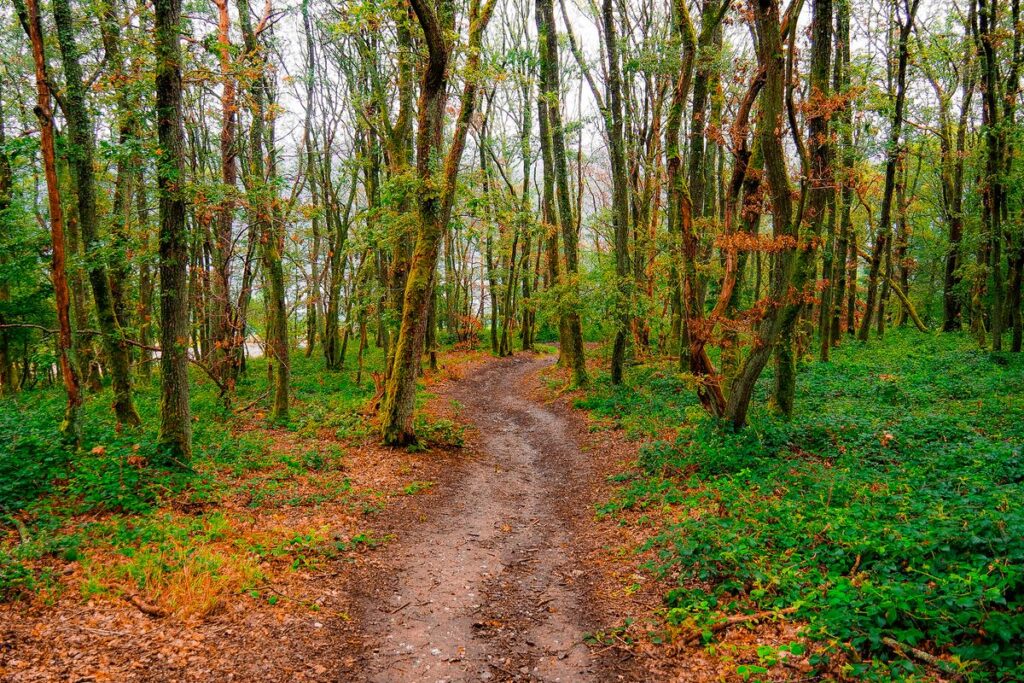
Area: Southern and western Palatinate, extending to the French border
The Palatinate Forest forms the German part of the UNESCO-designated Palatinate Forest-North Vosges Biosphere Reserve. Its red sandstone formations, wooded ridges, castle ruins, and hut network make it a better choice for a full hiking day than a quick roadside stop.
Choose a signed route that matches your time and fitness rather than improvising in protected areas. In core conservation zones, remain on marked paths. Carry water, check hunting or forestry notices, and expect patchy mobile coverage in some valleys.
Route planning: Dahn and the southern Wasgau are useful for sandstone scenery, while Neustadt and Bad Dürkheim make convenient eastern gateways. Start with the official Germany tourism biosphere overview.
16. Experience the Nürburgring
Address: Otto-Flimm-Straße, 53520 Nürburg, Germany
The Nürburgring is worth including even if you do not plan to drive. Depending on the calendar, visitors can attend major races, watch tourist-driving sessions, visit the ring°werk motorsport museum, book a guided tour, or stop at public viewing points around the Nordschleife.
The published 2026 tourist-driving season runs from March 7 to November 15 under the current plan, with individual opening windows listed online. Sessions can change because of weather, incidents, track rentals, or events.
Driving caution: Read the current rules, vehicle requirements, flag procedures, and insurance position before entering the track. Treat a tourist-driving lap as a high-risk activity, not ordinary sightseeing. Check the official 2026 Nürburgring tourist-driving announcement and live calendar.
17. Cross the Geierlay Suspension Bridge
Visitor center: Kastellauner Straße 23, 56290 Mörsdorf, Germany
Geierlay spans 360 meters across a Hunsrück valley and reaches about 100 meters above the ground. Crossing the bridge is free, it is open year-round, and pedestrians can use it in either direction. The movement and exposed views can feel intense for visitors with a fear of heights.
The bridge is not beside the parking lot. Most visitors walk from Mörsdorf, and the route adds meaningful distance to the outing. Parking is paid, the bridge is narrow, and busy weekends can reduce the experience. Early morning and weekdays are better for photos and a calmer crossing.
Accessibility note: A narrow stroller can cross, and bicycles may be pushed, but the approach and crowd levels matter. Check the official Geierlay website for parking, route, and event notices.
18. Plan a family day at Eifelpark

Address: Weißstraße 12, 54647 Gondorf, Germany
Eifelpark combines amusement rides with a wildlife park, making it more useful for mixed-age families than a conventional zoo or small funfair. The park includes roller coasters, family rides, playgrounds, animal enclosures, and scheduled presentations.
Operating days and hours change across the 2026 calendar. On some weekdays, rides pause briefly around lunch, and special evening events use extended hours. Plan this as a full-day stop rather than trying to fit it between castles.
Practical note: Dogs are allowed on a leash, but attraction-specific rules still apply. Review the official Eifelpark 2026 calendar before buying tickets or reserving accommodation.
19. See gardens and dinosaurs at Gartenschau Kaiserslautern

Address: Lauterstraße 51, 67659 Kaiserslautern, Germany
Gartenschau Kaiserslautern mixes landscaped gardens, play areas, exhibitions, events, and more than 70 life-size dinosaur models. It works well for families who need an outdoor break after castles, museums, or long drives.
The 2026 season runs daily from March 28 to November 1, generally from 9:00 a.m. to 7:00 p.m. Special events can change how long you need, and online tickets may reduce waiting on busy Sundays and public holidays.
Best plan: Allow at least three hours, especially with children. Check the official Gartenschau visitor page and combine the stop with other things to do in Kaiserslautern.
More worthwhile castles and family attractions
The following places appeared in the original guide and remain relevant, but they are better treated as alternatives or regional add-ons rather than core stops for every itinerary.
Stolzenfels Castle

Address: Schlossweg 11, 56075 Koblenz, Germany
Stolzenfels is a strong alternative for travelers interested in nineteenth-century Rhine Romanticism, landscaped grounds, and Prussian architecture. The uphill approach is part of the visit, and interior access is seasonal. Confirm current opening days through the Rhineland-Palatinate tourism listing for Stolzenfels.
Nanstein Castle

Address: Burgweg, 66849 Landstuhl, Germany
Nanstein is a red-sandstone castle ruin above Landstuhl. It is most useful as a regional stop for travelers staying near Kaiserslautern, Ramstein, or the western Palatinate, rather than a detour from the Rhine or Moselle. Check the official state tourism listing for current access.
Kastellaun Castle

Address: Schlossstraße 13, 56288 Kastellaun, Germany
Kastellaun Castle is a compact Hunsrück ruin above the old town. It pairs well with Geierlay, especially for travelers who want a short historic stop rather than another major castle tour. The lower-castle museum has separate opening hours and admission, so check the city of Kastellaun visitor information before your visit.
Landau Zoo

Address: Hindenburgstraße 12, 76829 Landau in der Pfalz, Germany
Landau Zoo is a compact city zoo with education and species-conservation programs. It is a practical half-day choice for families staying along the southern Wine Route. The zoo operates year-round with shorter winter hours; confirm the day’s schedule on the official Landau Zoo opening-hours page.
Kurpfalz-Park Wachenheim

Address: Rotsteig, 67157 Wachenheim an der Weinstraße, Germany
Kurpfalz-Park combines family rides, playgrounds, walking paths, and wildlife attractions on the edge of the Palatinate Forest. It is reached most easily by car; the operator states that there is no practical public-transport connection. Opening times vary by date, and rides begin later than the park gates. Review the official Kurpfalz-Park planning FAQ.
Nearby side trips outside Rhineland-Palatinate
Two attractions in the previous version of this article were geographically misclassified. Both are worthwhile Rhine excursions, but neither is in Rhineland-Palatinate. Keeping them in a clearly labeled side-trip section prevents readers from building an inaccurate state itinerary.
Niederwald Monument in Hesse

Address: 65385 Rüdesheim am Rhein, Hesse, Germany
The Niederwald Monument stands above Rüdesheim on the opposite side of the Rhine from parts of Rhineland-Palatinate. It is in Hesse. The monument and viewpoints are easy to combine with Rüdesheim, the cable car, and a Rheingau wine trip. The outdoor monument is open all day; check Rüdesheim’s official visitor listing.
Schloss Drachenburg in North Rhine-Westphalia
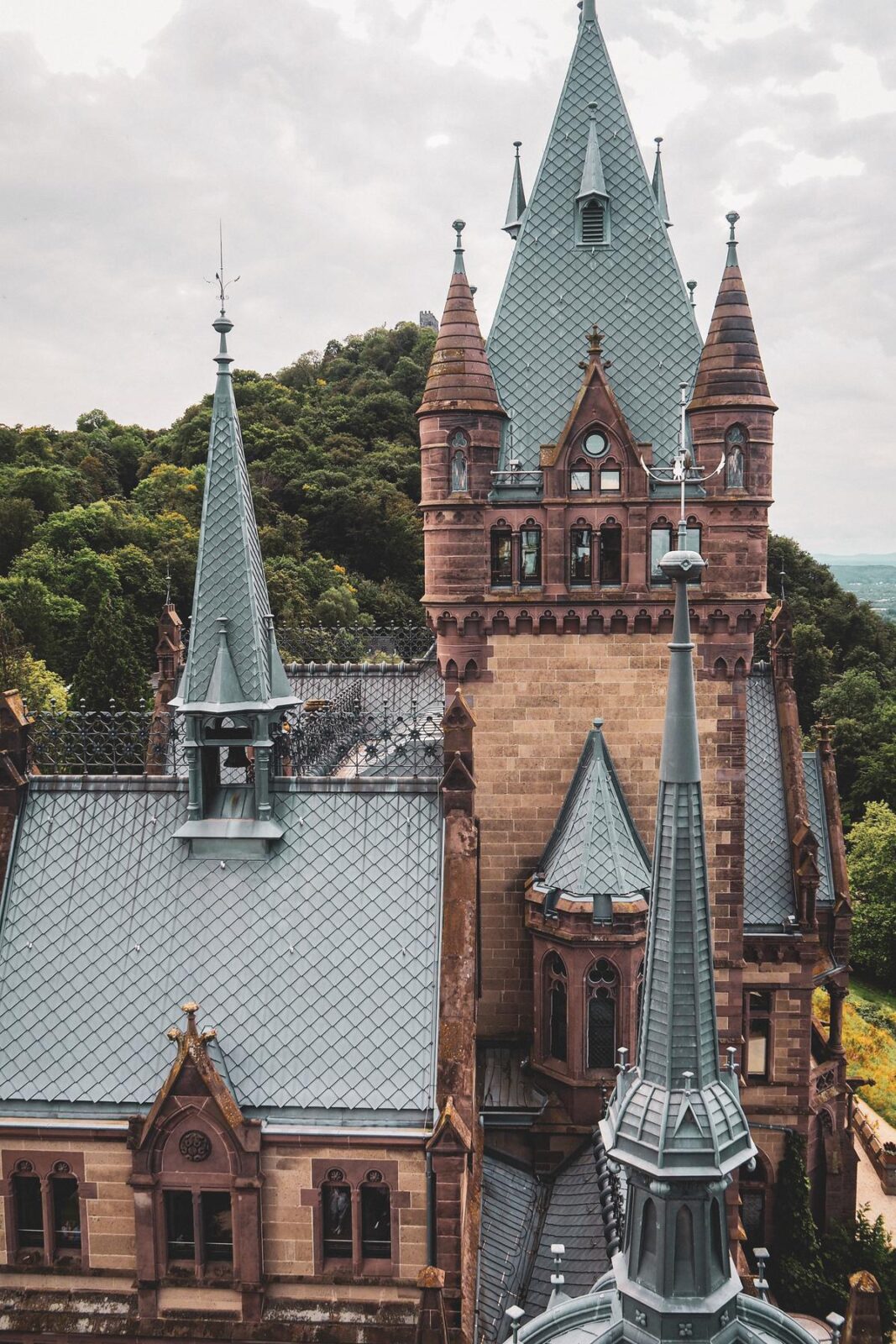
Address: Drachenfelsstraße 118, 53639 Königswinter, North Rhine-Westphalia, Germany
Schloss Drachenburg is in Königswinter, south of Bonn, in North Rhine-Westphalia. The neo-Gothic villa, park, Rhine views, and Drachenfels cog railway make it a good side trip from Bonn or Cologne, but it should not be counted among Rhineland-Palatinate attractions. See our Schloss Drachenburg guide and North Rhine-Westphalia’s official tourism page.
How to plan a Rhineland-Palatinate itinerary
Travel times are manageable within each river valley or subregion, but crossing the entire state repeatedly wastes time. Build the itinerary around two or three bases and group nearby attractions.
| Region | Good combinations | Suggested time |
|---|---|---|
| Koblenz and Upper Middle Rhine | Deutsches Eck, Ehrenbreitstein, Marksburg, Rheinfels, Stolzenfels | 1 to 2 days |
| Moselle and Eltz area | Eltz Castle, Cochem, Thurant | 1 to 2 days |
| Trier | Porta Nigra, cathedral, Roman monuments, old town | 1 full day |
| Mainz and Rhine cities | Gutenberg Museum MOVED, Mainz old town | Half to 1 day |
| Speyer and Palatinate | Speyer Cathedral, Technik Museum, Hambach, Wine Route, Palatinate Forest | 2 to 3 days |
| Eifel and Hunsrück | Nürburgring, Eifelpark, Geierlay, Kastellaun | 1 to 2 days |
A practical 3-day itinerary
- Day 1: Koblenz. Visit Deutsches Eck, ride the cable car, tour Ehrenbreitstein Fortress, and walk the old town.
- Day 2: Moselle. Start at Eltz Castle, then continue to Cochem. Do not add another major castle unless you have a car and an early start.
- Day 3: Trier. Walk from the Porta Nigra to the Hauptmarkt, Trier Cathedral, the Church of Our Lady, and one additional Roman site.
A balanced 5-day itinerary
- Day 1: Koblenz and Ehrenbreitstein.
- Day 2: Eltz Castle and Cochem.
- Day 3: Trier and its Roman monuments.
- Day 4: Speyer Cathedral and Technik Museum Speyer.
- Day 5: Hambach Castle and two or three towns along the German Wine Route.
Getting around
Regional trains make Koblenz, Cochem, Trier, Mainz, Speyer, Kaiserslautern, and Landau workable without a car. River cruises can connect selected Rhine or Moselle towns, but schedules are seasonal and are not a substitute for every train or bus connection.
A car is most useful for Eltz Castle outside its seasonal bus window, Thurant, Geierlay, the Palatinate Forest, Nürburgring, Eifelpark, and Kurpfalz-Park. When driving, account for steep village roads, limited castle parking, festival closures, and wine-tasting safety.
Start broader trip preparation with our Germany trip-planning guide.
Best time to visit
April through October offers the broadest combination of castle access, river cruises, parks, hiking, and wine events. May, June, September, and early October often provide a better balance of daylight and manageable crowds than peak summer weekends.
Winter works best for Trier, Mainz, Speyer, Christmas markets, and museums. Many outdoor parks close or reduce operations, while some castles use limited winter tours. Check each attraction rather than assuming the entire region follows one season. For a winter-focused trip, compare dates in our guide to German Christmas markets.
Common planning mistakes
- Trying to combine Trier, Koblenz, and the southern Wine Route in one day.
- Assuming every castle has open interior access without a guided tour.
- Relying on old ticket prices or opening hours copied by third-party travel sites.
- Driving after wine tasting instead of arranging a designated driver or rail-based route.
- Treating Geierlay as a roadside photo stop and underestimating the walk from Mörsdorf.
- Following old Mainz directions to the closed Gutenberg Museum building instead of Gutenberg Museum MOVED.
- Counting Niederwald Monument or Schloss Drachenburg as being inside Rhineland-Palatinate.
Frequently asked questions
Choose regions before attractions
The best Rhineland-Palatinate trip is organized by geography. Use Koblenz for the Rhine, Cochem or Trier for the Moselle and Roman sites, and Speyer or Neustadt for the Palatinate. Once those bases are fixed, choose one major castle, one city or museum, and one outdoor or wine-focused experience for each full day.
That approach produces a more varied trip and leaves enough time for guided tours, riverside walks, meals, and the unplanned stops that make this part of Germany rewarding.