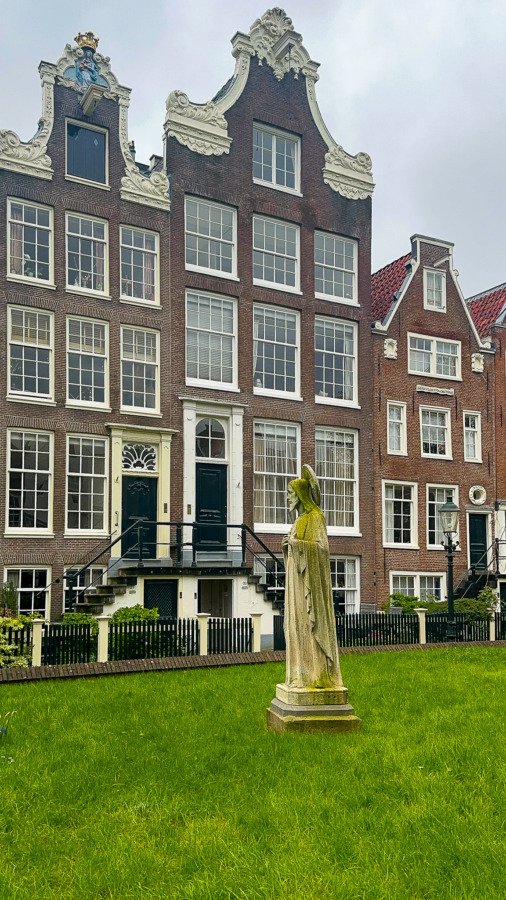
Begijnhof stands as one of Amsterdam‘s most tranquil and historically significant hidden treasures, a secluded medieval courtyard nestled in the bustling heart of the city. Founded in the 14th century as a religious community for Beguines—devout Catholic women who lived like nuns without taking formal vows—this enclosed sanctuary creates an otherworldly atmosphere of peace amid urban energy. The courtyard’s perfectly maintained garden surrounds a collection of historic townhouses dating primarily from the 17th and 18th centuries, though two rare wooden houses from the medieval period remain, including Amsterdam’s oldest preserved wooden house (Het Houten Huis) from around 1528. At the center stands the hidden Catholic church (Begijnhof Kapel), established after the Protestant Reformation when Catholic worship was officially forbidden but tolerated in private spaces. The courtyard is accessible through an unassuming doorway on Spui Square, where visitors step down several stairs into this remarkably preserved historical enclave that sits approximately one meter below the surrounding city—a tangible reminder of Amsterdam’s continuous land subsidence over centuries. Though remaining Beguines died out in the 1970s, the tradition of female residence continues as the houses are occupied exclusively by women. For travelers seeking authentic Amsterdam heritage beyond tourist crowds, Begijnhof offers rare insight into the city’s religious history, architectural preservation, and unique social traditions—all within an atmosphere of contemplative tranquility seldom found in major European capitals.
Cultural Context
Medieval religious community representing unique Beguine movement of independent religious women. Survived Protestant Reformation maintaining Catholic identity in Protestant Amsterdam, exemplifying Dutch religious tolerance and women’s spiritual autonomy outside formal church structures.
Historical Context
Founded early 14th century (first mentioned 1346) as béguinage for Beguines – lay religious women living semi-monastic lives without formal vows. Community persisted through Reformation until last Beguine died 1971, spanning over 600 years.