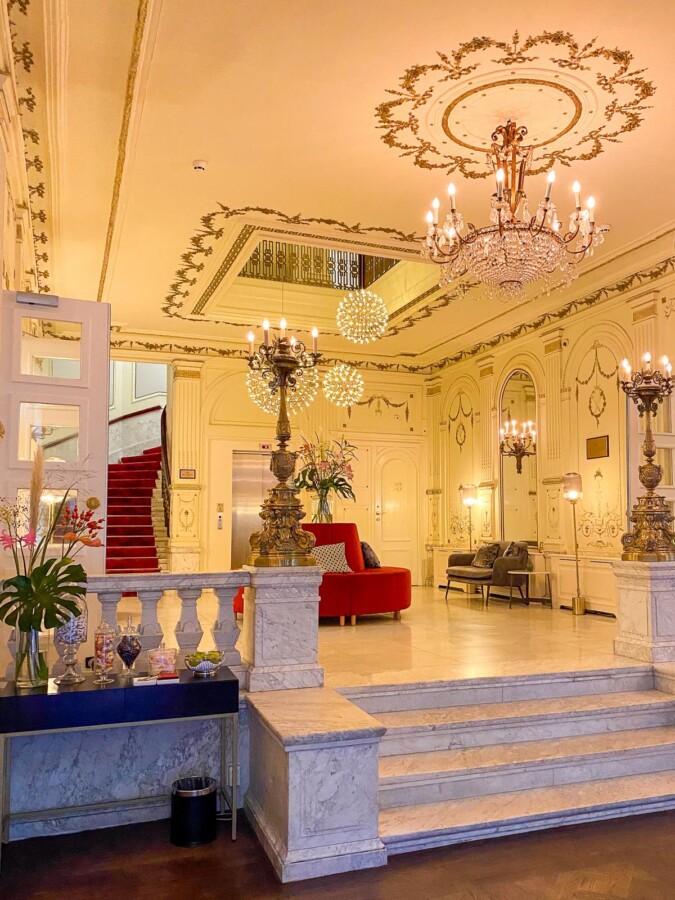
Pathé Tuschinski in Amsterdam stands as one of the world’s most spectacular cinemas, a breathtaking fusion of Art Deco, Art Nouveau, Amsterdamse School, and Jugendstil architectural styles. Built in 1921 by Polish-Jewish businessman Abraham Tuschinski, this cinematic palace was designed to transport moviegoers into a dream world before the film even began. The exterior captivates with its ornate brickwork and colorful ceramic decorations, while the interior dazzles with sumptuous details—from hand-knotted carpets and painted ceiling panels to stained glass windows and intricate woodwork. Each viewing room offers a distinct atmosphere, with the main theater preserving its original lavish design, complete with private boxes and atmospheric lighting. Having survived World War II and multiple renovations, today’s Tuschinski seamlessly blends historic opulence with modern projection technology, offering visitors not just a movie but an immersive journey into a golden age of cinema when theaters were built as temples to the emerging art form.
Cultural Context
Pathé Tuschinski holds a prominent place within Amsterdam’s vibrant cultural landscape, serving as a cherished venue where cinema is celebrated as both an art form and a social experience. Since its opening in 1921, the theater has been a gathering place for locals and visitors alike, reflecting the Dutch appreciation for innovation and artistic expression. The cinema often participates in cultural festivals, including the International Documentary Film Festival Amsterdam (IDFA) and the Amsterdam LGBTQ+ Film Festival, thereby supporting diverse narratives and inclusive storytelling. Its programming balances mainstream blockbusters with arthouse films, fostering a broad cultural dialogue and making cinema accessible to varied audiences. The theater’s ambiance and programming are deeply intertwined with Amsterdam’s identity as a city that values creative freedom, tolerance, and historical preservation. Pathé Tuschinski also honors Dutch cinematic heritage by occasionally hosting retrospectives of national filmmakers and special events celebrating the Netherlands’ contributions to film. As a cultural institution, it plays a role in sustaining the communal tradition of shared cinematic experiences, which remain important in an increasingly digital and individualized media environment. The cinema’s presence in the city underscores Amsterdam’s role as a hub for artistic innovation and cultural exchange, making it a significant landmark in the local cultural fabric. Pathé Tuschinski continues to be a focal point where history, art, and community converge, enriching Amsterdam’s cultural life profoundly.
Historical Context
Pathé Tuschinski was inaugurated on October 28, 1921, by Abraham Tuschinski, a Polish-Jewish entrepreneur who sought to create a cinema palace that combined luxury and cutting-edge technology. The theater quickly became one of the most prestigious entertainment venues in Amsterdam, reflecting the early 20th-century boom in film culture across Europe. Its history is interwoven with the social and political upheavals of the 20th century; during World War II, the cinema was commandeered by the Nazis, yet it survived the war largely intact. Post-war, Pathé Tuschinski continued to evolve, adapting to changes in cinematic technology and audience preferences while preserving its historic charm. The theater has witnessed numerous historical milestones in film history, including the transition from silent films to talkies and the rise of widescreen and digital projection. Ownership changes and renovations throughout the decades have maintained its operational status, but always with an emphasis on preserving its original character. The cinema’s endurance through Amsterdam’s turbulent 20th century symbolizes resilience and a commitment to cultural preservation. Today, it stands not only as a monument to early cinema history but also as a living institution that honors its founder’s vision of combining art, entertainment, and architectural grandeur. Pathé Tuschinski’s historical journey reflects broader narratives of innovation, survival, and cultural continuity within Amsterdam and the Netherlands.