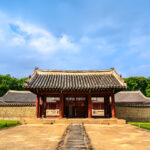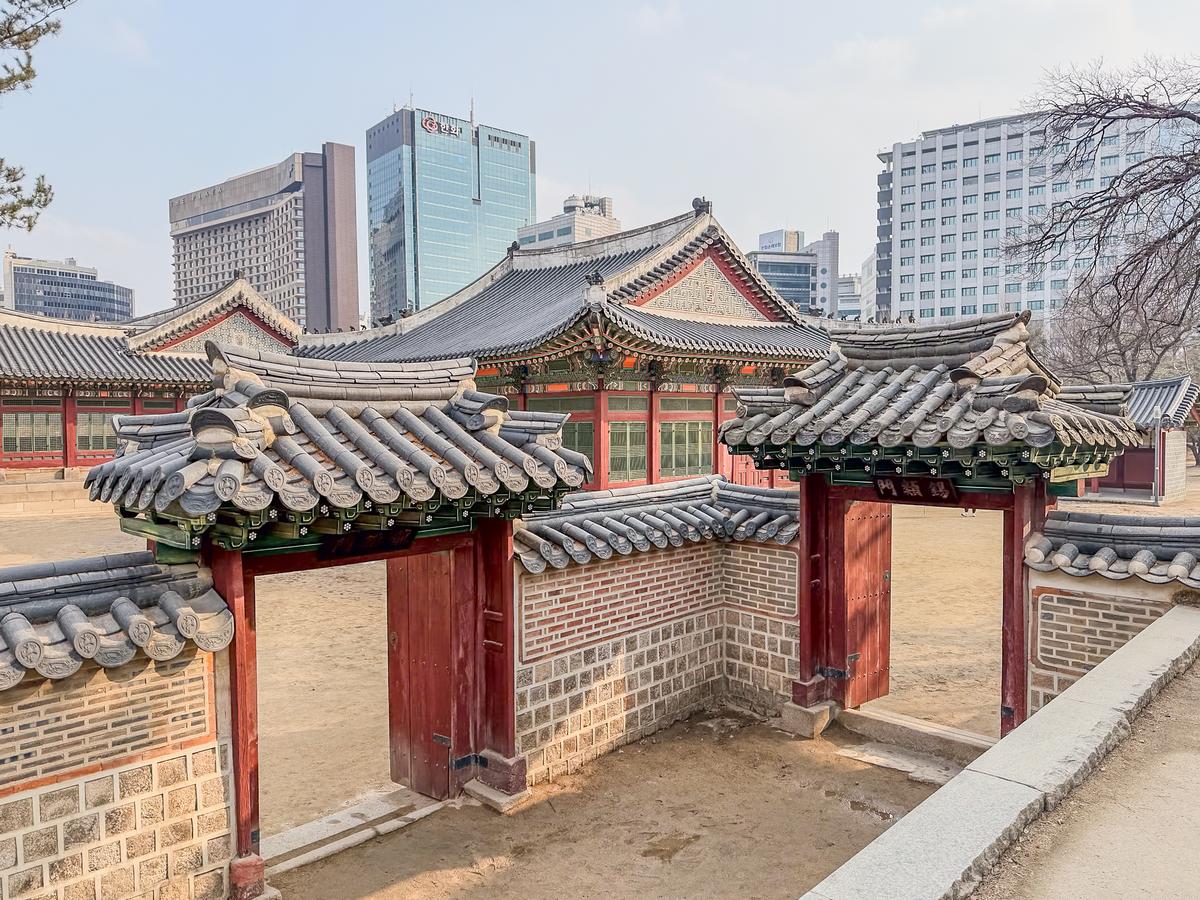
Changgyeonggung Palace stands as one of Seoul‘s Five Grand Palaces from the Joseon Dynasty, distinguished by its harmonious blend of regal architecture and expansive gardens. Originally constructed in 1483 by King Seongjong as a residence for retired queens and royal concubines, this elegant complex has experienced multiple cycles of destruction and restoration that mirror Korea’s tumultuous history. Unlike its more ceremonial counterparts, Changgyeonggung was designed primarily as a residential palace, lending it a more intimate and livable atmosphere evident in its human-scale buildings and integration with nature. The palace’s most distinctive features include Myeongjeongjeon (the main audience hall) with its relatively modest single-story design; Tongmyeongjeon, the queen’s quarters featuring heated ondol floors; and Hwangyeongjeon, the king’s private residence. Perhaps most notable is Daeonsil, the first Western-style greenhouse in Korea, constructed during the Japanese colonial period when the palace was controversially converted into a public park and zoo. Changgyeonggung’s layout follows traditional Korean principles with buildings arranged to maximize harmony with their natural surroundings—particularly evident in the placement of structures around the serene Chundangji pond where the curved eaves of pavilions reflect in still waters alongside blooming lotus flowers in summer. Connected to neighboring Changdeokgung Palace via a stone bridge, the complex offers visitors a deepened understanding of royal life during the Joseon era and Korean architectural principles emphasizing the respectful integration of built structures with natural landscapes—a philosophy that predates modern sustainable design concepts by centuries.
Cultural Context
Historic royal palace embodying Joseon Dynasty family values and filial piety, built for dowager queens demonstrating Confucian respect for elders, site of tragic royal deaths including Crown Prince Sado reflecting court intrigue
Historical Context
Built 1483 by King Seongjong on 1418 Suganggung site for three dowager queens, destroyed during Japanese invasions 1592-1598, rebuilt but degraded to zoo during Japanese occupation 1907-1983, restored as palace 1986