A hotel, a motel and an inn differ in three concrete ways: how you reach your room, how much service comes with it, and where the building sits. A hotel puts rooms on interior corridors inside a single building, usually in a city or near an airport, and sells the widest range of services. A motel puts the room door on the outside, facing a parking lot, sits on a highway, and sells a night’s sleep and little else. An inn is small, often historic, usually rural, run by a handful of people, and trades amenities for breakfast and local knowledge.
One thing worth knowing before you compare listings: in the United States, none of those three words is a protected or regulated term. No federal or state law, and no hotel-industry standard, stops a property from calling itself a hotel, a motel or an inn. Holiday Inn is a hotel chain. Plenty of properties branded “inn” are roadside motels. The distinction described below is building form and service convention, and it is a reliable guide to what you will actually get – but it is not a classification you can enforce.
You are about to embark on an adventure, meaning you must plan where to stay during your travels. These days, there are many options for accommodation.
Plan for the right sleeping accommodations for your adventure. Hotels, motels, and inns offer distinct characteristics. You can stay at a hotel vs a motel vs an inn! What are the key differences between a hotel, motel, and inn?
The difference between hotels, motels, and inns is amenities, layout, and location. Hotels tend to be in more urban and suburban areas, with modern amenities, larger rooms, and entrances inside a single building.
Inns are more rural and personal, with amenities that make the stay feel like a homestay. Motels are bare-bones, near highways and motorways, and often have exterior doors.
What are the pros and cons of staying at each one? With travel hacking, you must know the best hotels for your stay, location, and price. Here’s a summary table comparing each accommodation option.
| Feature | Motel | Hotel | Inn |
|---|---|---|---|
| Location | Usually located along highways or roads | Usually located in cities, near airports, or tourist destinations | Often located in rural or scenic areas |
| Size | Typically smaller, with fewer rooms | Larger, with more rooms and multiple floors | Smaller, with fewer rooms |
| Amenities | Limited amenities, such as free parking and basic breakfast | Wide range of amenities, such as restaurants, fitness centers, and room service | Varies, but often includes breakfast and common areas |
| Room Entrance | Rooms are accessed from the outside | Rooms are accessed from interior hallways | Varies, can be accessed from inside or outside |
| Length of Stay | Often used for short stays or overnight stops during travel | Suitable for both short and long stays | Often used for short stays or weekend getaways |
| Atmosphere | More basic and functional | More luxurious and full-service | More personalized and intimate |
| Cost | Generally less expensive than hotels | Often more expensive than motels | Prices vary, but often similar to hotels |
Hotels

What is a hotel? A hotel is a location that provides accommodation, meals, and other services to travelers. Hotels are where travelers can create a home base while sightseeing or conducting business.
What is a Hotel?

A hotel is paid lodging for travelers on a short-term or long-term basis for up to a few weeks. It provides a comfortable, home-like environment with basic amenities as well as luxurious services such as restaurants, swimming pools, a spa, a gym, casinos, etc.
Hotels are commonly described by star rating, but the United States has no government star-rating system, and any property can call itself five-star without being inspected by anyone. The two ratings that are actually earned in the US are private and voluntary: AAA Diamonds, which inspects roughly 26,000 hotels and awards about 145 Five Diamond and 1,750 Four Diamond ratings across North America, the Caribbean and Costa Rica, and Forbes Travel Guide Stars, which named 343 Five-Star hotels worldwide in its 2026 awards. If a rating matters to you, check which body issued it. Many hotels also accommodate conferences and meetings for business travelers.
The charges of a hotel depend on its amenities, ratings, location, and the popularity of its brand name. You can expect to pay more for your Marriott stay than the Holiday Inn.
Travelers tend to stay at one hotel for the entire duration of their stay, but what are the pros and cons of a hotel?

Pros of a Hotel
Proximity
One of the biggest appeals of staying in a hotel is its proximity to other locations. Most hotels are located downtown or in metropolitan areas, often next to airports, business districts, or tourist destinations.
Their proximity makes it easy for travelers to get to where they want to go without the hassle of driving or taking public transportation. In addition, they are prime locations for travelers who are attending conferences or public events.
Extensive Amenities & Staff

Travelers looking to enjoy their accommodation as much as their destination can enjoy staying in a hotel. Hotels tend to be much larger than motels or inns, meaning they have the resources to hire well-qualified staff and supply luxurious amenities.
Plus, there are many different hotel rooms out there that you can book to enjoy your stay. Depending on how large the hotel is, it can include personnel such as a a hotel concierge, event planner, bellhops, valets, and more. Again, depending on the size of the hotel, their amenities can include pools, gyms, spas, high-speed internet, shuttles, in-house restaurants, and more.
Variety of Service
Hotels offer many options to fit the needs of every traveler. They offer a variety of room styles, from simple to luxurious, depending on your budget. Besides, hotels offer long-term service.
While most accommodations have a short maximum stay, hotels can be booked for months, which is terrific for people attending training, relocating, or conducting extensive business. Beyond service, there is also a massive variety of types of hotels, such as:
- Boutique hotel
- Luxury hotel
- Budget hotel
- Extended stay hotel
- Sustainable hotel
The list goes on. There are even more micro-niche types of hotels beyond the above as well.
See Related: Where Should You Travel For Your Birthday
Cons of a Hotel
More Expensive
Hotels can be grand, offering many fantastic amenities, but this means that they are often expensive. Hotels can easily range from hundreds to thousands of dollars a night. Given their high demand, they may also book out far in advance or become more expensive as the number of rooms available decreases.
Also, most hotels do not have a cooking space; this means you are forced to eat out all the time, which drives up the cost of your vacation even more. Lastly, there can be hidden costs you aren’t expecting, such as the mini-fridge stocked with goods you need to pay for at the end of your stay.
Think you’ve seen expensive? Check out these famous hotels in Paris (you’ll be surprised at how much they charge).
See Related: Best Credit Cards for Travel Perks
Large & Noisy
Hotels can be huge, with many rooms lined up in long hallways. If you are placed on the far side of the hotel, this can mean lots of walking, and these long hallways also allow noise to travel.
If you are a light sleeper, you may hear the dinging of the elevator, the crunching of an ice machine, or guests walking heavily in the hall. Plus, hotels allow for some anonymity, leading to noisy neighbors who may stay up late into the night.
See Related: Award Wallet Review
Less Culture
With the luxurious amenities hotels frequently provide, you may lack culture on your vacation. Hotels are generally culture-neutral, which likely means that the food will be familiar to tourists, the decorations will be modern, and the space will be similar to every other hotel.
If you spend a lot of time in your hotel, you won’t get to experience the traditions and the unique culture of the place you visit. This is location-specific as the Hotel Pulitzer in Amsterdam was one of the hotel’s most cultural and unique experiences.
I used my American Express Platinum card to book with Fine Resorts & Hotels at that hotel. Hotels are unlikely to accept cash, whereas motels are more likely to.
I suggest you start building reward balances to reduce the burden on your wallet for traveling. These are some of the best credit cards for travel.
See Related: Top Hotel Digital Marketing Tips
Motels

What is a motel? A “motel” is short for a “motorists hotel.” Here is some more background on motels.
What is a Motel?
The term motel originally meant a hotel beside a major highway, with rooms facing a parking lot so guests could load and unload a car at the door. That is still the defining feature. Most motels put the room door on the building exterior, opening directly onto the lot or an outdoor walkway, rather than onto an interior corridor. Some newer or renovated properties have moved entrances inside, which is usually a sign the property is repositioning itself closer to a budget hotel.
Motels are meant for short-term stays as they have fewer amenities and services for guests. However, they provide easy access to a major road network, which makes it ideal for travelers wanting to hit the road at any moment.
Although motels rarely offer specialized services, some have an outdoor swimming pool for guests.
They also have internet access, which might not always work due to the location.
Why is it Called a Motel?
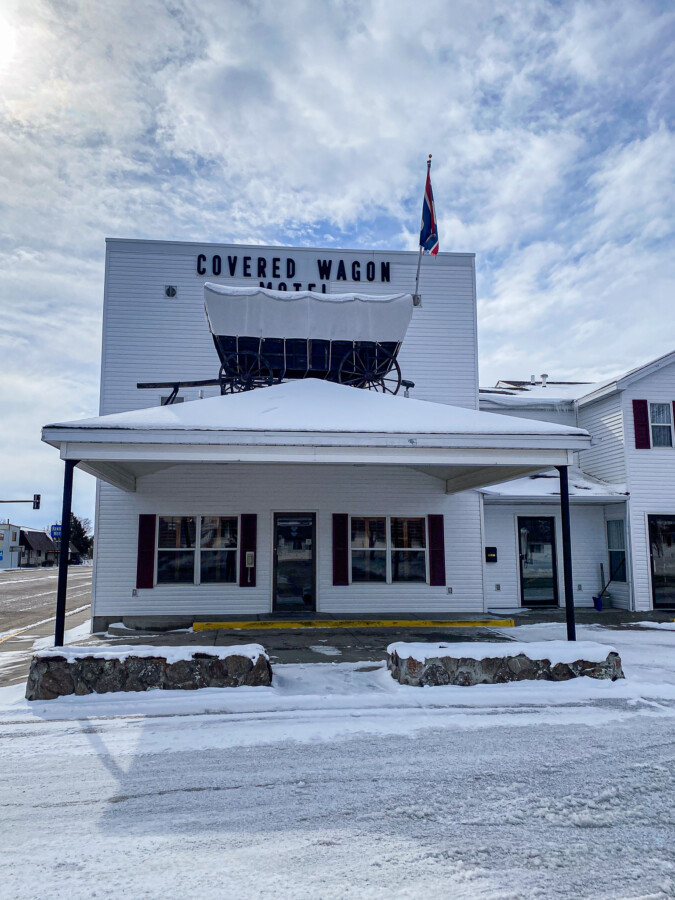
“Motel” is a blend of “motor” and “hotel”, and it is older than most people assume. Merriam-Webster dates the word’s first known use to 1925 (Merriam-Webster) – two decades before World War II, not after it. The word was coined for a specific building: the Milestone Mo-Tel in San Luis Obispo, California, which opened on 12 December 1925. Architect Arthur Heineman built 15 two-room bungalows with adjoining garages, aimed at drivers on the highway between Los Angeles and San Francisco, and charged $1.25 a night (Britannica). The building still stands, later renamed the Motel Inn. Motels spread from there as rest stops for traveling families along the growing highway network.
With the development of highway routes in the 1920s, long-distance journeys increased the need for inexpensive and easily accessible lodgings near the main routes.
This led to a growth in the concept of motels that provided a place to stay overnight. Today, a motel refers to a building that provides some hotel services minus the luxuries. Only a handful of motels in big cities have additional facilities, such as an on-site swimming pool or an eatery for guests.
What are the differences between a hotel and a motel?
Is There an Official Definition of a Motel?
Almost none – and the one that exists is worth knowing, because it confirms what the rest of this guide describes. US federal labor regulations at 29 CFR 779.383 define a hotel as “an establishment known to the public as a hotel, which is primarily engaged in providing lodging or lodging and meals for the general public,” and a motel as an establishment providing similar services “but which caters mostly to the motoring public, providing it with motor car parking facilities either adjacent to the room or cabin rented or at some other easily accessible place.” The same regulation folds in motor hotels, motor lodges, motor courts, tourist courts and tourist lodges as motels.
That definition exists for overtime-exemption purposes and has nothing to say about branding, licensing or quality. But it is the cleanest authority for the plain-English rule: a motel is a hotel where you park at your door.
Beyond that, there is no classification standard. State lodging statutes generally collapse all three terms into one category – California’s civil code defines “hotel” to include “any hotel, motel, bed and breakfast inn, or other similar transient lodging establishment,” and South Carolina, Maine and Maryland do the same thing. The hotel industry’s own segmentation, STR chain scales, sorts properties by room rate and brand affiliation into tiers from Luxury down to Economy. It does not use the words hotel, motel or inn at all.
What’s the Difference Between a Motel and a Hotel?
The difference between motels and hotels is primarily in their design and amenities. A motel is designed for motorists, often having exterior room entrances and adjacent parking. In contrast, a hotel offers a broader range of services, including restaurants, fitness centers, and rooms accessed through interior corridors. While both provide accommodations, hotels typically offer more luxurious amenities and services.
While hotels are designed for people on vacation, motels are created for people who are merely passing through the area. Motels fall within the subcategory of hotels, so the difference is not very striking. The primary differences between hotels and motels are in the price and the duration of stay.
Hotels located in ideal locations cost more than motels in less expensive areas of the country. However, motels situated in big cities such as New York or Los Angeles will cost similar to a four-star hotel.
Regarding the duration of stay for guests, hotels are for more extended stays. They are primarily located in cities with a wide range of attractions, so the guests stay for an extended duration. Some hotels are even known as “extended-stay hotels,” as they are built for guests who want to stay for weeks or even months.
Since hotels are usually for more extended stays, they offer a wider range of services, including room service, on-site restaurants, bars, spas, and gyms. A few hotels offer more extensive services usually found in resorts, including casinos and theaters.
Motels are better for shorter stays of up to a week and provide travelers with a place to spend a night or two. Some guests stay at motels for several weeks while looking for permanent accommodation in a new city or town.
Traditionally, motels offer fewer services than hotels, but there are exceptions. Some motels have swimming pools and provide complimentary breakfast during your stay.
Typically, motels are located alongside significant roads where travelers stop for the night before continuing.

See Related: How to Save Money for Travel
What is Cheaper, a Motel or Hotel?
Hotels usually offer more than just a place to sleep. As they are a kind of “getaway” for travelers, they will likely provide at least some basic luxury, such as on-site restaurants, swimming pools, spas, and gyms.
The average daily rate for a US hotel room was $160.30 across 2025, and $173.76 in June 2026 (CoStar/STR). That is a national average across every segment, from budget highway properties to luxury resorts, so treat it as a midpoint rather than a quote. Location and season move it far more than the star rating on the door: the same brand can cost double in Manhattan in October and half in a secondary market in February. If the nightly rate is what is deciding your trip, it is worth learning how to get free hotel rooms with points and certificates before you book.
On the other hand, motels offer fewer facilities, which is why they are less expensive. They are designed to meet guests’ basic needs, providing a place to rest and wash.
Motels sit in what the hotel industry calls the economy chain scale – the lowest-priced tier it tracks – so a motel night runs well below the $160 to $174 national average, often by half or more. We are deliberately not printing a fixed dollar range here. The per-segment rate tables are not published openly, the widely repeated “$45 to $100” figure traces back to industry data from 2018, and economy room rates have moved since. Check the actual rate for your dates and your exit off the highway; that number is the only one that applies to you.
Still, the final costs will depend on the motel’s location and quality of services.
Pros of a Motel
Low Budget
Motels are excellent for budget travelers. They are a cheap and easy way to get a good night’s sleep. In addition, most motels come with a continental breakfast. This means you can get up and grab a decent bite before heading on your way.
Vehicle Convenience
Motels are usually only one or two stories high, extending lengthwise instead of by height. This is fantastic for motorists because they can usually park right outside their door.
This means they don’t have to take a lot of time to lug in all their stuff, and they can keep an eye on their car.
Road Tripping
Motels are perfect for road trips, given their convenient location along major roads, the ability to park your car right next to the door, and lower prices. They are also always available, meaning you can walk in and get a room for the night.
Most road-trippers stay in motels because they can arrive in the evening, grab a cheap room, rest, eat a light breakfast, and then head off without worrying about booking in advance or hidden costs.
See Related: Best Family Travel Hacks to Save
Cons of a Motel
Few Amenities
Motels are cheap, so they do not have as many amenities as other locations. Generally, only a few staff members will be present to help you with your needs.
Usually, they have breakfast and occasionally a pool, but that is it. If you are looking for a tourist destination, you will not find what you want in a motel.
See Related: Best Hotels in Cappadocia, Turkey
Dirty
As we have said, motels are cheap, so they aren’t always 100% clean. The training of the cleaning staff may not always be perfect, and sometimes they are overloaded with work. While many motels are perfectly clean, you may find one where you won’t want to remove your shoes.
See Related: Best Hotels in the Midwest of the US
Unsafe
Given that the location of motels is often alongside major roads, they are not always the safest. The difference between hotels and motels is that entry doors are placed on the exterior walls, meaning anyone could come to your door or car.
It is always wise to ensure your room is securely locked and all your belongings are inside the room instead of being left in the car.
See Related: What is a Home-Based Travel Agent?
Inns

Coming across an inn is not as common as it once was. Inns are generally older houses or buildings converted into lodgings that are fit for a few people. They are usually located in rural destinations, similar to a bed & breakfast.
What is an Inn?
Unlike motels, inns provide short-term lodging services to travelers and limited food and drink services. However, they usually cost less than hotels and motels because of their unluxurious nature.
Inns can be found anywhere in a country, especially along the motorways, where people seek accommodation for a day or two. Although inns don’t have separate restaurants for food, they have small sections that offer limited cuisines.
Room service and other luxurious additions are uncommon to inns, and most don’t have star ratings except on travel sites that rate noticeable lodges in a country.

What’s the Difference Between a Hotel and an Inn?
Hotels and inns differ mainly in their prices and stay durations. Hotels are located in the middle of cities, allowing guests to stay for extended weeks and months.
Most hotels offer enough space and extensive services to accommodate all guests. Hotels are ideal for vacationers, with bigger rooms, larger restaurant sections, and recreational facilities such as gyms, swimming pools, spas, etc.
People also book hotels when searching for permanent accommodation in a city. Unlike hotels, inns are smaller and more intimate settings that don’t provide luxurious services. They are meant for short-term living with limited provisions of food and drink.
Inns are single-building locations mostly built in rural locations. They have limited rooms and singular in-house dining options. These days, the term “inn” is interchangeably used for branding.
For example, the well-known hotel Holiday Inn uses “inn” in its name even though it is far from a traditional inn. Also, traditional inns don’t have star ratings like hotels.
See Related: Best Japanese Ryokans
What’s the Difference Between a Motel and an Inn?
Inns are older buildings that have been changed into places to accommodate a few people. Located in rural locations or along highways, inns offer limited food and drink facilities but no luxuries like hotels.
As inns are also built for limited stays, they are ideal for travelers looking for a place to spend a night. They provide them with a bed to rest their weary heads before they hit the road again.
Motels and inns are both small compared with hotels, but they are small in different ways. A motel is usually a purpose-built single- or two-story block of near-identical rooms, each with basic amenities, and a handful add kitchenettes or an outdoor pool. Connecting rooms that open into one larger unit are common. An inn is more often a converted building where no two rooms match. If you want predictability, the motel wins; if you want character, the inn does.
Due to their apartment-like facilities, some motels charge higher, as guests can prepare food or get a complimentary light breakfast. Additionally, traditional motels always have “I,” “U,” or “L”-shaped buildings facing a large parking area for motor vehicles.
See Related: Best Airbnbs in Paris
Pros of an Inn
Less Expensive
Much like motels, inns are less expensive than other accommodation options. They are a spectacular option for travelers on a budget, and sometimes, they come with a complimentary breakfast!
You will not be faced with tipping door attendants, being pushed towards expensive places, or discovering hidden costs after your stay. Everything is upfront and honest, so you’ll be sure you won’t break the bank.
See Related: Best Hotels in Iceland to See the Northern Lights
Culture
Located in rural settings, often in smaller country towns, inns are fantastic for tasting local culture. Inn owners tend to be friendly, treating you like one of the family, so they will likely tell you the best places to check out during your stay. If they serve food, you will experience local dishes with local produce. What’s better than that?
See Related: Affordable Castle Hotels in Europe
Intimate Settings
Inns are designed to feel homey. They are comfortable, spacious, and quiet. In addition, there are cozy public spaces available to socialize and relax.
You do not have to worry about rowdy neighbors, given that most inns only allow a few guests at a time. Inns are peaceful and relaxed, and given their rural location, they will enable you to enjoy a tranquil vacation.

Cons of an Inn
Fewer Amenities
Similar to a motel, inns lack amenities. A family usually runs them, so there is little staff. There are dining options occasionally, but you must generally find most of your food and entertainment outside the inn.
See how to plan a month-long vacation.
No Ratings
Inns are rated – just not the way hotels are. Tripadvisor scores inns and bed-and-breakfasts on the same one-to-five bubble rating it applies to hotels, and runs a dedicated Travelers’ Choice “Best of the Best B&Bs and Inns” award each year. What inns generally do not carry is an inspected rating from AAA or Forbes Travel Guide, both of which are built around hotel service standards. So you have crowd consensus but not a professional benchmark, and what one guest calls a luxury another calls average. Read the recent reviews rather than the average score.
See Related: Top Affordable Overwater Bungalows
Short-Term Service
Given the small size of an inn, they do not allow for long-term service. If you hope to stay there for a month, that is unlikely to be acceptable. Most inn travelers tend to stay for one night to a week before continuing on their way.
Where Should You Stay?

The US market is large enough to give you all three almost anywhere: the American Hotel & Lodging Association counts more than 64,000 lodging properties and about 5.7 million guest rooms nationwide (AHLA). There are many differences between a hotel, a motel, and an inn. Each accommodation provides a different set of features for its target audience. There are no right or wrong answers; it merely depends on the amenities you want during your stay.
So, when choosing your accommodation, how will you know to choose between a hotel vs. motel vs. inn? If you want quick access to town, plenty of great staff, high-quality amenities, and a variety of room options, and you don’t mind having a pricier vacation, you should stay at a hotel. If you prefer a cheap place to stay and a light breakfast in the morning, then a motel is the right choice.
Lastly, if you would like to soak up the culture of the area you are visiting with kind staff, small-town charm, and a budget you can afford, then inns are what you are looking for.
Now that you have examined the differences between a hotel, a motel, and an inn, it is time to decide where to book your accommodation.
Consider where you will be located, what features you are looking for, what is within your budget, and what will make you happiest. Make sure to take a peek at their reviews and then book it!
FAQs
What is the purpose of a motel?
The purpose of a motel is to provide short-term accommodation for travelers. Unlike hotels, motels typically have rooms that open directly to the outside, making it easier for guests to load and unload their luggage. Motels are often located near highways or major roads, making them a convenient option for travelers who need a place to rest for a night or two.
Is a hotel or motel better?
A hotel and a motel are lodging options, but which is better depends on individual preferences and needs. Hotels are typically larger and offer more amenities, such as room service, swimming pools, and fitness centers.
On the other hand, motels are usually smaller and more affordable, with rooms that open directly to the outside for easy access. Ultimately, the choice between a hotel and a motel comes from budget, location, and desired comfort level and convenience.
Why are inns cheaper than hotels?
Inns are typically cheaper than hotels because they offer fewer amenities and services. This is because inns are usually smaller and more modestly furnished than hotels, with fewer staff members to provide room service or concierge assistance. Additionally, inns are often located in less touristy areas or smaller towns, which means they can charge less for their rooms due to lower demand.
Related Product Guides
- Best Travel Purses
- Best TSA-Approved Locks
- Minimalist Travel Backpacks
- Best Travel Security Products
Related Resources